
Queen Nefertiti — The Egyptian Beauty with a Cruel Reputation
Nefertiti is an icon of beauty and one of the symbols of ancient Egypt. However, the queen’s reputation is not without controversy. There is evidence suggesting that she was a ruthless hetaera who ordered the killing of her rival or may have even committed the act herself.
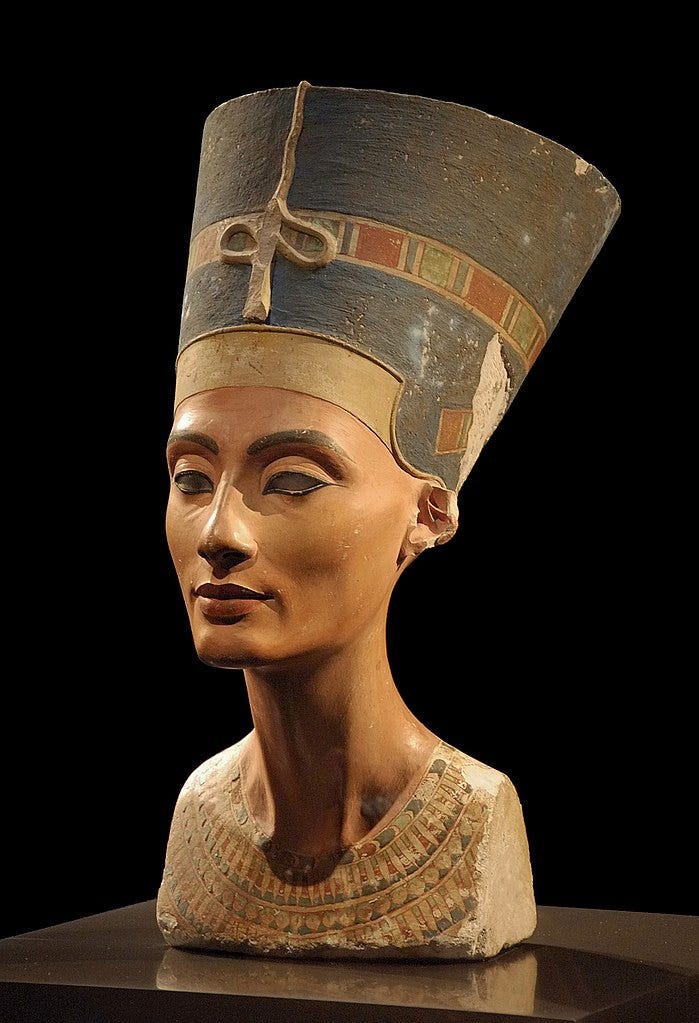
Who was Queen Nefertiti?
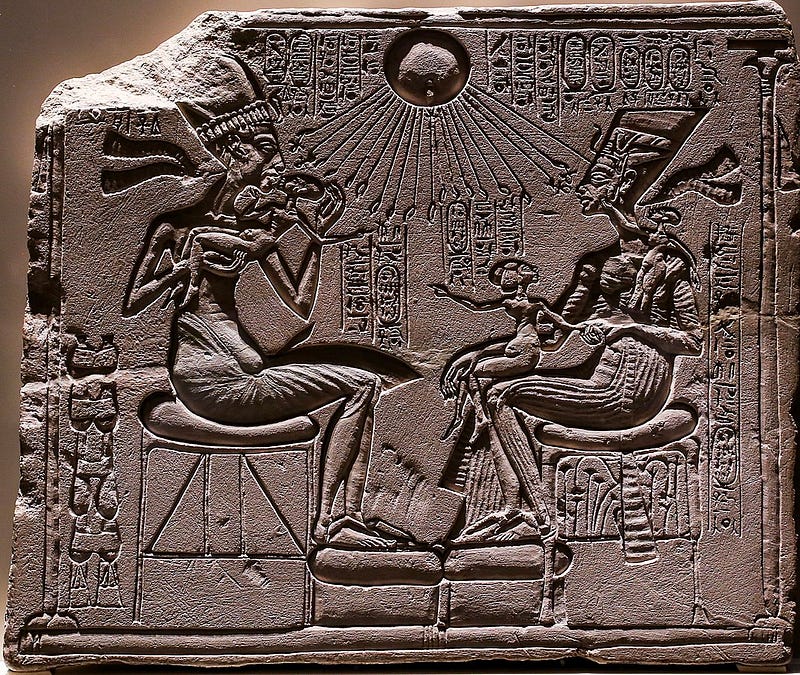
Nefertiti was the wife of Akhenaten, a revolutionary pharaoh who implemented religious reforms and introduced the cult of Aten, the sun disk. The couple resided in the new capital city of Amarna (Akhetaton), where they ruled with an iron fist. The police (medjay) suppressed any sign of dissent, and Amarna was referred to as the “bloody city.” Recent research indicates that thousands of slaves perished during the construction of this metropolis.
Like Pharaoh Akhenaten, Nefertiti was not a paragon of gentleness. In one of the surviving depictions, she is seen holding a mace to crush the head of a kneeling slave before her. The name “Nefertiti” means “the beautiful one has come,” and it is believed she might have been a foreigner, possibly from Asia, brought to Egypt by Amenhotep III, Akhenaten’s father.
Mysterious Two Women in the Tomb
Egyptologists generally agree that initially, the marriage between Nefertiti and Akhenaten was successful. However, midway through his 17-year reign, the pharaoh started showing favor to a woman from the harem named Kiya. She was allowed to participate in the Aten rituals, which were previously reserved only for the royal couple. Kiya’s sudden and mysterious disappearance from Amarna led to speculations about her death.
The puzzle, perhaps, found a solution 3,000 years later. In Tutankhamun’s tomb, two female bodies were discovered, likely belonging to members of the royal family from Amarna. The older woman with long brown hair was identified as Queen Tiye, Akhenaten’s mother. A miniature sarcophagus with her name and a lock of hair were found in the tomb. Egyptian radiologists Ashraf Selim and Hany Amer conducted tomographic examinations of the mummies and confirmed the woman’s identity.
The younger woman, with a diadem on her forehead and double-pierced ears, also appeared to belong to the royal family. Professor Joann Fletcher, an Egyptologist from the University of York, suggested that these could be the remains of Nefertiti. The age of death of the younger woman supported this theory, as tomographic examinations indicated she was between 22 and 40 years old. Her arms were positioned in a royal posture, and her clenched fist seemed to be holding a symbol of power.
However, skeptics questioned Professor Fletcher’s theory. The woman’s arms were too long and didn’t match the rest of the body. Moreover, her skull showed a peculiar deformation, resembling a spur, previously only found in one member of the Amarna dynasty — Tutankhamun. Subsequent DNA tests in 2010 confirmed that the younger woman was the mother of Tutankhamun. However, she turned out not to be Nefertiti, as Professor Fletcher had thought. The woman found in the tomb was actually the daughter of Amenhotep III and Queen Tiye, and therefore Akhenaten’s sister. Thus, the mysterious Kiya was not from the harem but a member of the royal family.
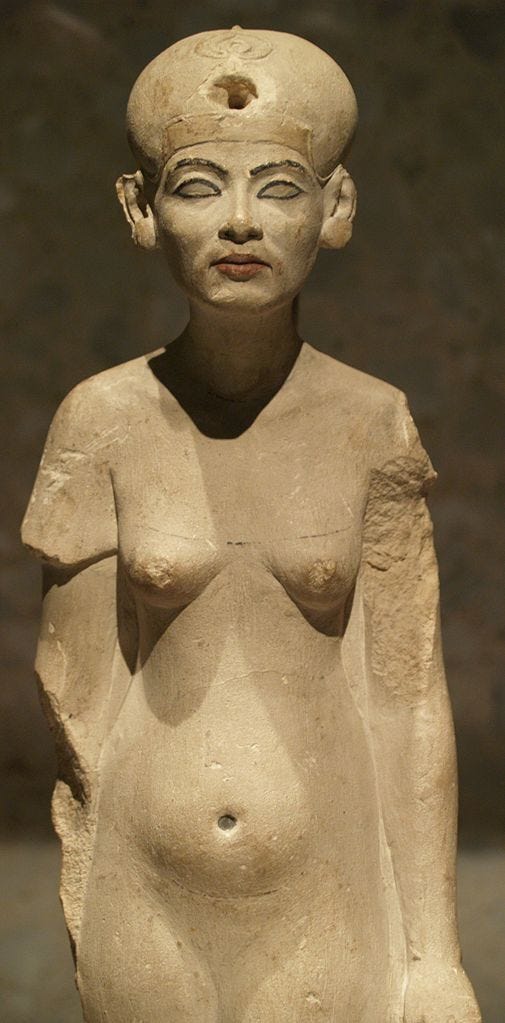
Murder at the Pharaoh’s Court
While we cannot be certain about Kiya’s identity, it seems likely that she fell victim to a crime within the palace. The mummy had a damaged upper jaw, and tomographic images revealed that she was struck with a blunt instrument, possibly a mace. Bone fragments and teeth of the victim were pushed into the nasal cavity, and the wound was filled with resin before the mummification process. Evidence of bleeding suggests that the woman was still alive when attacked, and a wound was discovered in the vicinity of her heart in the tomographic images.
Various theories circulate about what might have happened. Nefertiti, who competed for the affections of her husband with Kiya, might have influenced the assassins to attack her. In the 14th year of Akhenaten’s rule, Nefertiti disappeared from the court, possibly due to a plague or other reasons. Queen Tiye, Akhenaten’s mother, could have convinced him to get rid of his wife. In the 17th year of Akhenaten’s rule, he died, and Tutankhamun became the new ruler. The court left Amarna, and Tutankhamun restored the worship of the old gods and changed his name. Horemheb, who became the ruler of the land of the pyramids, erased all traces of Akhenaten and his family.
Thank you for reading! If you enjoyed this content, please consider giving it a clap, leaving a donation, or offering a tip to support my work. Your generosity helps me continue creating valuable content.




.jpg)
