
What We Will Need for the New Reality
‘Reality’, I say, because ‘normality’… it won’t be ‘normal’ again
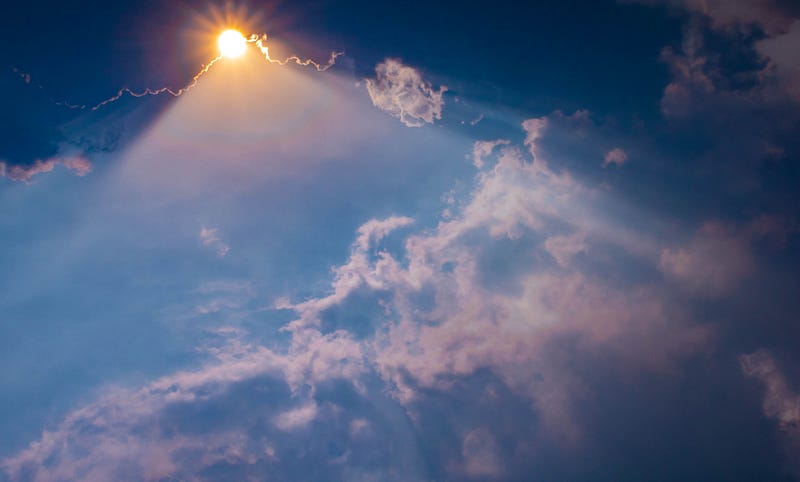
I call it ‘new reality’, not ‘normality’. I am not on the negative tone, or pessimistic, or paranoid, no. On the contrary, I always try to be optimistic, yet realistic: there won’t be a bell ringing for us to just open the doors and ‘normally’ go on with whatever we were doing before the pandemic. Whenever it’s been tried to simply put an end to lockdowns — giving people a green light to resume their lives — has come out wrong. Things will have to be done differently, whether we like it or not.
So, we need to continue working on our preparedness for things and issues before they arrive, before we are faced with them in the ‘new reality’.
While I was doing some research for this piece I inevitably ran into Elizabeth Kübler-Ross and her model on the five stages of grief. I have written about some of the things that we have lost since the beginning of the pandemic, specifically they not being jobs and houses or loved ones, but the abstract ‘things’ lost. Not that the tangible ones are not important, of course not, but because I truly wanted to focus on the abstract ones. The ones from the soul.
In another piece, I addressed the things we have learned. I wasn’t talking about languages or dancing, no, but rather things learned about. I had already worked on a whole section on resilience, but somehow it didn’t match the kind of ideas I was trying to juggle back then. Not that I didn’t think resilience is indeed important but I decided to pull it out altogether, still not sure why. It just didn’t match the tone.
I ran into another author, in the current research, George Bonanno, who has a different approach towards grief and the process a person goes through after a loss — a process which, in fact, can look like no process at all but preparedness. But he mentions four trajectories, ‘resilience’ being the most commonly seized by people in the face of trauma or loss.
Quite interestingly, he also says that resilience is something that cannot be taught — or learned, for that matter, right? So that was probably why I saved that paragraph for later, for a whole other article: this one! Even if it is not only about it, and you’ll see why.
RESILIENCE
And here comes resilience. It’s no coincidence that I’m reflecting on it after the entries about our fragility and our flexibility. I’m sure we’ll need to acknowledge both: how fragile we have become, maybe how shattered we and our livelihoods are, but also how flexible we have been able to prove. We’ll need resilience to recover our shapes after the deformation caused by the stress we’re experiencing. Boy, quite a stress! (Exact paragraph deleted from that other article).
I now understand better why I didn’t keep it in that article: because it’s not something we learn or learn about but something we possess already and has to come to the surface from within.
“Although the world is full of suffering, it is also full of the overcoming of it.” — Helen Keller
What will our ‘new shape’ be like? That’s yet to be discovered. The masks, the social distancing, travel, schools, restaurants — just about any confined indoor social activity… we still don’t know the new shapes. Uncertainty is part of the new way of living. I’m not saying it with a negative, gloomy bias, no. I’m saying it with an honest straightforward certainty. That I am certain of: I have no idea what life will look like. Do you, dear reader?
Right from the top of my head, I know we will have to unlearn some conditioned habits, such as kissing and hugging when greeting (oh boy, how are we going to get rid of that!), shaking hands, sharing office items as simple as pens and USB keys. No more birthday-cake-candles blowing! The list must be a long one and I say ‘must’ just guessing, but it’s — unfortunately — an informed guess.
And we should be watchful to identify the risks and to be ready to find alternatives. We’ll have to become creative as to how to solve other more pressing matters such as public transportation, trying clothes on, eating or drinking on long flights. How are teachers going to handle their little students and all their materials in the classroom, when they’re so hands-on… materials and kids?!
I’m hopeful and optimistic that we’ll unlearn old ways and learn new ones. The very one thing that has become obvious as we move forward — the very little forward… and backward — is we’ll have to reshape our lives greatly, and we’ll find out and figure things out as they come along.
That’s a tall order, the new reality.
ACCEPTANCE
And now comes acceptance. Of what is, just as it is. Regardless of what it used to be or what we wish it were. That’s another tall order. An immense one. Here’s where I go back to Kübler-Ross — you thought I had forgotten about her? No, no.
The thing is that even though the pandemic is not over yet, we have already experienced the five stages, up and down, not necessarily all or in the same order. What I have observed is that — fortunately — people have been going along them at different paces and depths, which is a blessing.
We’ve felt denial: ‘No, no, this cannot be happening worldwide, not to us, not to me’. ‘These horrible things don’t happen anymore’. ‘This cannot be taking this long… it will soon be over’. ‘No, this cannot attack young healthy people, no’.
Anger, oh boy, a lot of anger because of all the shattered plans, dreams, expectations. Deep anger because of all the things lost — abstract or very real ones, like jobs, savings, homes, health. Loved ones. We ALL have lost some. Some, lots. Others, all.
Bargaining is something we have also been doing, maybe in the manner of lowering the bars more and more, as I have also reflected upon in my articles. ‘We cannot go out? Fine, but please let me keep my job, online, will you?’ ‘I cannot go see my beautiful granddaughter who lives across an ocean from me for her first birthday? Fine, but please please please, at least for Christmas, will you?’
Depression is too among us, in different forms and, as I said, sinking in at different times and degrees, and for different triggers. That’s been a fortunate thing, particularly in families, so that not all are down at the same time and someone is there to lift you.
And finally, there’s acceptance, stage five. Not necessarily at the very end, though. We’ve already reached some acceptance, of course — blissfully because we need to get to that point, the sooner the better. That lowering of the bars, more and more — however much is necessary — is an example of the acceptance of what we cannot control or change.
“Grant me the serenity to accept the things I cannot change, the courage to change the things I can, and the wisdom to know the difference.”
— Reinhold Niebuhr AMERICAN THEOLOGIAN
But even if we have already started to accept things that we couldn’t have imagined four, six months ago… I am sure that we will have to put acceptance into practice — more frequently and more deeply — even as the ‘new reality’ continues to prove uncertain and elusive. And yet more profoundly when it begins to come to the surface and materialize. Whichever its shape.
When we are there, when the sun comes out after the storm this has been, we’ll still be in a trial/error phase. Guessing ways and trying them and then evaluating them. We’ll need patience as well to reshape, again and again, accepting that fact.