
What We Can Learn From Stinging Things
A tale of shallow roots and prickly customers.
It’s human nature to think in terms of good and bad.
Hell below, and heaven above. In this world we share with millions of other organisms, we categorize them by the use we can make of them. Dogs and cats are pets, while cockroaches and dandelions are pests.
But nothing exists by accident. Even the things that can hurt us can sometimes help us, too. Even if only by reminding us that we are part of this world — and not the masters of it.
It’s Spring, and Spring is the time to work in the garden.
The heavy heads of tulips nod on slender stalks as they push through the soil, planted long before we got here by some unknown hand. The handle of the shovel is smooth and pleasantly warm to the touch. Because it is spring.
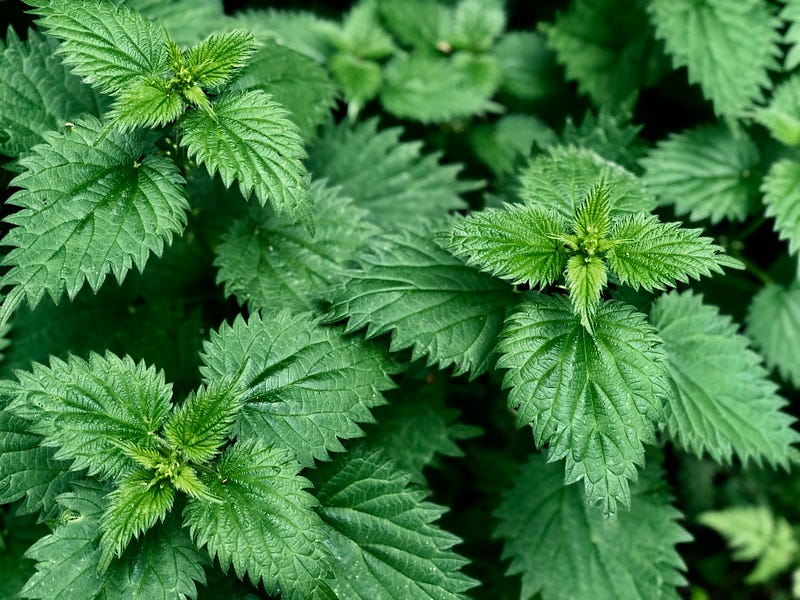
When we moved in, we inherited the dense tangle of thorny nettles at the bottom of the garden. Last year, a whole jug of weedkiller succeeded only in turning some of the leaves brown and curled, while new ones burst almost immediately from irritating buds. But not even nettles grow in the winter.
On the first day without rain, we hacked them down, trampling the woody stalks before ripping them up. Now, it’s time for the roots.
Nettles are tough customers. They sting, and they outgrow your efforts to control them. The one saving grace when you’re trying to get rid of them is that their roots are quite shallow. You need only turn over a few inches of soil to uncover the yellow rhizomes and drag the delicate network up into the punishing sun.
We forget sometimes that not everyone is like us.
Not everyone wants the same things. It seems obvious that the long commutes and the eight-to-six schedule and the crushing housing costs are the opposite of life. A slow poison absorbed a little each day, spreading steadily through the organism, translocating along shattered shikimic pathways as the dose slowly builds. Talk to me one more time about the weather, I dare you. Once you’ve seen the rapture — the rats gathering flowers under the statue of a renamed goddess, the slow work of stars that draws green life from black rock — how could you be content with anything else?
But not everyone feels that way. Poor soil for nettles is good for peas. Some have deeper roots than others. We blew into this town a year ago and will blow out just as easily, shaking its dust from our feet the moment a better option comes along.
Some people live their whole lives under these familiar mountains. Some people believe that they have been here forever, links in an unbroken chain of death and birth that reaches all the way back to the creation of the world.
That would never work for us. For us, the most bewitching thing about the mountains is what lies behind them. Every road sings its possibilities under the hum of traffic. The screech of the train’s whistle in the night tells us that the wide world is lonely without us.
We’ll never reach the end of the road, of course. The vanishing point where the steel rails forever converge. We don’t want to. The glory is in the journey, the endless quest, the man that runs his race, and even as he bends his head to receive his medal, is already thinking of the next wild dash.
So we keep moving on. We keep finding new places to make our hearts hum, and then leaving them for somewhere better. And every time a place starts to feel like home, we know it’s time to leave.
Even plants have teeth.
Nettles sting by tiny hair-like structures that grow on their leaves and stems. The hairs, called trichomes, inject venom with a complex composition. As well as histamines and serotonin, the cocktail contains formic acid, the same venom used by ants and wasps and other stinging insects.
An organism will protect itself in any way it can. The sting of the nettle evolved after grazing animals had emerged on the earth. The venom, of course, is intended to keep the plant from being eaten.
And the trichomes are made to break. When touched, these tiny structures shatter, creating a sharp point that can pierce skin. The trichomes are made of silica, like sand, like glass.
We hate what hurts us. But nettles have a thousand uses, from food to medicine to clothing. And while we rarely think of them as being beautiful, they grow and flower just like any of the plants we prize. Maybe we’re just looking at it wrong. Under those broad heart-shaped leaves, insects crawl through an inverted forest of tinkling glass.
It’s Spring.
And Spring isn’t that warm. But digging is warm work, and soon, thin rivers of sweat wind under our collar. An ache in the back. A tickle in the throat. At least the nettle patch is receding, the rich soil ransacked and overturned as we prize out the loose roots.
When summer comes, the nettles scramble over one another to reach the sun. Their barbed stems and the poison they carry ought to keep any animal from feeding on them. But when the nettles flower, a cloud of papery white wings flutters around them. Butterflies feed on these unwanted plants until the nectar makes them drunk and happy. They lay their eggs among the thorns and barbs.
When the caterpillars hatch out, they feed on the leaves, protected from predation by the poison the plants carry. Even weeds with shallow roots have their place. Ugly nettles can be a nursery for beautiful things.
The nettle patch was no more than half overturned when we set our shovels aside. Even the prickly and the venomous deserve their place in the sun.