
What time is it on the moon? Not yet determined
The general theory of relativity and big politics make it difficult to answer this seemingly trivial question. And without it, the Moon will find itself at the center of great confusion.
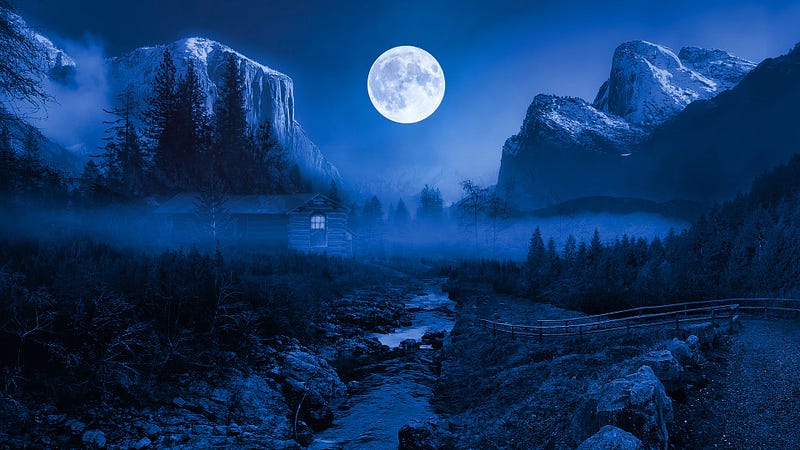
Recently, NASA introduced the world to the three astronauts and one female astronaut who will embark on the first human journey to the Moon in more than half a century in 2024. When Christina Hammock Koch reaches its orbit in the near future and asks her colleagues aboard “What time is it?” what will she hear in response? No one knows. Staffs of people at ESA, NASA and other space agencies are pondering this question.
If a clock, where placed?
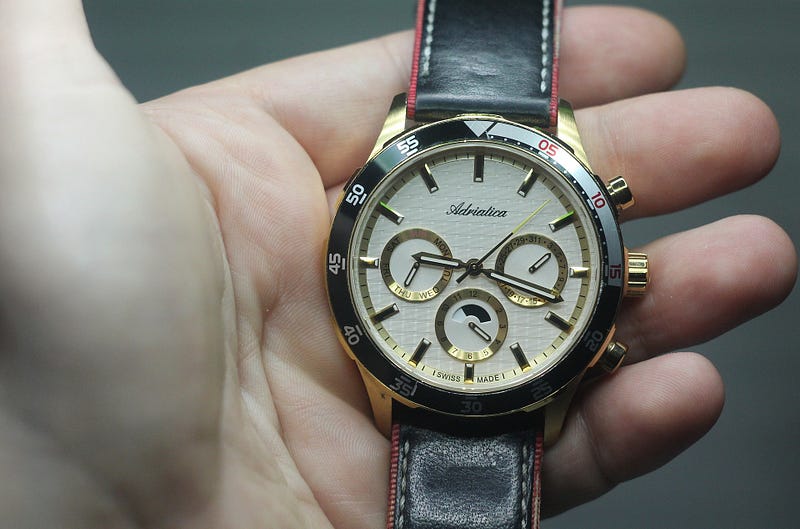
The simplest hint could be given by Albert Einstein, conceding that time is relative and dependent on our reference point. And he would be right. So, in practice, all we need to do is collectively establish a reference point and a unit of time. On Earth, for example, we measure time against atomic clocks, which determine the interval based on the vibrational frequency of the cesium atom.
LEARN MORE
The question of time is crucial for satellite navigation, for example. It is based on ultra-precise time measurement on satellites, which transmit a signal in the form of a radio wave. Knowing exactly its speed (because it is the speed of light, the most fundamental constant in the Universe), based on the time it took for the wave to reach the receiver, it is possible to determine the location with sub-meter accuracy.
So atomic clocks on the moon and the matter is settled? Not quite. For one thing, time passes a tad slower on the Moon than on Earth. Einstein’s general theory of relativity assumes — and numerous experiments confirm — that time near an object of greater mass, flows slightly faster than near a lighter object. We’re not talking about differences on a level like in the movie “Interstellar,” when the characters lose a dozen Earth years for an hour spent on a planet near a black hole. On the Moon, time passes more slowly by 56 microseconds per day, meaning that after a year on the Moon, we will be 0.02 seconds younger than if we spent that time on Earth. For us, this is an imperceptible difference, but from the perspective of navigation and coordination with Earth of the logistical aspects of lunar exploration, it is already considerable.
If time zone, whose time zone?
Well, okay, let’s use Earth time then. Just which one? From a practical point of view, it would be easiest to coordinate work and rest times with Earth time. However, if many countries build their lunar bases, it’s hard to imagine them working together when those even located a few kilometers from each other use time zones that are 12 hours different (and that’s the difference between the time in China and the US East Coast). Those who contact California and East Asia remotely at the same time know the pains of setting a joint meeting date.
We could agree on one specific time zone. But then a simple conversation about the hour suddenly turns political. Because attempts to impose a lunar time zone compatible with, for example, the American one, can be perceived as colonial inclinations. And, after all, we don’t want a space conflict even before the conquest of the solar system has begun in earnest.
What is left for us? Agree, for example, to a lunar day analogous to Earth’s? Only that one lunar day would last 29.5 Earth days, because that’s how long it takes the Moon to make a full rotation around its axis. And this solution is completely impractical from the perspective of human biological adaptation to a 24-hour diurnal rhythm.
If satellites, then in what orbit?
The consensus is still quite far away, so let’s deal with practical issues. Navigation and timekeeping on the Moon requires a complex system of satellites in its orbit and atomic clocks on the surface. All this should be in place before humans take up permanent residence on the Silver Globe. ESA is working on this with its Moonlight project and NASA with its LunaNet program. Pragmatism demands that satellites deliver precise information to the most densely populated places. GPS satellites travel in circular orbits with a moderate inclination relative to the equator, which means that the closer they get to the polar regions, the worse GPS accuracy becomes. This is a problem, since the first plans for lunar expansion involve settling precisely in the polar areas, where there are frozen supplies of a priceless resource — water.
The aforementioned problems over time are serious, but solvable. However, there are also some that we will have to live with. Suppose a romantically inclined partner decides to surprise his beloved with a virtual candlelight dinner: he gazing at the moon, where she is now sitting down to her freeze-dried portion of astronaut food. When he asks what time it is, what will her answer be? Even if, happily for them, the hour is exactly the same, the delay in conversation will always be at least a second. The light-speed barrier will not be jumped.
Cool that you made it to the end of this article. I will be very pleased if you appreciate the effort of creating it and leave some claps here, or maybe even start following me. It would be nice if you also left a tip! Thank you!