
What the Gospel of Thomas Has to Say about the Parable of the Talents
When interpretations collide

My last two articles dealt with the Parable of The Talents (or Minas). The first article examined the Parable of The Talents, as found in Matthew 25:14–30, and its parallel, the Parable of The Minas, as seen in Luke 19:12–27, and explored them from a somewhat in-depth perspective.
The second article focused on discovering what secret meaning these parables might have been concealing.
We now come to the current article, which examines what the Gospel of Thomas has to offer on this topic.
When I began to focus on this parable I first searched through Thomas, looking for any connection with this parable in parallel, and the only thing I found was a single saying.
Saying 41: More and Less
Jesus said, “Whoever has something in hand will be given more, but whoever doesn’t have anything will lose even what little they do have.”
Through the use of this saying, I discovered how it bound the Parable of the Talents with the more famous Parable of the Sower, which led to the discovery of the hidden meaning of the Parable of the Minas.
Still, all of that could be done without the saying from Thomas pointing the way. Thomas didn’t seem to add that much to the analysis, and the article was long enough anyway, so I didn't mention the saying from the Gospel of Thomas.
Also, there was the issue of how I had stressed in an earlier article that Thomas often used two consecutive sayings to better conceal the messages it contained. The message conveyed by the next saying just seemed too mundane and general to have much value.
However, now that I have had the opportunity to consider the solution to the parable in-depth, I’ve decided that the consecutive saying is more relevant than my initial assessment assumed.
Saying 42: Passing By
Jesus said, “Become passersby.”
The meaning only becomes apparent when the parable is solved. The first and second servants have been taking their minas from the other servants (who then disappear), so the best option is to become a bypasser. “Don’t mind me, just passing by.”
See, here is the thing. Nothing keeps the servant from running away with one mina, which is 100 denarii. So the servant in Luke is good to go.
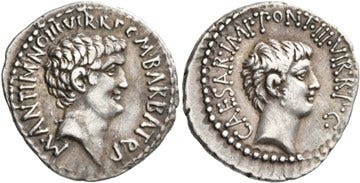

On the other hand, escaping with a talent, which is equal to 80 pounds of silver (36 kilograms), is somewhat riskier.
That was when I noticed that there might be another relevant saying available in Thomas.
Saying 109: The Parable of the Hidden Treasure
Jesus said, “The kingdom can be compared to someone who had a treasure [hidden] in their field. [They] didn’t know about it. After they died, they left it to their son. The son didn’t know it either. He took the field and sold it.
“The buyer plowed the field, [found] the treasure, and began to loan money at interest to whomever they wanted.”
The servant in Matthew has already buried the talent he received.
16 The man who had received the five talents went at once and put his money to work and gained five more. 17 So also, the one with the two talents gained two more. 18 But the man who had received the one talent went off, dug a hole in the ground and hid his master’s money. (Mat 25:16–18 NIV)
His master has already demonstrated how little faith he has by how little wealth the third servant has been given relative to the first two.
Then there is the consecutive saying to saying 109:
Saying 110: Riches and Renunciation (2)
Jesus said, “Whoever has found the world and become rich should renounce the world.”
Again, a very general and mundane saying. However, when paired with:
Saying 109: The Parable of the Hidden Treasure
Jesus said, “The kingdom can be compared to someone who had a treasure [hidden] in their field. [They] didn’t know about it. After they died, they left it to their son. The son didn’t know it either. He took the field and sold it. “The buyer plowed the field, [found] the treasure, and began to loan money at interest to whomever they wanted.”
Those two sayings, combined with the servant who buried his master’s talent out of fear that the other more favored servants would somehow swindle him out of it. And what was his reward?
30 And throw that worthless servant outside, into the darkness, where there will be weeping and gnashing of teeth.’ (Mat 25:30 NIV)
Suppose that that third servant, the one who buried the talent he had received, suppose that in an alternate timeline he renounced the wealth he had buried somewhere on his master’s land. He then became a passer-by and left the treasure hidden there.
And he waited. He raised a family and told his son of the treasure hidden on his former master’s land. And they waited. The old master died and left the land to his son, who eventually sold it to the son of the third servant. This son plowed the field, found the treasure, and began to loan money at interest to whomever he wanted.
Everything works out for the best, except that these stories are not supposed to be understood in isolation. The master who goes on a journey is never just a master. Instead, he has the identity of a character in the larger meta-drama being played out in a virtual role-playing contest between Jesus and the scribes.
So instead, they buried that small portion with which they had been entrusted. They buried it deep in the sands of the desert, and they also buried it deep within the texts that the other two servants accepted as the Word of God.
In the usual interpretation, the master is Christ. The journey he has gone on is his ascension to Heaven, and his return will, obviously, be when Christ returns. He entrusts his followers with various gifts to use to make a spiritual profit for him when he returns.
The two servants are likened to those who used their gifts to earn more spirits for Christ, while the servant who hid his talent is an unfaithful believer, who Christ will punish just as soon as he returns.
This interpretation is challenged by even the slightest form of critical investigation. The master who went away seems to have been drawn from the events of Herod Archelaus’s life as recorded by Josephus, which would seem to challenge the identification of the master with Christ. However, that is not a reason to dig further but rather serves as an excuse for covering up any evidence that any digging had ever been done.
Once the hidden meaning is revealed, our focus shifts from the identity of the master to that of these two servants. In Luke, the parable mentions ten original servants. These were then widdled down to three, with one servant gathering treasure from five other servants, another gathering the treasure from two other servants, and the last guarding the single portion entrusted to him.
Suppose we were to assign to the authors of Thomas and the synoptic Gospels the powers of Hari Sheldon and his science of psychohistory from Isaac Asimov’s Foundation series. In that case, it is possible that they foresaw a potential future where something like Catholicism was the first servant and Protestantism the second.
If not, we can interpret one servant as Paul and the other as Peter.
The main point is that whatever treasure the apostles of Christ managed to secure was then gathered into two groups. There was also a third group that still held the original portion they had been entrusted with. This third group did not want to be swallowed up by either of the other two groups.
So instead, they buried that small portion with which they had been entrusted. They buried it deep in the sands of the desert, and they also buried it deep within the texts that the other two servants accepted as the Word of God.
We don’t realize that we are victims of misdirection because we have never considered the possibility that our attention is being directed around things we are not supposed to see.
Let’s look at how the authors of the synoptic Gospels managed to keep people from noticing that the servant in Luke has eleven minas and not ten.
First, there is the parallel effect and the tendency to conflate the two parables in memory. Matthew has:
16 The man who had received the five talents went at once and put his money to work and gained five more. 17 So also, the one with the two talents gained two more. 18 But the man who had received the one talent went off, dug a hole in the ground and hid his master’s money. (Mat 25:16–18 NIV)
The first servant clearly has ten. The second has four, but it’s the third servant that we focus on.
20 The man who had received the five talents brought the other five. ‘Master,’ he said, ‘you entrusted me with five talents. See, I have gained five more.’ (5+5=10) 21 “His master replied, ‘Well done, good and faithful servant! You have been faithful with a few things; I will put you in charge of many things. Come and share your master’s happiness!’ 22 “The man with the two talents also came. ‘Master,’ he said, ‘you entrusted me with two talents; see, I have gained two more.’ (2+2=4) 23 “His master replied, ‘Well done, good and faithful servant! You have been faithful with a few things; I will put you in charge of many things. Come and share your master’s happiness!’ (Mat 25:20–23 NIV)
There is a rhythm and a pleasant repetition with the description of the first two servants, especially when it is ruined by that horrible third servant.
Compare this version to its parallel in Luke, where the misdirection occurs.
15 “He was made king, however, and returned home. Then he sent for the servants to whom he had given the money, in order to find out what they had gained with it. 16 “The first one came and said, ‘Sir, your mina has earned ten more.’ (1+10=11) 17 “ ‘Well done, my good servant!’ his master replied. ‘Because you have been trustworthy in a very small matter, take charge of ten cities.’ 18 “The second came and said, ‘Sir, your mina has earned five more.’ (1+5=6) 19 “His master answered, ‘You take charge of five cities.’ (Luk 19:15–19 NIV)
Notice that in Luke, after the first servant claims that the master’s mina has earned ten more, that servant is gifted ten cities. The same with the second servant, who is given charge of five cities after adding five minas to the original mina he had received.
The attention of the reader is redirected from the number of minas to the number of cities that are being rewarded. The first servant has ten cities, and then the third servant’s mina is given to the first servant even though he already has ten.
Ten of what? Cities or minas?
It's all the same, ten of this or ten of that. What does it matter? The numbers are not what the story is about.
23 Why then didn’t you put my money on deposit, so that when I came back, I could have collected it with interest?’ 24 “Then he said to those standing by, ‘Take his mina away from him and give it to the one who has ten minas.’ 25 “ ‘Sir,’ they said, ‘he already has ten!’ 26 “He replied, ‘I tell you that to everyone who has, more will be given, but as for the one who has nothing, even what he has will be taken away. (Luk 19:23–26 NIV)
Then there is that verse in bold above. It states directly that the servant already has ten. We don’t have any reason to doubt the Bible. We don’t realize that we are victims of misdirection because we have never considered the possibility that our attention is being directed around things we are not supposed to see.