
What Should You Do Before a Workout — Stretch or Warm Up?
The science behind warm ups, stretching, and athletic performance
After some time away, you’ve decided to get back into the gym, or maybe sign up for an athletic event you’ve put off. You begin thinking about and planning your routine. What and when to eat, the best way to stay hydrated, and so on.
What about stretching? Or — put differently — how do you warm up beforehand?
If you’ve ever run a charity event, half marathon or otherwise; preparation can look drastically different. You have people standing around socializing, others stretching, and some walking or running in place.
What should you do?
For those confused, recent studies have done little to provide clarity. Research — often within the same journals and publications — provides seemingly conflicting advice. Unless we know what to look for.
First, we should consider whether researchers are studying immediate athletic performance, long term performance, injury risk, fatigue or recovery.
Second, while studies can help guide or change habits, not everything needs to be validated through research. Personal experiments can confirm what works best for each individual (more on this later).
Lucky for you, I took a deep dive into the literature, cross referenced it with years of clinical practice, and followed up with a simple question: “What are elite athletes doing?”
What’s your goal?
Anyone who’s ever signed up for personal training has likely heard this question: “What are your health goals?”
Are you looking to go up a couple flights of stairs without losing your breath or run a full marathon? Similarly, when it comes to stretching or warming up, how or what to do is often dictated by the goal you’re looking to achieve.

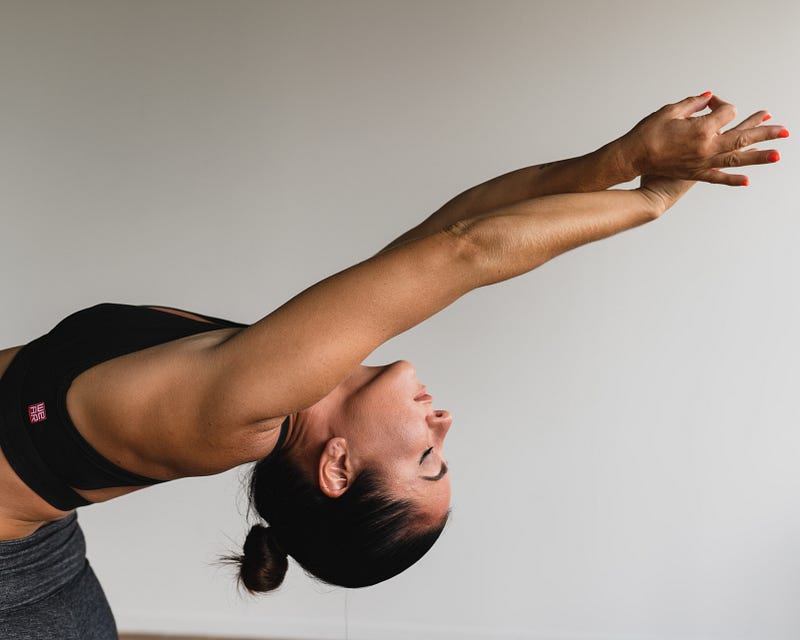
When the average person thinks of stretching, it involves trying to touch your toes, or bringing one heal towards the lower back (image above).
This method is called; static stretching. Static, for holding the body in a certain position for a specific time in an attempt to elongate muscles, joints, and associated fibers.
Stretching can also be dynamic, which involves movement. Think of a soccer player walking while performing high kicks, sprinters lunging back and forth, or martial artists rotating their arms in circles.
If you consider this a warm up, rather than stretching, therein lies the confusion. Warming up — for the most part — is dynamic stretching.
Variations of dynamic stretches can also be done with a partner (you’ve likely seen trainers do this with clients) whereby certain muscles are contracted, relaxed and stretched.
So, which method works?
This depends on WHY and WHEN you stretch.
By contrast, static stretching immediately before an athletic event may impair (explosive) ability. However, regular static stretching, long term, increases range of motion, which can decrease the likelihood for injury.
Static stretches are best performed after exercise. At that point, muscles are sufficiently warm (activity increases circulation), allowing you to lengthen fibers, increase range of motion and prepare for future (next day, week or month) workout or athletic event.
What does that mean for your gym workout, 5k or half marathon? When you show up — hydrated and energized — rather than static stretches, perform some walking lunges (see image below), a few squat jumps, jog in place, or walk with long strides.

You may not have a full time trainer or coach, but consider the process and preparation of elite athletes; warming up before competition through a series of dynamic stretches. Then — after or between games — while the cameras are off, they stretch statically to increase range of motion for future performance.
You can also conduct a personal experiment. Perform some dynamic stretches prior to a workout, static stretches at the conclusion, and measure your results. In subsequent sessions, try the opposite approach, and evaluate both methods. Rather than obsessing over studies, we can experiment, measure the results, and personally conclude what works best for us.
We don’t need researchers telling us, exercise improves happiness, you can feel it for yourself.
If you require hard evidence however, the science says; first, warm up (dynamic stretch), then exercise, and after exercising do some static stretching.
Works for me.
If you enjoyed this article, and would like to have unrestricted access to every story on Medium, subscribe HERE, a portion of your subscription goes to pay writers, like me, and keeps the site completely ad free!


