
What No One Tells You About Facebook Groups
Conducted a simple test and was surprised by the results

Some writers like Facebook groups and others hate them with a passion. Personally, I like them, kind of. Let me explain.
This past weekend, I share an article one on Saturday and then one on Sunday. The articles were dropped in the same group. The only difference was I added a sentence to one day that I didn’t in the other. The results will astound you.
On Saturday, I left one comment that left me with 14 responses. Nine simple words. On Sunday, I left my link with no comment that generated zero responses. If you don’t know, I like numbers. To me, these numbers tell a story.
The articles were on a similar topic, writing. The Saturday article was “How to Train Like a Ninja to Write Breathtaking Masterpieces”. The Sunday article was “5 YouTube Secrets to Make You a Better Writer”. Each article had good information for writers.
Do you know what the big difference was between the two articles? The only difference between the posts were I asked writers to leave their link for me to read. That’s it. Even though there was an extra day between the article, the responses were still similar for both. The image was taken on Tuesday, October 20, 2020, two and three days after these articles were published.
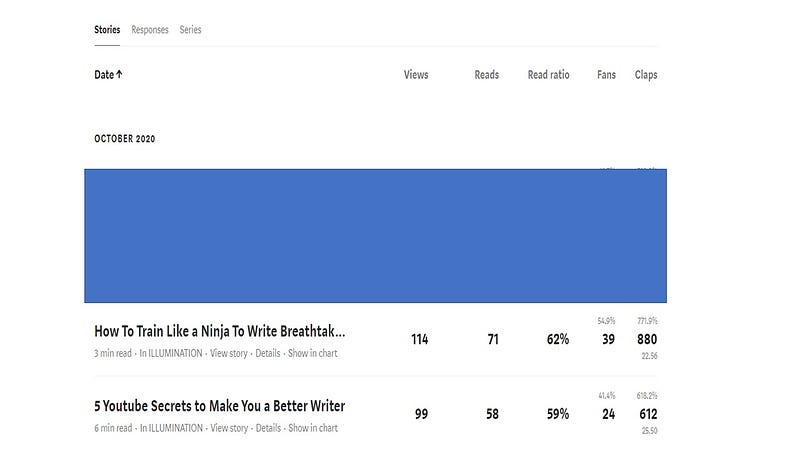
As for the amount made for each article, there wasn’t a big difference. The article “How to Train Like a Ninja to Write Breathtaking Masterpieces” earned $1.37 and “5 YouTube Secrets to Make you a Better Writer” earned $1.08. In terms of pay, there wasn’t a big difference. They are both earning similar amounts. Over time, the amount earned from the articles may change.
As for the read time, there wasn’t any significant difference. Though the How to “Train Like a Ninja to Write Breathtaking Masterpieces” received a few more claps but that doesn’t mean much except to make you feel better.
The most important information is in the read time. How much longer are my readers staying plugged into my article. The goal is the longer time they’re on the article, the better.
Does it really matter if you ask others to leave comments? Maybe. Most likely I’ll continue to run similar tests to see if there is a difference or not. The real answer to this is still to be determined.
Do you drop your article in Facebook groups?
Tom Handy is a top writer on Medium, former Quora writer, and father of two kids. He retired from the Army and sits on several non-profit boards. You can find him on Twitter @tomhandy1 and his publication Life is Like a Game.


