
What Makes Me Healthier Might Make You Sick
Why gut health has changed our entire understanding of what health means
It wasn’t until 2001 that the word ‘microbiome’ was even invented. Since then, countless studies have been conducted in an effort to better understand what’s going on inside of our guts.
Living throughout our bodies, but concentrated in our small intestines; bacteria are pulling all the strings.
Your ability to digest dairy or absorb nutrients from meat may be largely affected by which bacteria are living inside of you.
Your bacteria, my bacteria.
According to scientists, our bodies are absolutely teaming with bacteria. They’re so prevalent, there are functions constantly happening throughout our body that wouldn’t be happening without them.
According to some sources, cells containing our own DNA are outnumbered by bacteria cells by up to 10 times. Mathematically, that means that we are more them than we are ourselves.
Because of this, we have to rethink what we think we know about health.
Studies have shown that because there are so many different strains of bacteria living inside of us, there may be absolutely no overlap between the strains living in me, and the strains living in you.
My bacteria may be experts at digesting bread, moving it through my intestines and processing it for disposal.
Where I personally may not be able to do it, my bacteria could be experts at it.
Your bacteria may be terrible at it. You could have no bacteria that has any idea of what to do with bread, so bread sits in your intestines like a rock. It could cause you constipation, yet our bodies could be very alike. Regardless of how alike we are, if our bacteria is different, we’ll get very different results.
What does this mean for health?
It means that there’s no blanket understanding of health anymore.
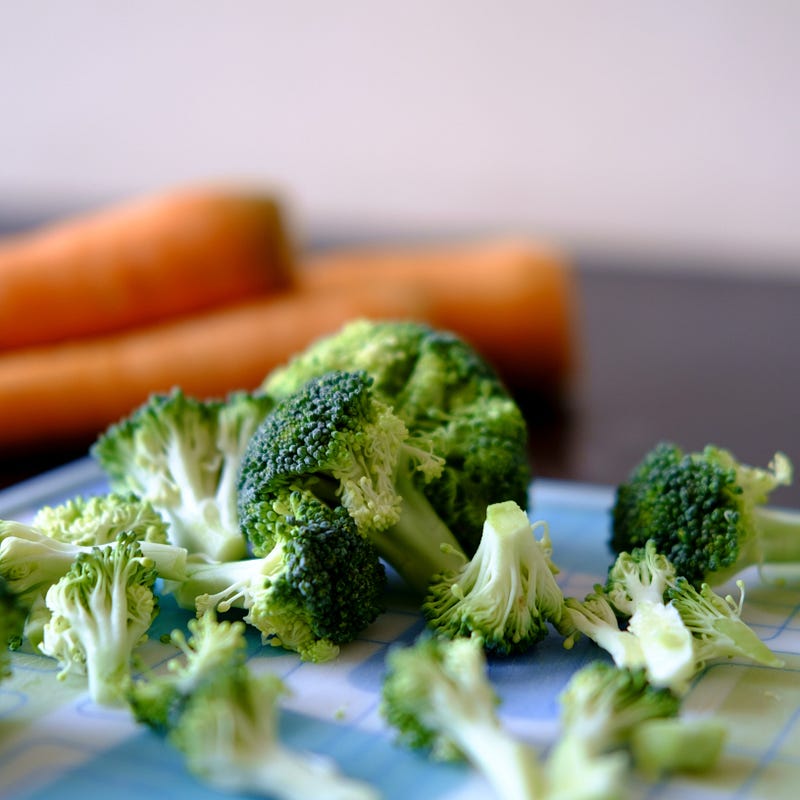
You can tell me that a piece of broccoli has 2.5 grams of protein and 6 carbs, but you have no idea whether my bacteria can even process broccoli.
If my microbiome is ill-equipped to deal with broccoli, I may eat it, pass it, and gain nothing.
It’s pretty scary not knowing whether eating the “right food” is actually having any effect without knowing for sure whether it’s the right food for me.
What can be done?
As we continue to conduct research and learn more, there are doctors popping up everywhere that claim to be able to test your microbiome.
Through testing your stool, they should be able to identify the species of bacteria living in your gut and match it up to known strains in the database.
Knowing what strains of bacteria are thriving inside you will go a long way in knowing what you should eat, and why you react to certain foods the way that you do.
Does coffee give you anxiety? That could be bacteria.
Does milk give you the runs? Possibly another strain of bacteria.
Besides doctors offices, there are also testing kits being sold online that advertise their proficiency in testing your microbiome. I’m somewhat skeptical of their accuracy though.

Transplanting stool
A lot of experiments are taking place to help scientists and doctors better understand the gut, including transplanting stool.
They’re discovering that if your stool is transplanted into my bowel, your bacteria will invade my gut. They’re using this technique to try and fight diseases and illnesses that stem from the gut and digestive system.
My bacteria might not be strong enough to fight a particular infection, where as yours may be strong and armed to the teeth.
This is an exciting field of science that could be the key to unlocking the mystery behind a host of illnesses we still don’t understand.
Being proactive
The best way you can help your gut day by day is introducing probiotic foods into your diet.
Food rich in probiotic bacteria is going to help populate your gut with bacteria that’s helpful and will aid digestion.
I personally love to start my day by adding a shot of apple cider vinegar into a tall glass of water. The water flushes out my colon, and the vinegar introduces bacteria that’s going to help with digestion throughout the day.
Studies haven’t proven the effectiveness of eating probiotic dense foods such as apple cider vinegar, but we do know it’s a lot better for us than an alternative such as sugary soda.
We know that the vinegar is teaming with the bacteria, we just don’t know if they’re surviving once they arrive in the gut. Can they be killed by bacteria already living there? Might they be welcomed as friends? Or flushed as waste? We’re still quite early in the research process.
While we don’t yet know everything yet, we can still take concrete steps to help ourselves stay healthier. We can also try adding and removing things from our diet.
One at a time you could add and remove dairy, meat, grains, everything you’re use to eating. See whether you feel better or worse after a few days of having made the change. You could discover through experimentation what your bacteria responds well or poorly to.
It’s about staying engaged and thinking about our diet, rather than going into autopilot and eating junk. That’s how we can stay on track and stay on the road to good health.


