
The Future of Health May be Ghost Sugar
Eating healthy bacteria that itself eats sugar
For a while now I’ve been experimenting with wild fermentation. This a process that involves leaving fruits and vegetables in the right environment to ferment on their own without any extra assistance (such as added yeast).
Often these fruits and vegetables already have enough bacteria on their skins and inside their flesh to begin the fermentation process on their own. Leaving them in a dark environment, cut off from oxygen is almost enough. But the bacteria needs food, so depending on the desired result we leave them to ferment with either salt or sugar.
When making a sauerkraut, you leave cabbage alone with approximately 2% of its weight in added salt. The bacteria that naturally lives in the cabbage will eat the salt and multiple until they’ve overrun the cabbage and turned it sour.
This creates a delicious sauerkraut that has become overrun with beneficial bacteria that will inhabit our gut once ingested.
Scientists are doing more and more research into the effects of beneficial bacteria living in our guts. What we know so far is that they absolutely do have an effect on our overall health, and that they can force out bad bacteria. Scientists have even found that bacteria may be communicating directly with our brain. Our mood, weight and general health are all affected by the bacteria living in our guts.
It’s theorised that tipping the scale towards positive bacteria in our gut biome could play a small part in bettering our lives and health.
The three links above will take you to more reading on the subject. One of which (the middle link) will take you to a relevent scientific study.

The effect of sugar
While some ferments need salt, others need sugar.
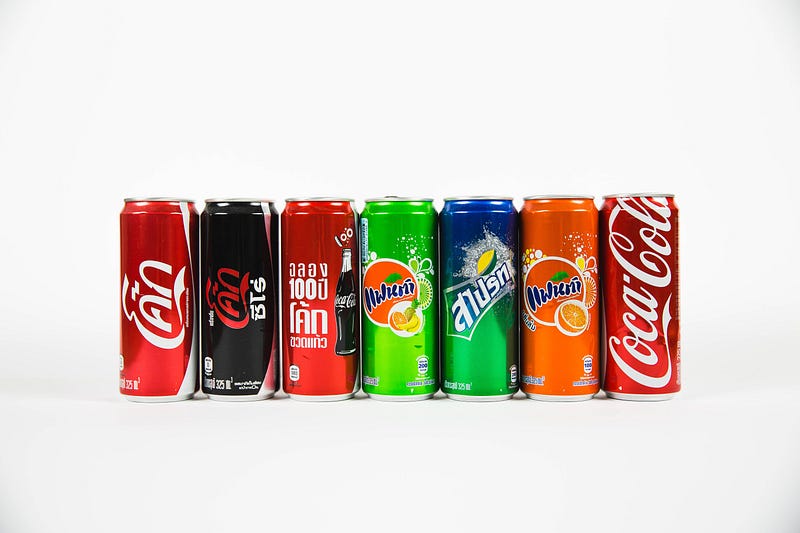
I’m someone that use to have a crippling addiction to Coca-cola. Sugar in this form is disastrous to our gut health, stripping it of good bacteria, and encouraging the growth of negative strains that feed on sugar.
Bad bacteria that live in our guts and feed on sugar will grow larger as we supply it with what it needs. As it grows, its influence on our eating habits will grow with it. This will mean more cravings for the food you shouldn’t really be eating.
However, not all bacteria that eats sugar is bad; such as the probiotic bacteria that lives in the skin and flesh of ginger.
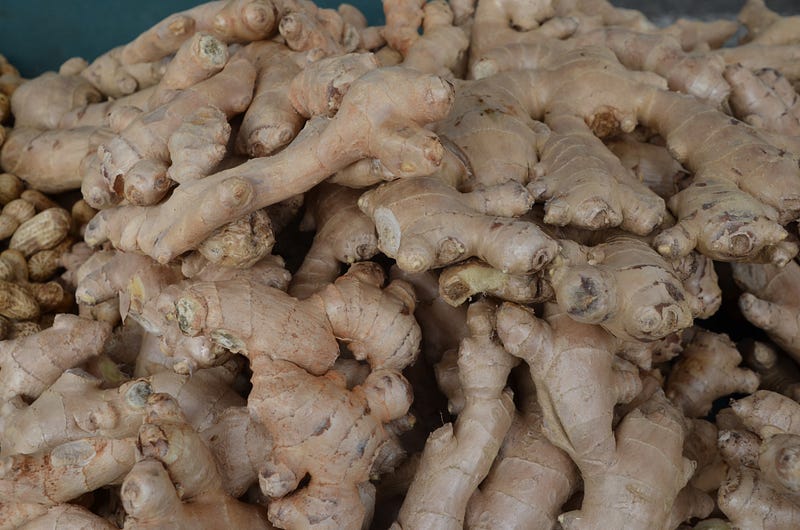
I’ve been fostering a ginger bug for some time now. A ginger bug is a jar of ginger, water and sugar that is left to ferment over time. Once the ginger bug has been left long enough and fed with enough ginger and sugar, it becomes loaded with probiotic bacteria.
Once that has happened it can be made into a probiotic ginger beer (a much better alternative to traditional soda).
Ghost Sugar
Ginger beer is fermented with sugar, which means that the bacteria living inside will eat the sugar and multiply.
Disclaimer: While the bacteria in wild fermented ginger beer will eat most of the sugar you add, it will not eat 100%. This means that if you’re someone that’s living sugar-free, this ferment may not be for you.
If, like me, you’re trying to reduce your sugar intake and head in a more positive direction, this may indeed be for you.
Even though you’ve added sugar to the ginger beer, you’re not eating all the sugar you added. Most of the sugar you’ve added has been eaten by something else, and you’re going to eat the something else.
The sugar has been consumed by bacteria, it’s gone now. (It’s a ghost). In turn you will eat the bacteria.
It can feel so disgusting knowing that you’re intentionally eating bacteria, but it’s useful to know that you’re always eating bacteria whether you like it or not.
We’re all covered in bacteria, and most of it is helping us. We couldn’t digest food or do most of what our bodies need to do without them. Everything we eat is crawling with bacteria, our job now is to recognise that and finally have some say over which bacteria we want and which we want to evict.
We already know that ginger is great for us, and partly it’s because of the bacteria it fosters. Fermenting the ginger just allows that bacteria to multiple before we eat it, so that we’re eating a lot more of it. We’re adding value to each piece of ginger.
That bacteria eats sugar and becomes strong, then we eat the bacteria. That probiotic bacteria then enters the gut biome and will hopefully make a positive difference.
Ginger Bug
How to make your own ginger bug is better described in the story below, just in case you’d like to make your own -
My ginger bug was made a month ago, so I’ve decided that it’s time to give my bug the ol’ shake and sniff test.
Lately, I’ve been holding the jar closed with rubber bands. This is because it has been so active that even closing the jar properly for a few hours might have resulted in an explosion.
Why?
As bacteria grows inside a fermentation jar, it emits more carbon dioxide. The bacteria keeps eating the sugar you’ve provided, and keeps emitting gas.
If your jar remains closed for too long, it may become too full of gas and may explode.
How do I stop this??
- Manually release the gas every day or so
- Buy an automatic burper (a bottle lid that releases gasses on its own)
- Bind the lid down with rubber bands (as I have)
- Put it in the fridge, all bacteria action will stop. Be warned, if you take it out and leave it for too long, fermentation will start back up again.
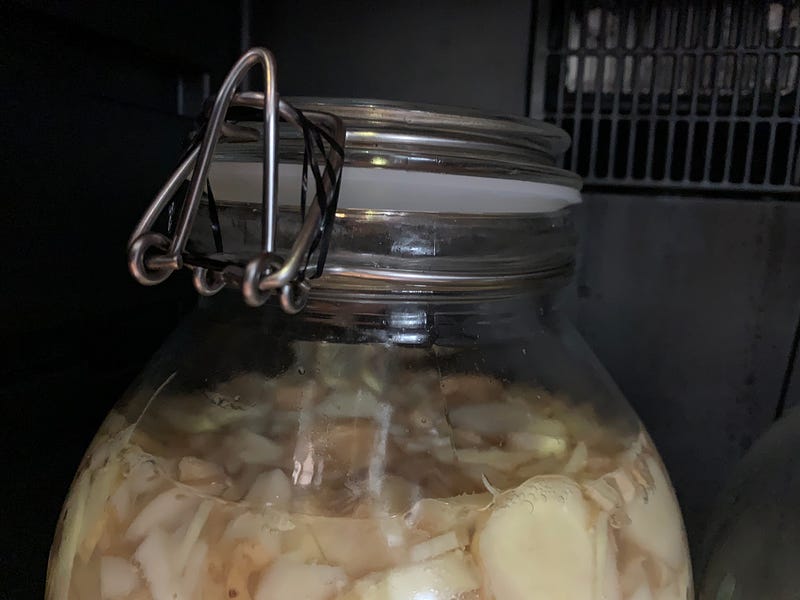
The rubber bands still keep it somewhat sealed, but allow it to self-burp, which just means that gasses emitted by the bacteria can push past the seal and escape the jar, rather than put stress on the glass.
The Natural Life of Bacteria
So it’s been a month and I’ve just smelt the jar. It was only then that I remembered the other byproduct of fermenting with sugar.
One being carbon dioxide (as we’ve talked about)… but there’s another…
Yep…
It’s alcohol..
I forgot about that…
The bug has gone to college and become full blown alcoholic. That’s because as it eats sugar, the bacteria emits alcohol while it’s emitting carbon dioxide..
That’s actually why a very overripe banana is actually a little bit alcoholic, that’s right! Crazy facts of nature. Ever see a drunk monkey? They’re out there.
Is there a way I could have stopped this?
Yes, I could have replaced the ginger inside the jar after a couple weeks of fermentation.
Is there a way I can correct this?
Yes, I can add small amounts of this bug into new jars, make fresh bugs, then the alcohol will be enveloped in new species of bacteria and be watered down.
Although there’s a way to reverse this and start over, I decided not to. I’m actually really excited about how this bug is developing.
Why Not Be Different?
The big difference between the average person and a big ginger beer manufacturer is that you have all the time in the world to tinker and play.
A commercial manufacturer has to hit targets and sell in mass volume. They don’t have the time or budget to tinker around with the recipe, and they especially don’t have the luxury of accidentally messing up and making a bad batch.
They worked out what sold years ago, and they’re going to keep selling the same thing until the company dies or the world ends.
We aren’t confined by this kind of pressure, so why would we hold ourselves to the same rules?
I’m excited by the aging bug sitting in my fermentation zone, and I’m so curious about the new flavours that are developing inside.
Let’s Make Probiotic and Slightly Alcoholic Ginger Beer
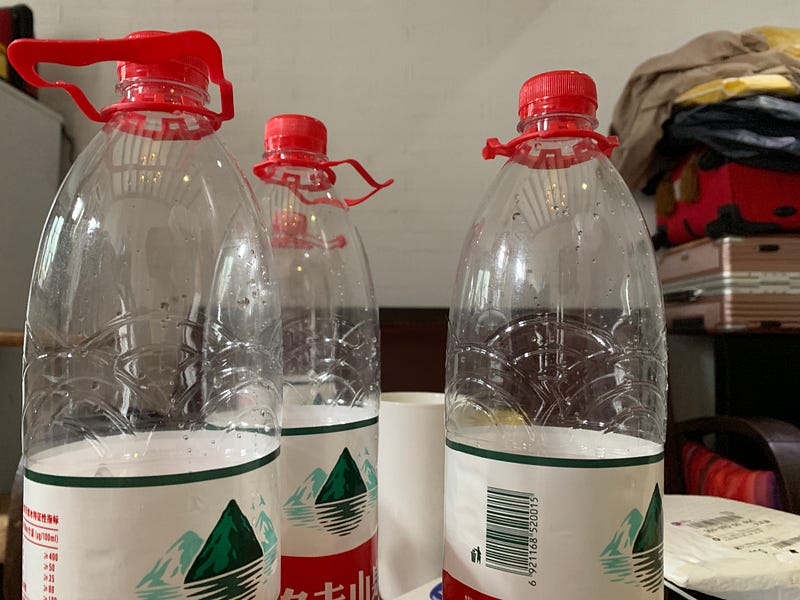
Step 1: Water Bottles
I don’t like making ginger beer in glass bottles anymore. Yes, the wisdom of fermentation is to avoid plastic because over time the chemicals in the plastic will leak into the ferment. (This effects ferments that will be taking place over several weeks or more).
This is true, but our ginger beer bottles will only be fermenting for literally 2–3 days. This isn’t enough time for chemical-leakage.
Plus, a glass bottle exploded on a friend of mine, and he’s now pulling shards of glass out from inside his wall…
I rent my place, so I’m not going to let that happen.
Also I don’t want to die.
Which bottles?
I buy normal 1.5 litre water bottles from the local store. I then empty those bottles into the pot, then fill them back up later with the finished beer. How’s that for recycling?
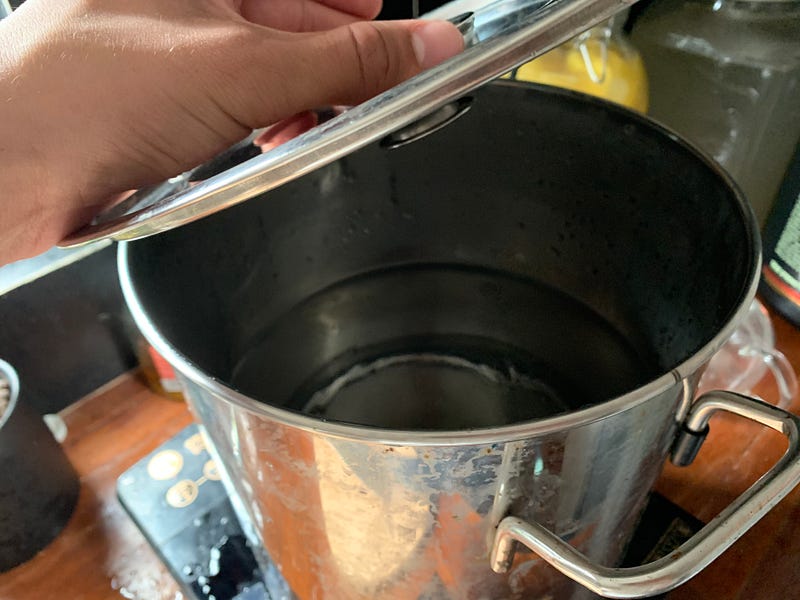
Step 2: Boil That Water
Bring your water to the boil. Once it’s boiling, turn it off and add the ingredients.
P.S I used 4 bottles of water, each containing 1.5 litres.. It’s math time!!
Today I’ll be adding to the water..
400 grams of washed ginger, cut into small pieces.
1.5 cups of sugar
3 candied lemons cut in half.
I candied the lemons myself and am dying to know how they’ll impact the taste of the beer.
You can too! The below story will tell you how -
If you only have regular lemons, simply cut them in half and throw them in.
If you’re using candied lemons that have been fermented, you may be worried about killing the bacteria that’s been fermenting with the lemons.
To those people I say..
Let them die..
You don’t really want to be adding bacteria species that will be competing with your bug.
So throw the lemons into boiled water and let the little suckers die. The lemons are being added for flavour, not for bacteria.
Your ginger bug should be the king of the mix, and that’s why it’s not going to be added until the mixture has cooled to a reasonable temperature that will encourage life and bacteria growth.
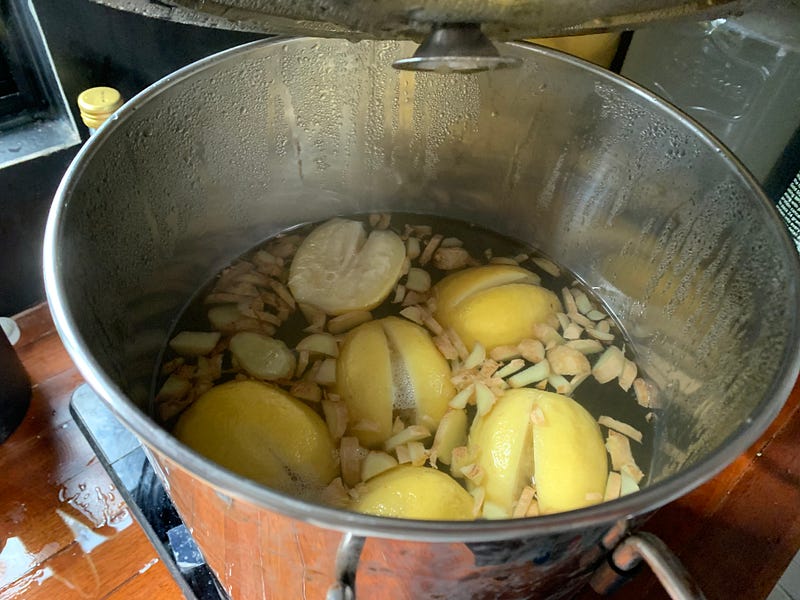
Step 3: Stir and Walk Away
By now you should have brought your water to the boil, then turned it off.
You should have then added all your ingredients (except your ginger bug). After that, give them a really good stir with a wooden spoon.
Once that’s done, cover the mixture and leave it alone.
This may be hard, but you’ll be waiting a while, either all day or all night, depending on when you made it.
The water must cool down to 30–35 degrees Celsius. This waiting is rough, but it’s so important.
Some people say that the mixture can be hotter than that. However in my experience, if it’s any hotter than 35 degrees, my hard-won bacteria dies and the beer doesn’t carbonate.
Let it get cool enough before adding the ginger bug, trust me, you want the bacteria to survive.
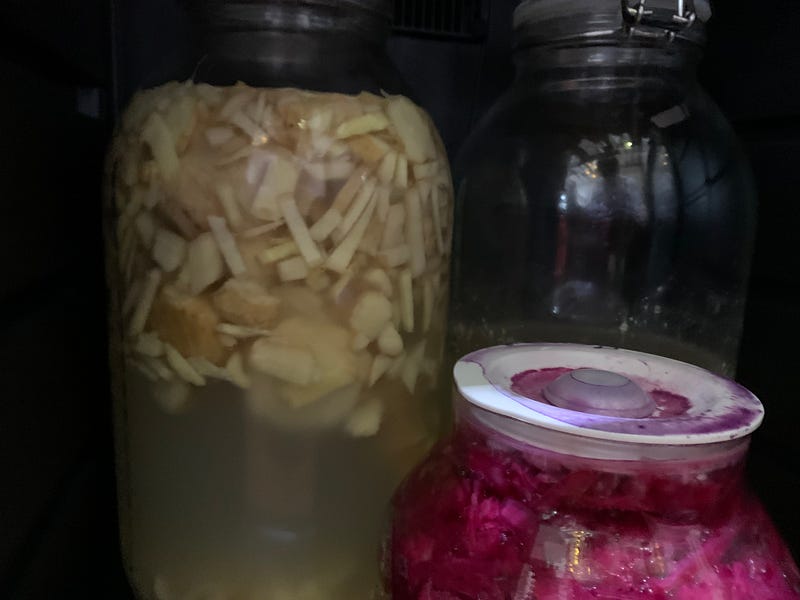
Step 4: Add that bug
Once the mixture is cool enough, pour it through a strainer into the same bottles you bought the water in, leaving enough room for the bug and for head-space.
Head-space: Air left in the top of the bottle for carbon dioxide to hang out in. Your beer will emit a lot of it while it completes secondary fermentation.
Once the mixture has been divided across your bottles, pour your bug into the bottles through the strainer.
About 3/4 of a cup of bug is enough for each bottle. Some say even 1/2 a cup is enough.
Cap those bottles and store them in a dark place for the next couple days.
Step 5: Squeeze Test
Squeeze the bottles near the top every morning and night. Once they feel rock-hard, they’re done.
They’re rock hard because of all the carbon dioxide that’s built up inside.
Put them in the fridge and they’ll stop fermenting automatically. Once they chill down, they’ll make an amazing beverage the next time you need something fizzy and delicious.
Bottoms up!


