
What I’ve Learned About Love From Non-monogamy
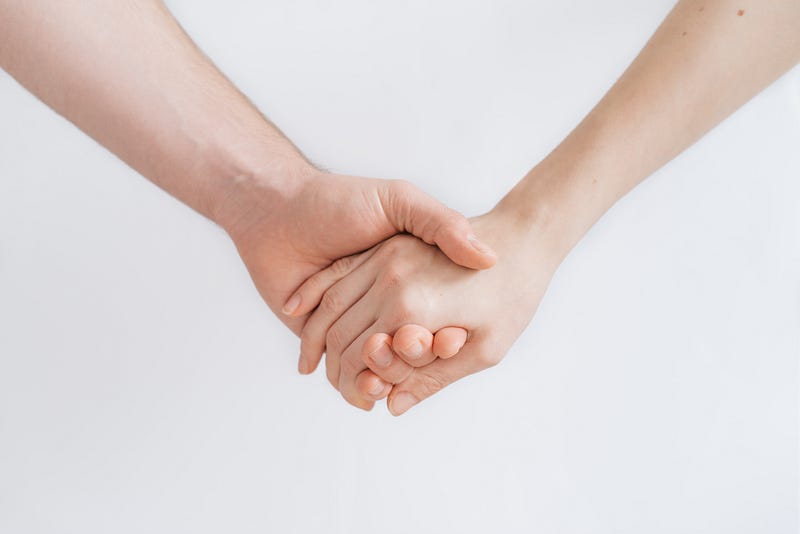
On Saturday night we went to a wedding. I’m particularly fond of this couple and was really happy to see them looking so happy together. The ceremony was pretty non-traditional in a lot of ways, but there was still some old-school messaging in there. I think the last time I went to a wedding I was in a really different place in my life, so it didn’t stand out for me in quite the same way that it did last Saturday. Don’t get me wrong; monogamy is a perfectly acceptable way to go about relationships but some of the “wedding language” gave me greater clarity about what I’ve come to believe in about love through no longer being monogamous.
For example, the couple promised to be each other’s “favorite person.” That one’s not so bad really, but I have two “favorite people.” Way back when, when James was still adjusting to the idea that I also loved someone else besides him he asked me, “Who do you love more?” It wasn’t a question I could really answer because it was a case of “apples and oranges.” I live with James. We share a mortgage and a child and a long history. My every day is built around our shared life. I love Nat in a completely different way, with different expectations but no less powerful feelings. To me, having to choose only one “favorite person” means looking at love as if it were a pie to be sliced up, and I just don’t believe that it is.
The officiant at the wedding also talked about how “two become one.” This was the one that really brought me up short. I think that is actually harmful and a terrible lie to encourage people to buy into that idea. I believe it’s one of the fundamental ways that we indoctrinate people into unhealthy ideas about relationships and commitment. Losing your self to someone else or to a relationship is not the way to have healthy love. We used to have two cats who were very good friends. One time we saw them walking together down our hill with their tails intertwined. They didn’t morph into one cat just because they cared about each other. They still retained their individuality and separate identities all the while choosing to walk side by side, close enough to be physically connected.
I used that exact visual when I told James several years ago that I didn’t want to be his wife anymore. This didn’t mean I wanted to get divorced or be less committed to each other. I just no longer wanted to do it with all the baggage that comes with that term and I wanted him to be freed up from his societally imposed baggage as a husband also. That’s why I most often refer to him now as my partner. I really just wanted to walk alongside by side, committed to our relationship and to our love, making our way together as parallels who keep choosing each other every day, not as the braid that was plaited for us when we stood up in a church and said, “I do.”
I’ve personally known several couples who did fine living together and then once they got married, the relationship deteriorated. They couldn’t get past either their own societally imprinted ideas or their partner’s, of what it meant to be a wife/husband and it destroyed the love. I’ve also known several couples who joyfully bought into traditional concepts of marriage and did fine. But the greater majority of couples I’ve seen who stay together and continue to love each other, feel the constraints of their roles and suffer because of them whether or not they are conscious of that being in play.
James had lunch the other day with some friends he’s known since elementary school. When I asked him how it was he said, “They are all so old. They talk like old men and they even move like old men. I think it’s because they are all prisoners of their lives.” “They aren’t vibrantly engaged with living in the way we are,” I quipped, but I think that’s really true. You don’t have to have other partners or other lovers to be vibrantly engaged with life, but it actually isn’t a bad way to force yourself to really take a look at what’s actually going on. Having multiple love interests in your life at one time gives you the opportunity to experience non-attachment based love. You can’t own all of these people in the way that some married couples feel they own each other. It’s a lot harder to be co-dependent when love and relationship extend to more than just one other person. Not every non-monogamous person goes about it in a self-reflective and self-aware manner, but it’s sure a lot easier to see the pitfalls of any relationship when you remove the constraints of “just us.”
Dismembering our old programming about love and commitment took a lot of intention and work. It also didn’t happen overnight and it wasn’t only about letting love be big enough to include more than just the two of us. There have been a couple of instances recently where someone was being unkind to me and James felt like he ought to come to my defense. He felt like that was his job. I had to tell him really firmly, “This is mine to navigate. If I want help, I’ll ask. You are even free to inquire if I need help, but otherwise, stay out of it.” And he has and he does, but he had to unlearn that impulse he thought was a part of his role as a husband. There are things I’ve had to unlearn too.
Our lives are comprised of my life and his life and they take place in very close alignment and proximity, but they are still two separate lives for two separate individuals. I think that is the best advice you can give someone starting out together, whether in intended monogamy or not, that you owe it to yourselves and to each other to not become absorbed in some myth of what togetherness should be. Learn who you each really are and what you actually want and let that keep being uncovered over time. Commit to walking along beside each other on this journey and to supporting each other in what you each find. I think that is the real secret to lasting love and perhaps also is the fountain of youth.
© Copyright, Elle Beau 2020 Elle Beau writes on Medium about sex, life, relationships, society, anthropology, spirituality, and love.


