
CULTURE | RACE
What It’s Like To Grow Up Looking White While Feeling Black
I’d never relive my teenage years. However, what didn’t kill me did in fact make me, and others close to me, stronger.
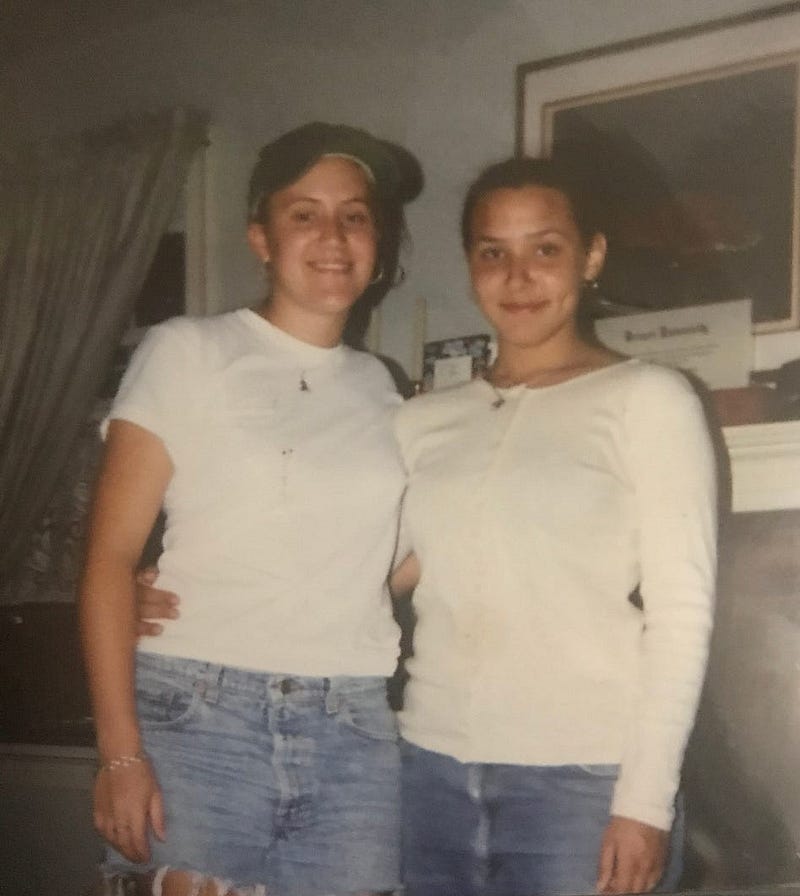
On October 3rd, 2021, I wrote a story about what it was like to grow up looking white with a Black mother. It was the first story of mine that many people read and left responses to.
I focused more on my childhood and my relationship with my mother while mentioning some things I experienced as a young adult. I glazed over my teenage years because they were difficult for me to revisit and I needed more time to figure out how to tell that story.
What was the big deal?
How hard could it have been??
Let’s find out…
When you think of teenagers, what’s one of the first things that come to mind?
Hormones — and lots of them.
I was no exception to this, but what did make me exceptional was how much racism played a role in who liked me, who wanted to date me seriously, who loved me, and who wanted to just use me. That pertained to friends and those who wanted more.
Although my mom suspects that my white father left her while pregnant due to racial tensions with his family members and friends, she was fairly oblivious as to what it was like for me to date, or live life in general, as a biracial teenager.
We never talked about racism or my being biracial during those years.
My half-brother behaved somewhat fatherly towards me at times. He was 6 years older. His father wasn’t in the picture either, and our mother never seriously dated anyone after my father left.
My brother and I had some pretty steep learning curves throughout our lives, as we figured out how to have healthy romantic relationships.
In fact, I’d say that we are still figuring it out.
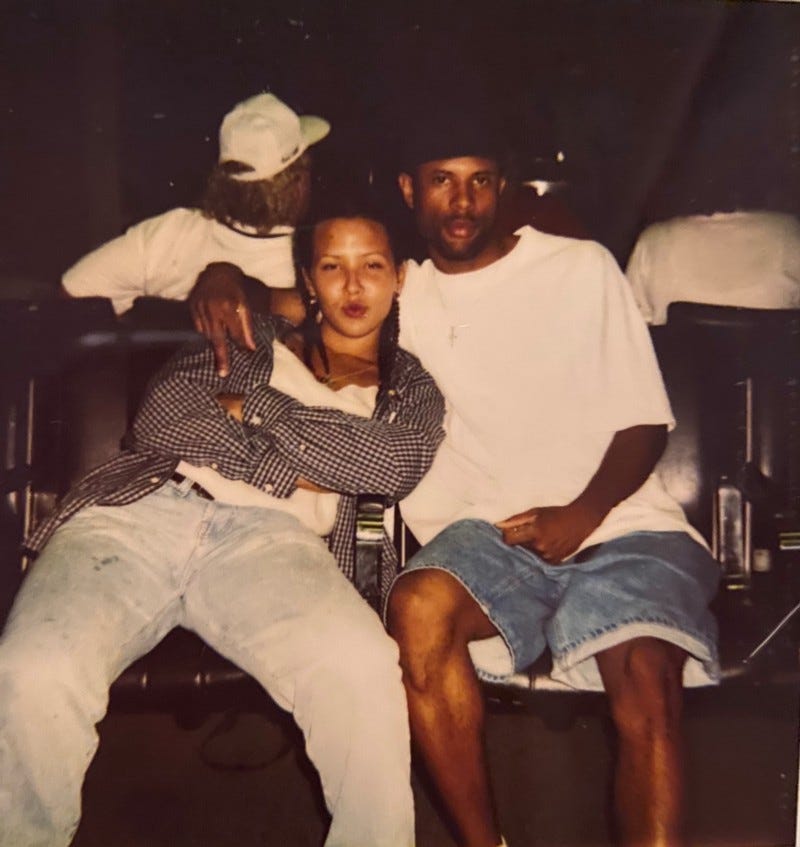
Scott Jamal Parker.
That was the name of my first crush in grade school. Funny how his full name has embedded itself into my long-term memory like that.
I attended 3 ethnically diverse schools from K-12th grade. One would think that the kids would have been more open-minded or tolerant, but I did not find that to be the case, on average.
Scott was not one of the boys who made fun of me relentlessly, but he might as well have been.
He never said anything when his buddies, particularly this boy Abdul, berated me for various reasons on any given day.
My mom wasn’t the type to buy me the latest and greatest fashion trends. Whereas, even the poorest among Abdul’s friends had parents who bought them expensive sneakers, glasses, and other accessories in order to keep them “looking sharp”, and potentially avoid being picked on.
It didn’t help that neither my mom nor I knew what to do with my changing hair which used to be wavy and easy to control. She had kinky hair that she straightened with heat using a hot comb. When I tried the same thing on my hair, it quickly sizzled away and evaporated into smoke.
It was a Cuban girl in one of my 8th-grade classes who finally helped me to manage my curly hair.
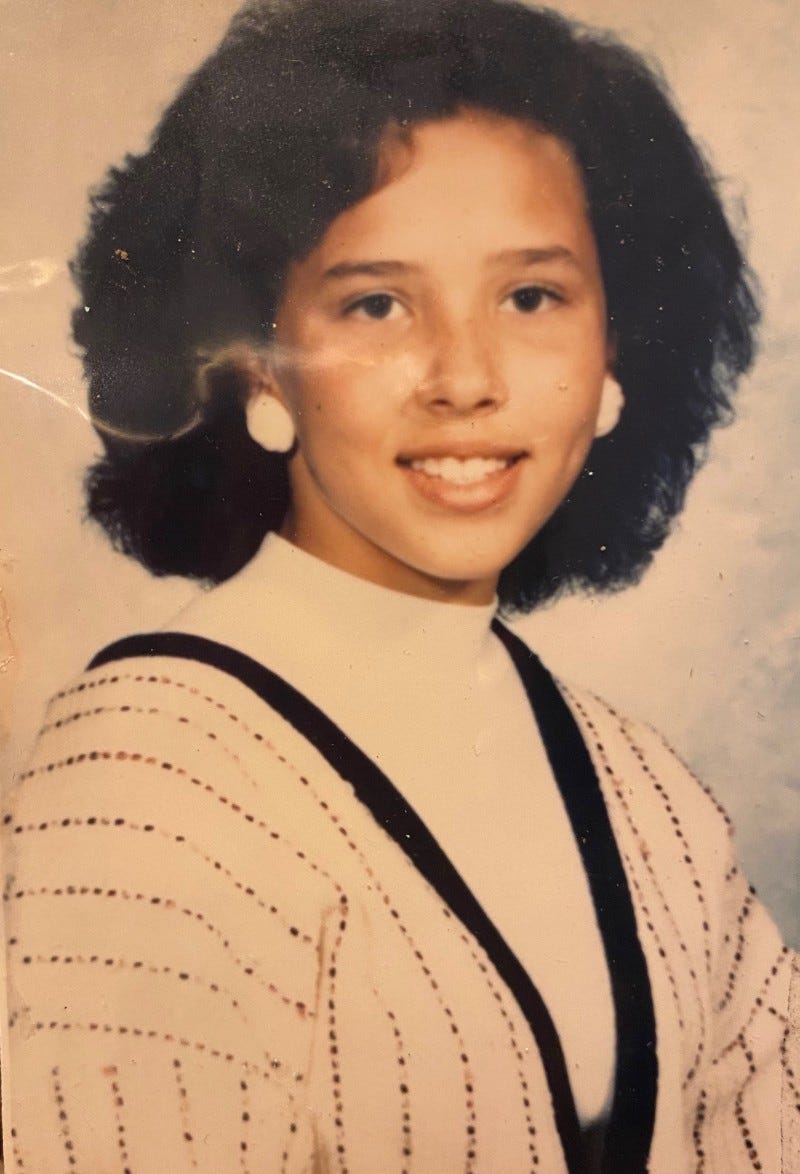
Shortly before graduating 8th grade, I discovered that the kid Abdul had a huge crush on me.
Yes, I had heard that boys who tease you tend to do so when they like you, but he bullied me.
He made me hate going to school.
I allowed his words, along with the bitchy, popular girls who gave me dirty looks, to validate the worst of my insecurities and I resented them all for it.
It was a Christian school too — one in which the blond-haired, blue-eyed and popular, “can do no wrong” pastor’s daughter became pregnant at 16 years old.
That made me happy.
That was not an ideal mental state for me to start my new, public high school that was 4 times the size of my old, private school.
Most people didn’t know how insecure I was.
I hid it fairly well, especially as I reached 16 years old and began drinking alcohol at parties. I wanted to numb and escape my overly sensitive self when I was around other people.
I got along well with a wide variety of people because I enjoyed getting to know other cultures. However, I rarely came across other teenagers who were like-minded, and strong enough to act in line with their true beliefs.
When I was 15 years old, I was on the back of a public transit bus with other kids from high school. I was going to a friend’s house and liked that I didn’t have to get off the bus near my own house in a poor neighborhood, which made me feel ashamed.
I had a huge crush on one of the boys that were in the back of the bus. I knew who most of them were, but I didn’t know them. I don’t know how it all started, but all of a sudden, I felt something hit my hair.
It was a large spitball meant for me, shot through a straw by the guy I liked.
My heart wasn’t broken, but my ego was, as the group of all-white boys proceeded to make fun of me and my curly hair.
Not one person, including me, stood up to them.
I remember how I felt the first time I heard a racist joke, told by a white boy who was standing next to me in a small group of people. I was in 10th grade.
Several kids were in the lunchroom and I happened to be sitting with some whom I didn’t know that well.
I don’t recall the joke, just this one boy’s embarrassment, and my own when one of my friends said to him, “Dude, she’s Black.”
The lunchroom became a place that I avoided in 11th and 12th grade because I didn’t want to align myself with any particular group.
I don’t even know if anyone else noticed, but I always noticed how racially and ethnically divided people sat, of their accord, in the spacious cafeteria. My school had roughly 2,000 students who had a lunch period at various times throughout the day.
There were always divisions though, so I started having my lunch outside or in the library to avoid them.
Then a minor miracle happened, rap and hip-hop music started to become very popular, which meant that being Black and most things associated with culture, started to become trendy and cool.
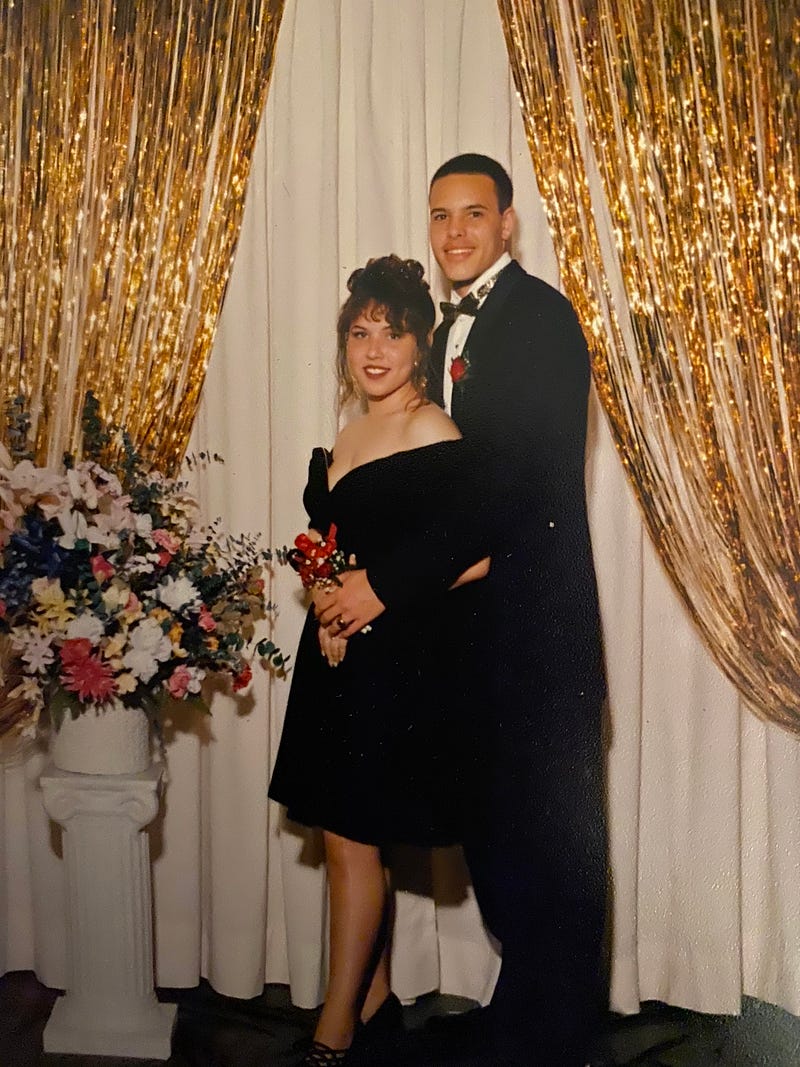
This is when I finally began to feel a degree of social acceptance from my peers and when everything changed.
I started to accept, get to know, and love my biracial self, in all its various forms, as is.
That is what I consider the first days of me becoming a woman.
Being a licensed massage therapist is one of the best things I’ve ever done.


