
What It Feels Like To Be Looked At
It’s subtle and distracting, and I wish I knew how to stop feeling it.
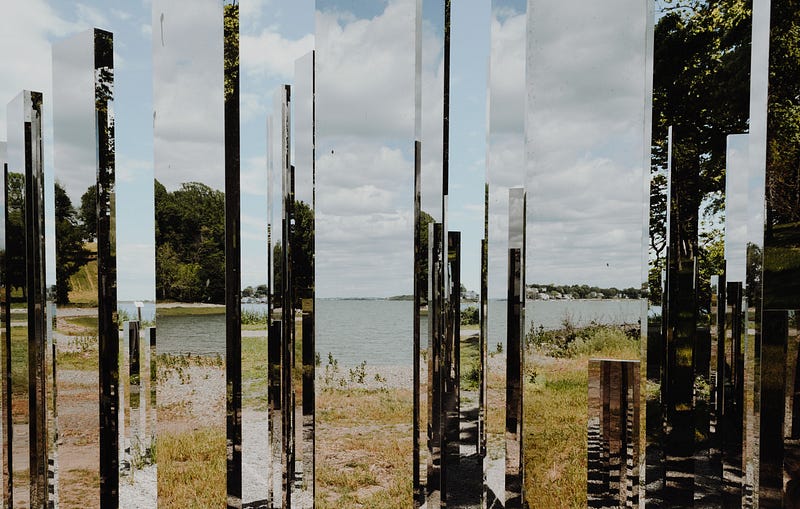
On sexualization and self-objectification.
Do you know that tingling awareness on the back of your neck when you get the sixth-sense that someone is watching you? It feels super creepy and weird.
But it feels even creepier and weirder when you wake up to the realization that you’re living your whole life as if someone is watching you all the time.
With the rise of the smartphone and social media, we are living in an era where the images or avatars we choose for ourselves seem to be taking precedence over our actual selves.
Women have been dealing with this problem for centuries if not millennia.
Now selfie-culture is turning this into a problem for everyone. Many of us have become aware of this issue. But who among us knows how to stop the trend?
The female body is socially constructed as an object to be regarded and evaluated. Objectification theory (Fredrickson and Roberts, 1997) posits that women often are looked at as objects by society, with a sexual focus being placed on their bodies rather than on their abilities.
This process is called self-objectification and occurs when women think about and treat themselves as objects to be regarded and evaluated based upon appearance (Fredrickson and Roberts, 1997; McKinley, 2011).
My awareness of this research, as well as additional studies into the sexualization of mainstream media content, means I have this knowledge in my brain.
But sadly, this awareness has not removed the habitual curse of self-objectification from my day to day experience.
It makes me cringe inside every time I hear someone tell my daughter how beautiful she is. I want to smack the loving smiles off these well-meaning people’s faces and beg them to stop focusing exclusively on her appearance.
Why can’t they comment on her infectious laugh or her amazingly clear pronunciation of words? Why does it always have to be a comment about how beautiful her eyes are?
Don’t they know what they are doing to her?
Probably not.
But now I do. I’m living proof that awareness of this sticky issue does not remove “the internalization of the observer’s perspective” from the self-awareness of the modern woman.
This is something I am simply going to have to actively work to undo.
I can’t ever remember being unaware of what I physically look like to others.
As a woman, I’ve been trained by my experience to always be conscious of the shape of my body.
Am I holding in my stomach? Am I standing up straight? Am I moving in a graceful way?
There has never been a time in my life while sharing the same physical space with other human beings that I haven’t felt the self-awareness of my appearance thoroughly blended with my perception of self.
Part of this awareness comes from being an athlete and a healer. I love striving for the feeling of flow that comes from moving efficiently and with strength. And I know that postural alignment is related to the performance of my physiological function, and therefore how good I feel on the inside.
But external appearances and internal functions are related in more than just form for me.
It’s not just about how I feel about how I look. This consciousness of self includes how I imagine others feel about how I look.
Part of this comes from being raised in a society that tells us that our value comes from our appearance. It used to be a cultural training more heavily impressed upon women of course, but in this era of social media, it is being impressed upon people of every gender.
I think this concept is worth unpacking.
My self-worth is not based on my appearance, but…
There is a complex relationship between how I feel on the inside, and my consciousness of the reaction of the world to who I am on the outside.
I am mindful enough of my own higher-self if you want to call it that, to be aware that my own inner experience should be more heavily weighted in my personal experience of humanness than what others think of me.
And, truth to be told, I’m not so conventionally attractive that I’ve attached that much of my self-worth to my appearance.
Intellectually, I know better than to compare myself to the way others look, for down that path leads only insecurity and a feeling of fear.
And yet, there is still a part of me that is always giving some energy to the idea of the imagination of my own appearance. And also what I imagine the perceived reactions of others to be.
There is always a little bit of my brain that is hyperconscious of my posture, and my appearance, and my vibe. There is always a part of me that wonders what others think of me. Even when I don’t want it to.
It’s the part of myself that sucks in my belly when my partner’s eyes wander to it during sex. It’s the part that shifts the way I walk into a sexier sashay when I pass by an attractive man in a public space, and I feel his eyes on me. It’s the part that chooses my clothes when I dress myself in the morning for the effect they might have on others.
I must have these subtle, secret, inner concerns about what others will think of me as some kind of semi-conscious approval-seeking mechanism. I don’t think I’m alone in this.
I would much rather go through life with less attention paid to the opinions of others, but I honestly don’t know how to cultivate this in myself. I don’t know where the lines of code for this particular mental malfunction live within me.
This constant awareness disconnects me from my own inner reality.
It’s distracting AF.
It lives below the verbal threshold of the mind, the subconscious chatter of my monkey mind. It tries its damnedest to keep me from focusing on what I’d rather put my attention on, i.e. my experience of being.
It also makes me feel insincere in my own experience, as though what I’m doing is being done for the effect, as opposed to just being done because I want to do it.
It makes me feel constantly off balance, even when I’m striving to exist within and operate from my center.
Maybe this is part of the reason women are so notorious for being more difficult to bring to orgasm.
We are altogether too conscious of the outer world to really go inside and pay attention to our own pleasures. It takes a damn lot of stimulation to capture my full attention and just allow myself to feel what’s happening to my body.
It is all too easy to feel empty inside.
If my husband wants to have sex, and I’d rather go to bed or spend my time in the evening writing — it’s incredibly hard to tell him this. I still can’t say the words of my own desire without considering his desires, and usually prioritizing them.
Even when I know he actually wants to know what I really want.
I’ve become so numb to my own inner signals to the point where when someone asks where I want to go eat, or what I want to do with the time we have together — I’d rather just hear what they want to do.
Most likely their wishes will satisfy me, or at least I think they will. After all, I’m easygoing, right?
Or am I?
Am I doing what I really want? Or am I doing what I feel I ought to want?
Is this lack of center at the heart of my own subtle discontent in life?
Another intellectual knowing I have is my appreciation for the foundations of gratitude and presence in this gift we call life. Unlike the magical undoing of self-objectification, I can feel this knowledge in my body sometimes.
I feel this most strongly when I’m out in nature, or when I’m alone with myself for any length of time. I feel this when I am on my yoga mat, breathing, moving my body through the poses, and sweating while I listen to the teacher’s voice.
But outside of these practices, it seems like I must constantly hold onto and remind myself of the gratitude that I know I ought to be feeling.
After all, I’m a straight-cis-white woman in the USA surrounded by family, love, and abundance. What on earth do I have to feel discontent about?
Why do I have this undercurrent of exasperation in my life? Where does it come from? And how the hell do I get past it?
I want to live my truth.
To live in constant vigilance (to quote Mad-Eye Moody) of the opinions of others comes at a frightful price.
It is the price of my sense of identity and integrity with myself. It is also the price of not knowing how to perceive the truth in others.
If you ask me intellectually, I know with 100% certainty that my identity is something that should come from within.
But knowing HOW to locate my identity firmly within myself is another beastie entirely. Evidently this is yet another piece of “the work” my generation is being invited to take on.
Thankfully.
I’ll take this dare any day rather than succumbing to the subtle misery of conforming to a FUBAR appearance-based values system. It seems a challenge worth accepting. And it’s part of the self-exploration journey that has opened in front of me as a writer.
I write because I am actively working to discover a way to unify my experience of self with the thoughts, actions, and words I choose to utter. I wish with all of my heart to exit the confinement of the various domestications in which I have been trained.
I don’t want to blame the patriarchy. I don’t want to complain. I just want to move forward in claiming my identity.
It’s time to exit the state of constant awareness of what I look like physically and energetically to the rest of the world.
I just want to get down to the business of being human on earth. And I think it’s about damn time to stop staring at myself in the metaphorical mirror and start working on making the world a better place instead.
Don’t you?
More like this.
Kaia Tingley is a writer, artist, podcaster, digital strategy nerd, and sometimes hot-tempered supernova with a wild, free soul. You can find her on Instagram here or on LinkedIn here.