
What is the Purpose of a Teacher?
A look at the debate as to the role of teachers in classrooms today.
I have my answer ready.
And I’d be curious to hear your answer in the comment section if you please.
I first came across the idea of questioning the purpose of teachers a few years back while I was teaching a 30-hour course on how to prepare for the TOEFL iBT exam.
The TOEFL iBT is a standardized interbet-based proficiency test of the English language taken by international students looking to study in an English-speaking country.
The question on the purpose of teachers was an example of an independent writing question given on a previous TOEFL exam.
The original question looked at debating the idea of what creates a greater impact when it comes to teaching — relationships or knowledge sharing.
Now, side note here, when answering this question on the TOEFL, examiners are not looking for a particular answer, they are looking to see how students incorporate certain points and direct the reader through a logical sequenceof thoughts when expressing their opinions as they write.
So, my role as their teacher in helping them to achieve the best score possible was to make them aware of how to approach answering this question regardless of which side they chose to fall on in this debate.
Students expected that the knowledge I shared with them about the TOEFL writing section would automatically translate into having them achieve the highest score.
Why else would they be taking the course?
The Purpose of Learning
Now, before I go on to the purpose of teaching, let’s take a brief look at the purpose of learning.
I’m going to stick with the TOEFL exam as my guide.
The TOEFL exam provides a rubric that students can use to help them learn how to attain the highest scores in the writing section.
Now, being that these students are English language learners (ELLs), learning how to attain the highest writing score possible would effectively come down to how close of a relationship they want to have with the English language.

But that’s not what the majority of students attempting the TOEFL exam want to know.
They want to know what they can do — not learn — in securing the score they need to get them into that English-speaking university.
When they enter university — that’s when they will begin to learn.
The TOEFL exam has been reworked many times over the years because of how students try to cheat the purpose of the test — which is, of course, to use English as native speakers would inside and outside the classroom setting.
See the TOEFL is meant to be a precursor to how university life will be like for these English language learners.
But the problem is that it’s a standardized test with expected outcomes.
So what’s more important — the knowledge to score well, or to have some sort of relationship to what they are learning.
Knowledge Sharing and Teaching
Schools are designed with the rights of student learning in mind.
Students are to come to class with the expected notion that they will learn something from their teachers.
They expect that their teachers will come to class prepared to present them with the knowledge that they are expected to know, and this knowledge will come to benefit them in the real world.
How will it benefit them, well that depends on the students to figure out.
A teacher who comes to class with the sole purpose of sharing information may be under an old-school assumption that all students learn in the same manner.
That sharing of knowledge plus computing of knowledge creates a useful output of knowledge.
This is after all how students retain knowledge, yes?
This is an extreme form of knowledge sharing without relationship building, but what about the other extreme?
A teacher who does not show any kind of direction in presenting knowledge on a subject matter in their classroom may lose the respect of students as a trusted source of knowledge.
Now, students may argue as to the kind of knowledge being shared in the classroom and how beneficial it may be — but that should never be a cause for the teacher to transfer all the responsibility of learning into the hands of students in the hopes of building better relationships with their students.

In one school I taught at, one novice teacher presented to the principal the idea of removing the required textbook in the classroom in favor of having students do their own research on the topics outlined in the textbook using the Internet.
After all this, teachers came to believe that the Internet was going to make teachers obsolete in the future — as all knowledge sharing was to be controlled by the Internet.
The principal at first took this as a ‘revolutionary’ idea in getting students to take charge of their learning.
Mind you, this teacher was teaching an SAT subject test class at the time, and so it was acceptable to the teacher that normal textbooks would be an afterthought.
This novice teacher presented the idea that students would learn more by deciding on a project within the subject and doing their own research, and presenting it to the class.
This type of freedom intrigued students and they were all for it. They began to build a relationship with this teacher. They were all for the idea that they could spend the majority of the class on the Internet “researching” their projects.
They made this teacher one of the ‘popular’ teachers in the school.
Well, sure enough, when it was time to prove themselves, a few students began to complain that this was, in fact, a waste of time, that students were wasting their time on the Internet, and this teacher did nothing in terms of giving knowledge or direction on the subject matter.
Sure enough, the principal, after initial SAT practice test results came back showing students' scores to be abysmal, asked me to take over with textbook in hand and try to convince the lowest performing students to give up their time on the Internet and return to textbook learning.
But, unfortunately I didn’t have the time with these students to make a convincing use of the textbook before their official SAT tests were to be taken.
The principal apologized for putting me in this situation and needless to say, the novice teacher had to quit from all the hate she got from students who had to repeat taking the SAT subject tests on their own time because of how bad they scored the first time.
Therefore, one clear purpose of a teacher is to give direction when it comes to knowledge sharing.
Relationship Building and Teaching
The question as to the purpose of a teacher also opens up the debate as to whether or not students can learn from someone they don’t trust.
Students can build a stronger relationship with what they are learning when they are able to trust the person helping them to learn.
They need to be able to trust that the teacher is sharing true knowledge, not wasting their time and delivering the knowledge that is expected with clear direction as to the purpose behind the knowledge.
This is how far some students want or need their relationship with their teacher to exist. They go on listening to this teacher because of the expectation the teacher presents for knowledge sharing.
This level of relationship building is often where you will find university professors or TOEFL instructors.
They are not expected to go beyond showing students that they are trustworthy when it comes to sharing knowledge. And these students, in return, really only look to find the knowledge to help them succeed academically.
Where relationship building can become more vital is in students’ formative years in school.
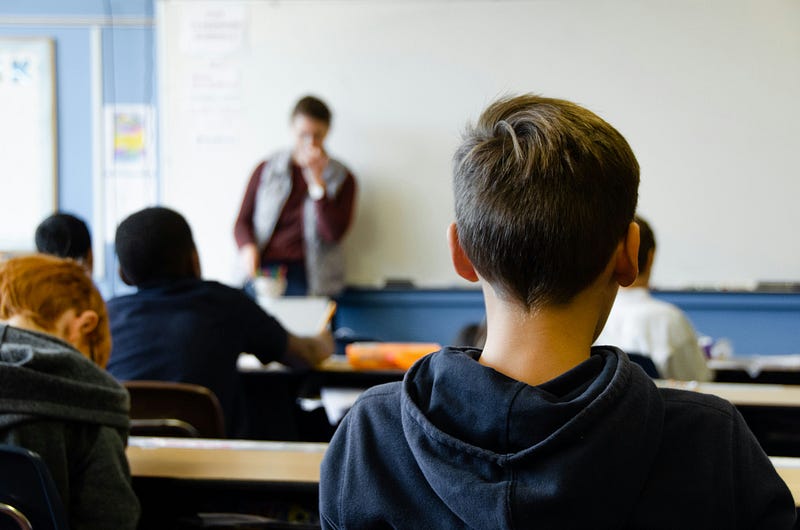
In these current times, students who struggle with gaining knowledge because of how they were taught in the past, may find more comfort in having a more communicative relationship with their teacher.
As teachers, we should be open to students who may want to share their frustrations with learning in the hopes that they are able, with more of our emotional support, to overcome gaps in their learning.
We can let it be known that we do not judge students based on their gaps in learning, but on their ability to want to benefit from the knowledge we share with them.
The world will judge us by our knowledge and to hide this fact from our students is to do them a disservice.
The goal of building relationships with students is not so that students will tell others how good a teacher you are to make you popular among other students but to allow the students the chance to see themselves as a better version of who they were thanks to your help, guidance, and support.
The Purpose of a Teacher
And now, here is my concluding answer to this question on the purpose of a teacher.
I have come to believe that the true purpose of a teacher is to be one who communicates the knowledge students seek in a manner that helps students see their own self-growth.
And so if you ask me whether teaching is more about relationship building or knowledge sharing, I will answer that it is in finding the balance between them through intuition.
A teacher who is aware of this balance will be cognizant of how to go about building relationships among students in ways that benefit student learning while also knowing how to harness the power of their intuition when it comes to knowledge sharing.

Intuition plays a key role in becoming the teacher students want to recall with fond memories because this teacher will know how to balance the sharing of knowledge with knowing when students need a break from their knowledge-seeking and want to do something else instead.
And, of course, teachers need to always be prepared with that something else and never surrender control to students without any direction.
If in society, we were to ever lose sight of the purpose of teachers, we would lose much more in terms of what future generations will look like.
S if you didn’t know, now you know what the true purpose of a teacher should look like.
If you enjoyed this article, please consider reading more of my articles on teaching and learning.


