
What is the ExpressibleByIntegerLiteral Protocol in Swift?
Substitute your actual type with an Int

In this short article we will explore the ExpressibleByIntegerLiteral protocol in Swift based on a simple Xcode Playground example.
We generally use this protocol when we want to substitute our custom type with an Int. Using it in right situations helps you write more concise code.
Let’s Start
Say we have this simple struct called CustomNumber:
Now if we want to create an array of CustomNumbers we would write something like this:
How can we make it nicer? Let’s conform to the ExpressibleByIntegerLiteral protocol (notice that we no longer need the previous initializer):
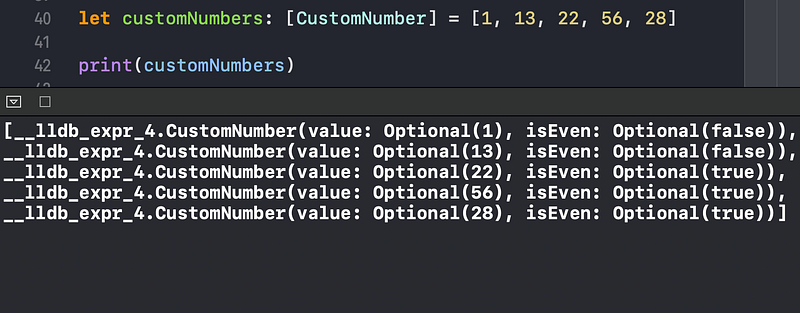
We can now create that array in a much nicer way:
Which correctly prints out each member of our array:
We can add even more flexibility by conforming to an ExpressibleByStringLiteral , so we could also use String values:
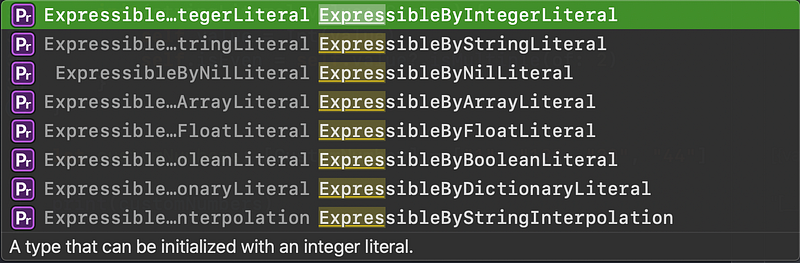
There are lots of similar protocols available to suit your needs:
Wrapping Up
Interested in more lesser-known features of Swift? Feel free to check out my other relevant pieces:
- What is the ~= Operator in Swift?
- What is the Equatable Protocol in Swift?
- What Is the vDSP Framework in Swift?
- What is the CustomStringConvertible Protocol in Swift?
- What Is the Difference Between Class and Static in Swift?
Thanks for reading!


