
What Is Sampling In Marketing Research
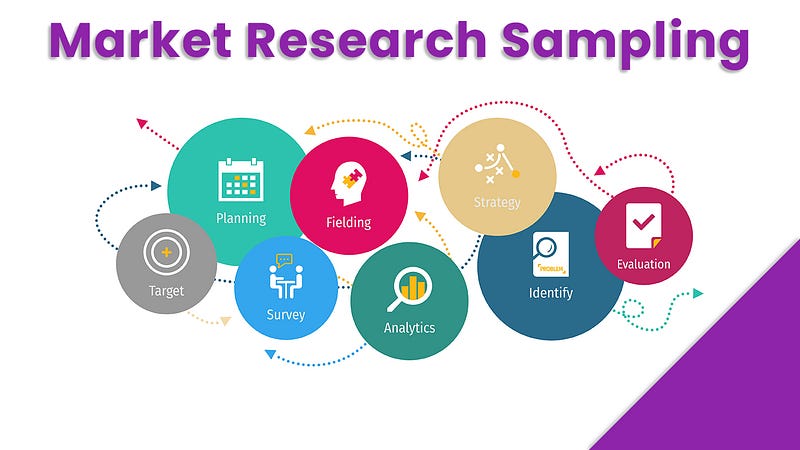
Sampling is the process of selecting a group of people from a larger population to study. This group is called a sample, and the process of selecting them is called sampling.
Sampling is an important part of market research because it allows researchers to gather information about a larger population by studying a smaller subset.
If you surf the internet insecurely, consider using Nord VPN as it keeps you and your family safe. Follow this affiliate link to learn more about why you should use Nord VPN.
The Two Main Types Of Sampling
1. Probability sampling: This type of sampling is based on a random process, so every member of the population has an equal chance of being selected. The most common type of probability sampling is random sampling, which involves selecting people at random from the population.
2. Non-probability sampling: This type of sampling is not based on a random process, so not every member of the population has an equal chance of being selected. The most common type of non-probability sampling is convenience sampling, which involves selecting people who are easy to reach or who are available at the time of the study.
There are a variety of different sampling methods that can be used in either type of sampling.
The Most Common Sampling Methods Are Listed Below
1. Random sampling: This method involves selecting people at random from the population.
2. Stratified sampling: This method involves dividing the population into groups (strata) and selecting a random sample from each group.
3. Cluster sampling: This method involves selecting clusters (groups of people) from the population and then selecting a random sample from each cluster.
4. Systematic sampling: This method involves selecting a fixed number of people from the population at regular intervals.
5. Convenience sampling: This method involves selecting people who are easy to reach or who are available at the time of the study.

If you’re curious about what others are doing in your field. Consider subscribing to Medium.com as it’s an amazing blogging platform to learn and grow as a professional. You can join using my affiliate link here — Subscribe to Medium. Don’t forget to follow me on Medium. Thanks.
How Does Sampling Impact The Results Of Marketing Research Studies
There are a few different types of sampling methods that can be used in marketing research studies: Probability Sampling, Non-Probability Sampling, and Quota Sampling. Each method has its own benefits and drawbacks which can impact the results of a study.
Probability Sampling is a method of sampling that uses a random selection process to choose participants from the population. This type of sampling is considered to be the most accurate, as it ensures that all members of the population have an equal chance of being selected. The drawback to this method is that it can be more expensive and time-consuming to implement.
Non-Probability Sampling is a method of sampling that does not use a random selection process. This type of sampling is generally less accurate than Probability Sampling, as it does not ensure that all members of the population have an equal chance of being selected. However, Non-Probability Sampling is often more affordable and faster to implement than Probability Sampling.
Quota Sampling is a type of Non-Probability Sampling that uses a predetermined number of participants from each segment of the population. This type of sampling is considered to be less accurate than Probability Sampling, as it does not ensure that all segments of the population are represented. However, Quota Sampling is often more affordable and faster to implement than Probability Sampling.
What Are Some Of The Benefits Of Using Sampling In Marketing Research
There are many benefits to using sampling in marketing research.
First, it allows researchers to study a smaller population, which can lead to more accurate results.
Second, it is more cost-effective and time-effective than studying the entire population.
Third, it allows researchers to test hypotheses and theories about a population.
Finally, it helps researchers to generalize their findings to the entire population.
What Are Some Of The Potential Risks Associated With Sampling In Marketing Research
Sampling in marketing research can lead to inaccurate results for a few reasons.
First, if the sample is not representative of the population being studied, the results will not be accurate. For example, if the sample is drawn from a population that is not randomly selected, the results will not be representative of the entire population.
Second, if the sample is not large enough, the results may not be reliable.
Third, if the sample is not randomly selected, the results may be biased. For example, if the sample is drawn from a population that is not randomly selected, the results will be biased.
Finally, if the sample is not representative of the population being studied or if the sample is not large enough, the results may not be reliable.
How Can Researchers Ensure That Their Samples Are Representative Of The Populations They Are Studying
There are a number of ways that researchers can ensure that their samples are representative of the populations they are studying. One way is to use a random sampling method, which ensures that all members of the population have an equal chance of being selected for the sample.
Another way to ensure representativeness is to use a stratified sampling method, which divides the population into different groups (or strata) and selects a number of participants from each group. This helps to ensure that all groups within the population are represented in the sample.
Researchers can also use sampling weights to adjust the results of a sample to ensure that they are representative of the population.
Here Are 5 Key Takeaways From Sampling In Market Research
1. In marketing research, the term sampling refers to the selection of a subset of the population for the purpose of studying that population.
2. Sampling is used to reduce the cost and time required to collect data from a population.
3. Sampling error is the error that is introduced into a study as a result of the selection of a sample rather than the entire population.
4. The most common sampling method is simple random sampling, which involves selecting a sample at random from the population.
5. There are a number of factors that should be considered when selecting a sample, including the size of the population, the desired level of accuracy, and the cost and time constraints.
In Marketing Research: The Term Sampling Refers To
Sampling in marketing research refers to the process of selecting a subset of elements from a population in order to study them more closely. This subset is typically chosen randomly, which allows researchers to make generalizations about the population as a whole. Sampling is an important tool for market researchers, as it allows them to collect data from a smaller group of people and then use that data to make decisions about the entire population.

If you found the article beneficial, smash the clap button as it helps others find my work. Don’t forget to sign up for my email list as I scour the web for useful information. Also, consider subscribing to Medium as it’s an amazing platform for people who enjoy learning from others. Please join through my affiliate link here Subscribe to Medium.
If you surf the internet insecurely, consider using Nord VPN as it keeps you and your family safe. Follow this affiliate link to learn more about why you should use Nord VPN.


