
The Challenge to Define Happiness
“Happiness is not a state like Vermont,” said Abraham Maslow. Or maybe it is but sometimes we’re stuck in New Jersey.
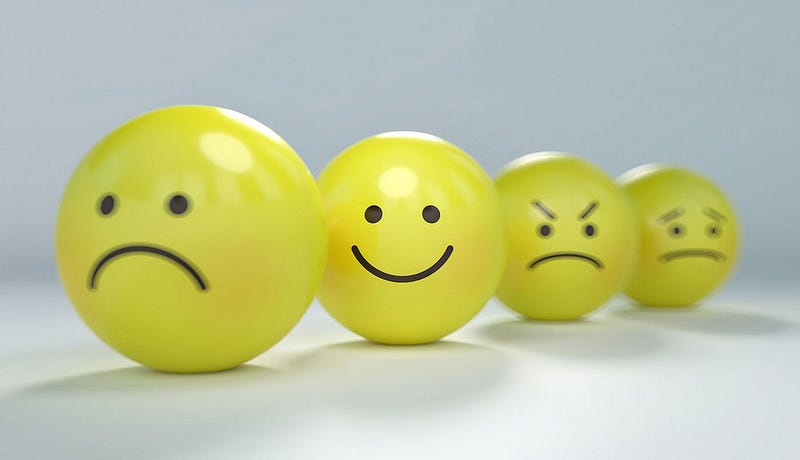
Happiness is an inescapably weighty yet nebulous concept whose meaning varies by individual and has even changed across time with cultural evolution and societal shifts. That’s not a definition. It’s a set of facts that help illustrate how ambiguous and elusive any definition is.
In my recently begun year-long exploration of the nature of happiness, what contributes to it, and the human desire to achieve it, a definition of the term seems useful, if not vital. So as a starting point, I’ve gathered some scientific thoughts and lay definitions to form a basis to begin at least starting to prepare to cogitate on the question.
(This article does not offer a definitive answer, nor does it touch on how or whether happiness can be achieved. We have a year to work on all that.)
Long & Short of It
Psychologists are the first to admit the word “happiness” is ambiguous. They prefer terms like “subjective well-being,” or “life satisfaction.” Those are no doubt important research terms, but they’re synonyms, not definitions.
Meanwhile, my big 10-pound analog Random House dictionary offers a definition of happiness that is at once overly succinct and ridiculously broad: good fortune; pleasure; contentment; joy. As meanings go, that’s the very definition of ambiguous.
One oft-cited modern definition comes from Sonja Lyubomirsky, a psychology researcher and author of “The How of Happiness.” She says happiness is “the experience of joy, contentment, or positive well-being, combined with a sense that one’s life is good, meaningful, and worthwhile.”
That’s pretty darn good, but a little longish for my taste and not so memorable.
“Happiness is a state of activity,” Aristotle said. I really like that. I know people who seem happy as long as they are busy. And those six words somehow pack in much to ponder. But Aristotle just couldn’t stop there. He had to complexify the hell out of it: “Happiness is the meaning and purpose of life, the whole aim and the end of human existence.”
That’s awfully ambitious! Like trying to kick a 70-yard field goal to win the big game.
What Happiness is Not
Linguists like to define things by what they’re not. Such semantics can be useful. Example:
“Alive” and “dead” have totally opposite meanings. “One or the other may be applicable in a certain situation, but never both,” wrote George Miller and Philip Johnson-Laird in a great tome from the pre-Amazon era: “Language & Perception” (Harvard University Press, 1976). “Table” and “rug” are also mutually exclusive, the authors pointed out, “even though they do not show the same degree of opposition.”
Allow me to extend their logic to a topic they didn’t cover:
Happiness is mutually exclusive from its antonyms, unhappiness or sadness, and arguably even from its nemeses, depression and anxiety — in a given moment. Yet fluidity in the human condition allows for all these to coexist in a given longer time period. Who among the happy isn’t sometimes sad, depressed or anxious?
“For many happiness is a rare companion due to the competing influences of anxiety and depression,” Morten Kringelbach and Kent Berridge wrote back in 2010, in a paper aimed at defining how scientists should define and study happiness.
Here’s an interesting related question: Is happiness truly synonymous with its synonyms? Merriam-Webster lists these synonyms: beatitude, blessedness, bliss, blissfulness, felicity, gladness, joy, warm fuzzies (seriously, it’s in there).
Speaking of definitions, the American Psychological Association has a two-paragraph definition of depression, but it’s definition of happiness is short: an emotion of joy, gladness, satisfaction, and well-being.
Likewise, the American Psychiatric Association has a really detailed definition and explanation of depression. It has no formal definition happiness. Let me help them out. If I turned this org’s depression definition on its head and removed some of the “disorder” parts, the definition for happiness might read like this:
Happiness is an uncommon condition that positively affects how you feel, the way you think and how you act. It erases feelings of sadness and/or a loss of interest in activities once enjoyed. It can prevent to a variety of emotional and physical problems and can increase a person’s ability to function at work and at home.
Changing Definition
As a typical teenager would say to Aristotle, “Times have changed.” And so has the definition of happiness.
A 2013 study led by Shigehiro Oishi at the University of Virginia analyzed Webster’s dictionary definitions for happiness from 1850 to the present, and presidential State of the Union addresses going back to 1790, plus general appearances of the phrases “happy nation” vs. “happy person” going back to 1800. The conclusion:
“Across cultures and time, happiness was most frequently defined as good luck and favorable external conditions,” Oishi and colleagues wrote in the Personality and Social Psychology Bulletin. “However, in American English, this definition was replaced by definitions focused on favorable internal feeling states.”
(Remember good fortune; pleasure; contentment; joy?)
In a clever study by psychologist Sandie McHugh, perceptions of happiness were found to have changed between 1938 and 2014. McHugh recreated a small study in the town of Bolton, where people were asked to define happiness in 1938. Back then, security, knowledge and religion were the three most important aspects of happiness. In 2014, good humour, leisure and security topped the list.
Thinking Different
Some big thinkers shun the whole concept of defining happiness. “What does ‘happy’ mean? Happiness is not a state like Vermont,” said Abraham Maslow, he of pyramid fame. I would argue: Maybe happiness is a state, like Vermont, but sometimes we’re stuck in New Jersey.
Here’s a nifty sideways take from Mahatma Gandhi: “Happiness is when what you think, what you say, and what you do are in harmony.” Less a definition than a philosophical calling, but it ain’t bad.
Finally, Einstein took a much less philosophical view: “A table, a chair, a bowl of fruit and a violin; what else does a man need to be happy?”
Perhaps the more important question I should be asking is this: What’s your definition of happiness?
UPDATE Dec. 30, 2020: After a year of looking into happiness and well-being more broadly, and with the help of a survey, I know a little more now than I did on Jan. 1, 2019. The results are here.


