
What Is Education Like In Portugal?
An article about the whole cycle of Education, what subjects are taught, and ultimately the importance of class in a country becoming more and more privatized.
Hello, first of all, let me tell you that my main job is to be a teacher of Portuguese to foreigners. My classes are given online, and my main clients are from the Anglo-Saxon culture.
One of the main reasons for wanting to learn the language is that they are planning to move to Portugal. Many do not come alone; they plan to go with their family, children, and sometimes their parents. Therefore, one of the most recurrent questions they ask me is about education in Portugal.
So I have decided to answer their questions and possibly yours about the Portuguese educational system, from baby to adult.
Daycare centers
Daycare centers, which did not exist when I was a child in the 90s, are paid places. The access of children from 0 to 3 years old is very disputed, and it is challenging to get vacancies in public-private daycare centers. The government subsidizes part of the amount according to the families’ tax bracket (calculated according to the IRS).
The minimum age for accepting a baby is three months, and enrollment must always be done well in advance. The concept of babysitting is not common in Portugal, unlike in countries like the United States.
For the most part, the Portuguese do not have the purchasing power to pay a babysitter. Many times it is the grandparents who help with the baby.
However, if you live far from your family, this doesn’t happen. Either a daycare is paid for, or one of the couple members stays with the baby, and yes, it’s usually the mother.
Kindergartens
Kindergarten starts at the age of three, it is not mandatory, but children need to socialize, play, and discover the world. It depends a lot on where you live in Portugal, but in general, a backward mentality, in my opinion, has closed the children too much inside the schools. In certain Nordic countries in Europe, children explore nature much more, and this is something that unfortunately is not done much here.
There are free and paid kindergartens. Unfortunately, the paid ones are still considered better. However, I also have my own opinion on this — even though I don’t have children. Since I was little, I’ve always gone to public school, which doesn’t make me any less intelligent, but paid kindergartens indeed bet more on the child’s intellectual development.
Many things have indeed changed in Portugal. When I was a child, kindergarten, just like elementary school, went from nine in the morning until three in the afternoon, leaving lots of time for playing and being with friends.
We had a freedom that kids nowadays don’t have. Because parents work longer hours, school hours have also been extended, and being a child seems to be a profession in itself, and this, personally, saddens me.
Primary School — from 6 years old to 10 years old.
Primary school starts at the age of six and goes on until ten; this is called the first education cycle. As a child, the subjects I had were only three:
- Portuguese Language — learning how to write, read, and comprehend;
- Environmental Studies — a bit of History, science, and basic human life survival ( I still remember being taught at school not to put metal into microwave machines and that the iron for clothes was only for adults);
- Mathematics.
There was no physical education, no English, but there was plenty of free time for us to run, jump, play, and all that was better than an outdoor gym.
If we go back in time, my husband, 38 years old, only had classes in the morning, and the afternoons were reserved for playing. Like him, sometimes our parents were not home, but being alone or outside playing with other children didn’t seem dangerous. Nowadays, that idea doesn’t fit in almost anyone’s head.
Nowadays, children are in school from nine to around six in the afternoon.
The days become long. The subjects have been maintained, and extra-curricular activities have been added.
But again it depends on whether the school is public or private.
My niece’s private school offers English classes, sports practice, and study support. Public schools also supposedly provide the same options, but the quality can be questionable.
But at all levels of education, one thing that has changed for the worse for me:
The fact that students are not failed.
What does this mean? Until recently, one of the motivations for studying was that nobody wanted to be known as the one who was one year behind in school.
Nowadays, this rewarding factor seems to have disappeared, dramatically worsening the quality of education. The government wants to show that we are all intelligent and have degrees. But in the end, we have been ending up with many “literate illiterates.”
Basic education — ( from 10 to 14 years old).
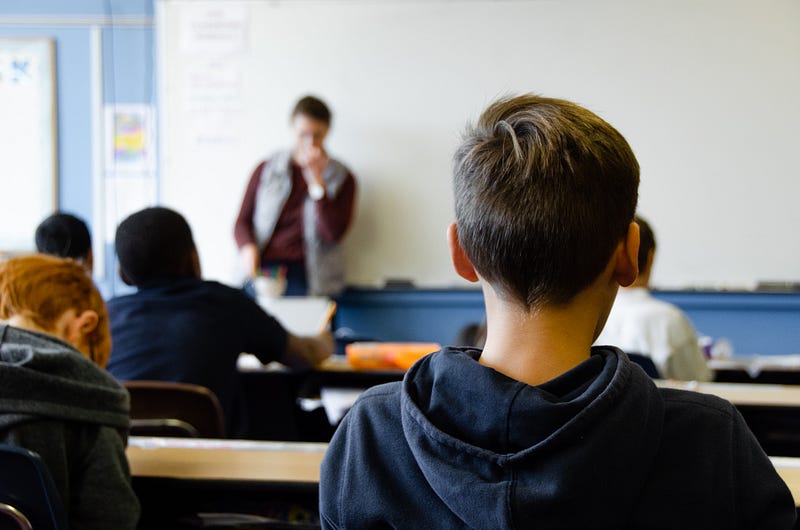
This step is significant in the student's life because they start having many teachers when in the previous school they only had one. The change is radical; the student begins to have more subjects, and a different teacher teaches each one.
This stage is divided into two cycles, the first and the second.
The first cycle consists of the fifth (age 10) and sixth grades (age 11). The subjects are various.
- Portuguese Language;
- English second language;
- History and Geography of Portugal;
- Mathematics and Natural Sciences;
- Visual Education (drawing, painting, geometry);
- Technological Education (crafts; carpentry;)
- Musical Education (something fundamental like learning musical notes, playing the flute);
- Physical Education;
- And might be surprising, but even though it is optional, there is the old subject of Catholic Moral and Religious Education.
- And also controversial, especially for conservatives, is the subject of Citizenship and Development, which talks about human rights, gender equality, sexuality, environmental education, and which many say is left-wing political propaganda, an idea I particularly abhor.
When I was a student, we had a subject called Civic Formation, and at the time, nobody seemed to care. But in the age of hate and the spread of scorn through social media, opinions are inflamed about something as elementary as human rights.
The second cycle runs from the seventh to the ninth school year, from 12 to 14.
Many change schools, others stay the same, and others have all education levels.
But the following subjects are the ones one can find to start and conclude this cycle of studies.
- Moral and Religious Education — optional
- Physical Education -
- Technological Education
- Visual Education
- Physical Chemistry ( Chemistry and fundamental Physics )
- Natural Sciences ( Biology, geology, how the human body functions, we learn about the animal world)
- Mathematics ( I was never good at this, but the last thing I remember learning was something called “functions,” whatever that thing was).
- Citizenship and Development- the same as before.
- History of Portugal( this subject breaks into two different ones, focusing more on History and leaving Geography for a whole other subject).
- Geography ( separated from History; You learn about rainfall, land, and world demography, among other topics.)
- English as a second language.
- French or Spanish as a third and foreign languages
- Information Technology
And now for the most shocking thing about education in Portugal.
Until recently, the completion of the ninth grade meant completing compulsory education.
The system had a flaw because legally, you could only start working at sixteen, but you could finish compulsory schooling (if you hadn’t repeated any year) at fourteen.
Because then compulsory schooling ended there, the next cycle of studies was called Secondary and is still called that.
The second thing that may shock is that to enter secondary school, the student begins in a certain way to dictate his future.
Upon reaching the tenth grade, the student must choose not only the course he intends to follow, but also if he wants to change school and do what we call a “professional course”.
Secondary School or High School
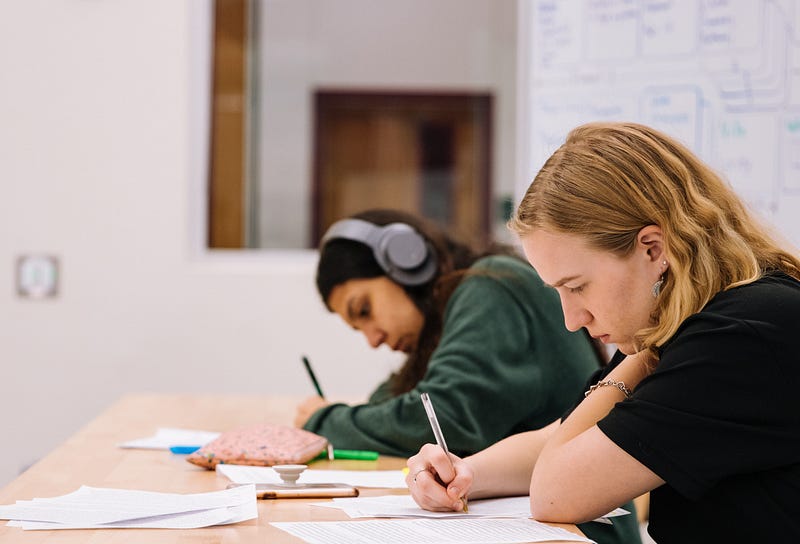
In addition to the technical schools,these courses that students must choose from have the following subjects in common:
- Portuguese (10th, 11th, and 12th grades)
- Foreign Language I, II, or III — German, Spanish, French, or English (10th and 11th grades )
- Philosophy (10th and 11th grades)
- Physical Education (10th, 11th, and 12th grades)
I have organized them randomly, and I have only added the subjects specific to them, not forgetting that the subjects I wrote above are common to all.
1- Science and Technology course:
- Mathematics A — (10th, 11th, and 12th grades):
Biennial (10th and 11th years) — The student chooses two biennial subjects
- Biology and Geology (10th and 11th grades )
- Physics and Chemistry A (10th and 11th grades )
- Descriptive Geometry A (10th and 11th grades )
Annual Courses (12th grade ) — The student chooses two annual 12th grade courses, at least one of which must be from option (b):
Option(b)
- Biology
- Physics
- Geology
- Chemistry
Options (c ) — funny note: all the (d’s) you see mean “dependent on whether the school has this to offer; stupid, right? My school never had these options, and this option is also common to all courses.
- Anthropology (d)
- Computer Applications B (d)
- Political Science (d)
- Classics of Literature (d)
- Law (d)
- Economics C (d)
- Philosophy A (d)
- Geography C (d)
- Greek (d)
- Foreign Language I, II, or III (d)
- Psychology B (d)
2- Socio-Economic Sciences;
- Mathematics A — (10th, 11th, and 12th grades):
Biennial (10th and 11th years) — The student chooses two biennial subjects — options (a):
- Economics A
- Geography A
- History B — This “B” letter indicates that history is not the main subject and, I hate to put it this way, but it won’t be as difficult as the humanities course below.
Annual Courses (12th grade ) — The student chooses two annual 12th grade courses, at least one of which must be from option (b):
- Economics C
- Geography C
- Sociology
Options C — same as before.
3- Languages and Humanities;
History A — (10th, 11th, and 12th grades):
Biennial (10th and 11th years) — The student chooses two biennial subjects — options (a):
- Geography A
- Latin A ( but not every school will have this option; Especially in more rural areas, where the lack of interest and the lack of teachers make this subject only exist in theory but not in reality)
- Foreign Language I, II, III — Or French, English, or German
- Portuguese Literature
- Applied Mathematics for Social Sciences
Options (b)
- Philosophy A
- Geography C
- Latin B
- Foreign Languages I, II, or III
- Portuguese Language Literature
- Psychology B
- Sociology
Options (c ) — same as before
4- Visual Arts
- Drawing A — Triennial compulsory (10th, 11th, and 12th grades)
Biennial (10th and 11th years) — The student chooses two biennial subjects — options (a):
- Descriptive Geometry A
- Mathematics B
- History of Culture and Arts
Annual Courses (12th grade ) — The student chooses two annual 12th grade courses, at least one of which must be from option (b):
- Art Workshop
- Multimedia Workshop B
- Materials and Technologies
Options (c ) — same as before
Professional Schools
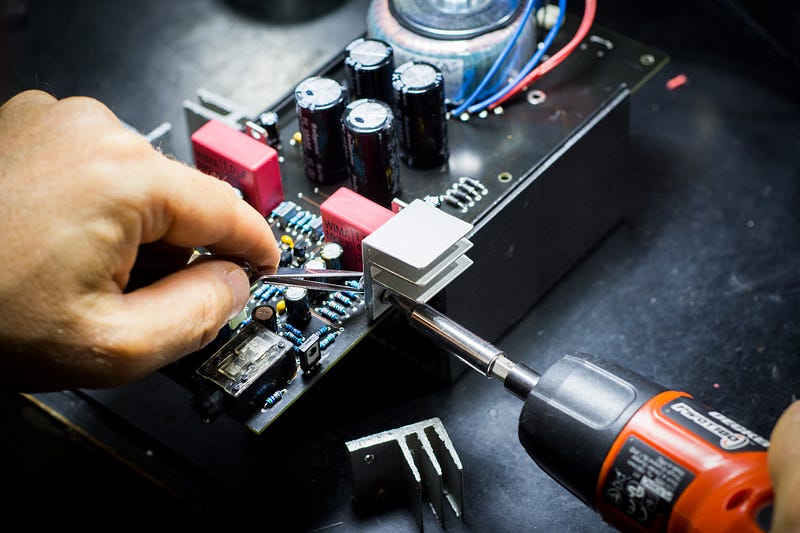
Professional or Technical schools could have immense potential, but unfortunately, they do not fulfill that potential.
This may be a very unfortunate opinion of mine. Still, since education is compulsory until 18, many students seem to go to this education system just because they are forced to stay in school.
It wouldn’t be a problem if the course offerings were appealing and with some tangible results afterward in the working world.
There is a massive shortage of people in construction, carpenters, plumbers, and electricians. But the professional schools that could and should provide students with these courses necessary for the country and certainly also appealing to many don’t do it.
Rare are the schools where this exists. The majority opt for courses without any output, introductory courses in tourism, health care, or auxiliary education. Other schools offer courses with more potential, such as accounting, management, secretarial, safety, and health at work.
However, very few students go on to higher education when they enter professional schools.
There’s nothing wrong with that. The most frustrating thing is that the great majority of students coming from a professional school never make use of their course. And even though studying is never a waste of time, it is a waste of money that the government is getting in two ways, both by betting on dead-end courses and then not having national staff and having to hire foreign labor more gifted with these technical skills.
College/ University
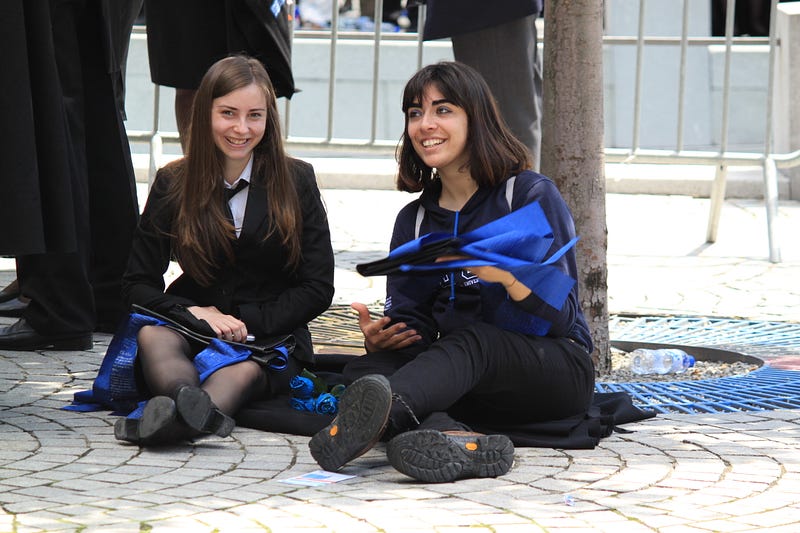
Higher education in Portugal is very different from that of the United States. I still can’t even understand how it works in the U.S. because it is so different from Portugal.
After finishing high school, the student can go to higher education in Portugal. To access higher education, depending on the course you want, the student depends on two factors:
1- The average of all the grades from the tenth to the twelfth year. 2- The grade of the national exam that will be required to enter the desired course.
These two factors weigh 50% in the admission, and only this is considered.
The weight of the national exam can be very unfair, I speak from experience. Having always been a good student, my grade on the national exam in History was horrible compared to the student I was in the same subject. The national exams are also controversial because they are the same for all students, but the teachers are different, and so is the way they teach. For three years, the student is with a teacher of a specific subject, taking certain types of tests that are usually very different from the national exams.
But these are the rules. I enrolled in Languages and International Relations at the Faculty of Arts at the University of Porto.
When the student applies to a university, he can apply to several courses and universities. I believe you have up to seven options. I managed to get my first choice, and I was thrilled.
I could have entered my degree with the History exam or the Spanish exam. Since I got a better score on the Spanish exam, that was the exam that got me into that course.
The academic world in Portugal is full of traditions. I went into more depth on this issue in the following article:
I have little knowledge of how one enters the university world in the United States, but I have a small notion that there are other factors to consider.
When it comes to Portugal, in my opinion, education has seen better days. But I believe that almost everyone in the world suffers from this problem. But these are the stages that exist on this side of the world.
The privatization of education, and of other areas such as health care, has made education unjust, even more, unfair not only in terms of class but in terms of geography.
The interior of the country is still the place where schools have few course options. Many students are unable to pursue arts, economics, or certain vocational courses simply because the region or the school in that area doesn’t offer them.
Many times the parents might even have the purchasing power to put the student in a private school, but they exist more in more urban areas, like Lisbon, Porto, or Coimbra.
The state of education in Portugal in short reflects the huge differences that still exist in Portuguese society, economically and regionally.
And out there? How is education in your country?
Hello, I’m Araci, a female writer from Portugal navigating her thirties. If you have enjoyed this article, maybe you would like to buy me a coffee here https://ko-fi.com/joanaaraci
I write on Medium about politics, culture, pop culture, society, feminism, and womanhood. I hope you’ve enjoyed this article and that it helped you out!
You can also find more about me here:
Are you considering joining Medium for only 5$ a month? If so, consider doing it through my referral link:
Your membership fee directly supports me, Araci Almeida, and other writers you read. This way, you are helping me out while you’ll also get full access to every story on Medium.
Thank you for reading me.


