
DECENTRALIZED FINANCE
What is DeFi and Why Should You Care?
The decentralized finance revolution started innocently enough with online nerds playing Magic the Gathering, making funny dog memes, and selling rainbow cat NFTs. It doesn’t end there.

Last Edited 12/7/2021|By Jesse J Rogers
New to crypto and want to know where to get started? Click here.
Dogecoin’s 12,000% price increase towards the beginning of the year might have landed on your radar.
It’s possible that you read the New York Times article about how an image you can easily copy to your computer right now for free somehow sold for half a million dollars.
But by this point, you’ve almost certainly heard the news that a sovereign nation has just made Bitcoin (BTC) legal tender.
There’s a lot of dots to connect and some of them frankly seem a bit silly. Is it worth the time to make sense of what’s going on?
In a word… YES. This matters.
Now that there are people literally forced by law to accept Bitcoin as payment for goods and services, things have escalated to a point where cryptocurrency is simply impossible to ignore.
What happens when someone orders a Big Mac in El Salvador? To do business there, international companies like McDonalds need to have a QR code ready to accept BTC payments using options such as the peer to peer Lightning network. That means they’re getting experience with crypto transactions at scale. Don’t be surprised if they like what they see. International giants may soon decide to start bypassing the 1.3–3.5% processing fees taken by credit cards and traditional bankers. For global conglomerates, that “small” percentage on each transaction can amount to billions of dollars in annual savings.
There’s even more to be saved by migrant workers that remit to their families in other countries. According to the world bank, the transaction fee to send $200 can be a steep 6.8%. By using some of the most efficient networks to send funds, the fee for moving crypto to family members in a remote village on the other side of the world can be almost zero.
There’s around $500 billion remitted every year, meaning a significant use case for crypto as a globally relevant currency, a store of value, and a medium of exchange. But as we’ll expand on, transactions and digital money are only the beginning of what this technology offers.
Despite the benefits which blockchain technology and the crypto ecosystem unlock, I’m not going to try to advance the case that crypto is going to magically create some kind of utopian democratic society. Humans are still going to be humans. Inequality is still going to be a serious problem and the potential exists for it to be made far worse.
Just as social media manifested as a kind of Faustian bargain that amplified both our greatest strengths as well as our most shameful weaknesses, so too do I expect crypto to be a double edged sword. So again, I’m not going to try to claim “crypto is good”. I’ve simply accepted that “crypto is power”. Or perhaps more precisely, “crypto is the next layer of internet evolution”. Hopefully you’ll be my ally in trying to harness that power in a way that can improve the human condition and leave a better world for our children.
Either way, you’re going to be impacted by this technology in significant ways.
You can’t ignore it.
But you can learn about it, and maybe even benefit. That’s what this article intends to help you do.
Defining DeFi
Decentralized Finance can be said to have begun in earnest in 2015 when a network called Ethereum (ETH) launched with the intentions of using its blockchain as a base layer for other decentralized applications (dApps) to build on and be secured by. Smart contracts could be programmed for much more complex tasks than just money transfer.
Intermediaries and middlemen of all kinds can be bypassed by writing standardized, limited, deterministic, open-source contracts. Why is having predictability written into the code so important?
In the same way that you don’t need to know and trust the individual operator of a soda machine to put your cash in and reasonably expect a drink in exchange, automation, blockchain, and smart contract capability have made trust between individuals unnecessary for large and complicated transactions too. It’s one thing to trade $2 for a coke. It’s another to trade $2000 of one asset for $2000 of another (which I’ve confidently done countless times at this point).
There are several different but interlocking aspects to DeFi. In the same way that Lego blocks that allow us to use our imagination to build new and interesting things, the open source code of DeFi allows high interoperability and creativity for structuring contracts and assets. Here’s a run through of some of the main types of DeFi building blocks.
Stablecoins
One of the big challenges for 1st generation cryptocurrencies like Bitcoin — and an objection that you will immediately hear from skeptics — is that its price is too volatile to serve as a currency.
In 2015, one such application called MakerDAO built on Ethereum came up with an interesting solution to the price stability problem. Users of the protocol could passively generate the currency called Dai, which is pegged to a value of $1, by staking digital collateral such as Bitcoin and Ethereum.
Using Dai as a means of exchange effectively eliminates the volatility problem, since it typically trades within a fraction of a penny of the dollar. There’s grown to be a surprisingly deep vault of capital for the project. As of September 2021, about $12.5 billion in value is locked in MakerDAO, enabling about 6.48B Dai to be in circulation.
In addition to creating a way to trade a price-stable crypto asset, Maker also adds to the usefulness and value of the digital assets used as collateral. Even if they aren’t consistent stores of value in and of themselves, these cryptos like BTC and ETH can be staked for passive returns, and that implies an added value to owning them and an important place in the future of the ecosystem.
There’s an entire class of assets called “stablecoins” that peg their value to the US dollar. This video elaborates on the concept and compares stablecoins.
Decentralized Exchanges (DEX)
All the reliable onramps to trade your dollars into crypto require KYC (know your customer) and AML (anti money laundering). Whether you’re using Coinbase, Gemini, Binance, or any of the other centralized exchanges (CEX). They all have to follow the laws of the jurisdictions they operate in or else they aren’t able to operate there for very long.
This does chafe the sensibilities of privacy advocates like Edward Snowden, but most people can live with it.
What can’t be tolerated is the single point of failure and too-big-to-fail dynamic that decentralization is supposed to protect us against.
To underscore the issue, one of the early uses of Bitcoin was as a way to trade value online for online players of the card game Magic the Gathering. An exchange that dominated Bitcoin trading from 2010–2014 was called MtGox, which stood for Magic the Gathering Online Exchange.
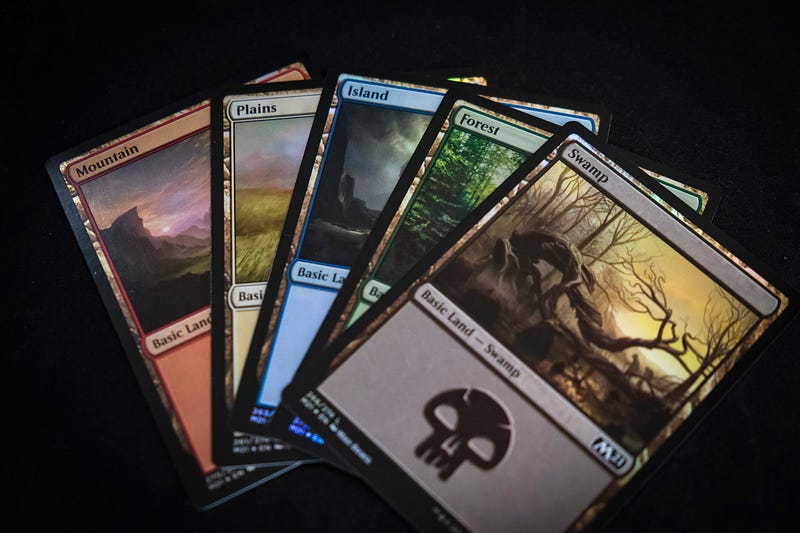
I’m using past tense because in 2014, MtGox was hacked and declared bankruptcy. This one exchange accounted for 70% of the trade volume. $450 million dollars of Bitcoin were stolen. This devastating blow took such a toll on the community and the price of BTC that it didn’t fully recover for years.
Today’s top CEX are much more professionally run and secure than what was available in the old days, but DEX such as Uniswap and PancakeSwap are utterly immune to the kind of vulnerabilities that took down MtGox.
Instead of holding funds for customers, users remain custodians of their own coins, which are held in their own wallet like Metamask or Trust. All a DEX really does is facilitate the simultaneous swapping of tokens. It functions like an escrow service but without the high fees.
DAO Governance Tokens
Building on this theme of increasing the security, value, and fairness of a network by decentralizing it, one popular but experimental way to accomplish this is through a Decentralized Autonomous Organization (DAO). Luminaries like Mark Cuban and Raoul Paul are both very bullish on DAOs and have tons to say about them, but if you’re going to watch anything I’d prefer that it be this short clip from my conversation with Luca Moretti, the European lawyer for Hoge Finance that helped set up our Swiss Association and is active in the creation of the DAO that will govern it.
Non-Fungible Tokens (NFTs)
NFTs are all the rage right now but what are they exactly?
Cryptocurrencies are like fiat money in the sense that each unit is identical and interchangeable with each other. By contrast, each NFT is unique, being more analogous to the way an original Van Gough painting would be. Sure, you can copy the painting and buy prints for cheap, but there’s only one original painting, and it will sell for exorbitant amounts of money. Digital originals have become similarly valuable because the problem of verifying authenticity has been solved by blockchain.
Art grabs headlines with the high dollar amounts, but perhaps the collectable that future generations will view as most priceless — on par with Magna Carta, the Constitution, or the Rosetta Stone — is the NFT of the original source code for the world wide web. It was sold by its creator Tim Berners-Lee for $5.4 million.
Blockchain Gaming
If you remember the craze in 2016 for Pokémon Go, that might give you an idea of the trend sweeping through places like the Philippines and Vietnam called Axie Infinity. This time around, through using crypto and DeFi toolsets on the Ethereum network, players can own, trade, breed, lend, and fight their NFTs of cute Axie monsters. Believe it or not, there are thousands of people making more money from playing this game in those countries than they do from “real” jobs. Axie is only one of hundreds of new games being created to empower player ownership of in-game items. You can learn more about this relatively new trend here.
Needless to say, this is a major challenge to the traditional model where a game creator manages all the digital assets and keeps control over them on behalf of their players. It gives players a piece of ownership in the digital worlds they build and spend time in. Speaking of which, there is even land available for purchase in Axie as well.
More Than the Sum of Its Parts
Any one of these types of applications would be interesting by itself. But the ecosystem of many such components all interacting with each other is a game changer that is hard to even put into words. Using NFTs, there are applications that track and manage the (IoT) Internet of Things and supply chains with projects like Iota, which was just selected by the EU to be one of the developers of its European Blockchain Services Infrastructure (EBSI). There are copyright agencies logging millions of NFTs on Algorand to preserve intellectual property rights. There are browsers like Brave that protect users’ privacy and pay them in crypto for the privilege of showing them ads, unlike Google Chrome which extracts as much data and value from users as possible. Fetch.ai has developed artificial intelligence agents that can created, deployed, and upgraded with machine learning tools to perform an unimaginable range of tasks.
On and on it goes. The space is exploding with possibility. Will title insurance become obsolete when ownership is clearly readable and non-duplicatable on a blockchain? Will blockchain election voting be instantaneous and fraud-resistant in ways that paper ballots never could be? How long will it take to revolutionize every aspect of our world with the tool of scalable, verifiable, transparent blockchains and programmable smart contracts?
Some Words of Caution
It could be longer than you think.
There’s always a hype cycle faced by technological innovation. Even on the things that are relatively inevitable and obvious like e-commerce, there was a 24 year arc for Amazon to become what it is today. It took Apple 42 years to hit $1 trillion in market cap. Bitcoin by itself did that in just 12 years, but these big society-altering things do take time to mature. Along the way, your value could sometimes dip to eye-watering lows. Trust me on that. I’ve lost 80% or more of my portfolio value in this first year of being a crypto trader. I know people who lost even more when the market crashed in 2018, but those same people would be well ahead now. Crypto is volatile. Expect a roller coaster even under the best circumstances and with the highest quality projects.
Theft and Fraud Are Rampant
Imagine the piracy that flourished in the Caribbean when Spain stole everything from Incas and Aztecs that wasn’t bolted down. Their galleons, in turn, were plundered by rapscallions from every corner of the Earth.
Well, in this latest gold rush, the DeFi space is pillaging the highly profitable rent-seeking empires of middlemen. There is still no shortage today of lawless degenerates hoisting the Jolly Roger and taking what they can along the way.
There have been many high profile attacks, including a recent theft of $600 million. However, in a strange twist that underscores the difficulty of getting away with crimes using blockchains, the perpetrator has returned most of the funds.
In my own circle, I know some highly capable investors that got cleaned out. This includes my college buddy and serial entrepreneur Gregory Gopman as well as Wasso, one of the core Hoge developers in the early days.
In a different class of theft which is far more common than that sort of phishing attack is something called a rugpull. Novice investors are lured into what are basically pyramid schemes with the promise of life changing money, and then the “developers” pull the liquidity, disappear with the funds, and produce no technology with any real value.
Regulation
I’m going to list this under words of caution because right now the likely regulation doesn’t look very favorable. I think some new regulation is inevitable and necessary given the scams that hold back progress and damage trust in the space, which I mentioned in the paragraphs above.
This is probably the biggest threat, but I don’t want to overstate the risk. It’s true that Congress, the Chinese Communist Party, the SEC, the IMF, the FATF, and many other powerful incumbent institutions and bodies around the world have varying levels of tolerance regarding the disruptors on the horizon. But I don’t see them as our enemies. Decentralized communities are going to have to share this world with centralized authorities for the foreseeable future.
Even within each of these organizations and more, there are a chorus of voices which are not yet singing in harmony. Some members of Congress and the panelists they invite share my view of DeFi through an optimistic lens.
We see it as a way to protect individual privacy, and expand freedom and financial access for the unbanked.
The Next Chapter: A DeFi SuperPAC?
While the regulatory and legislative threats are very real, we are not without a voice. Joshua Deese, aka HOGE Lobbyist was the guest of a recent episode of my podcast, and we discussed many important topics including his upcoming trip to speak with Congressional leaders, and the possibility of forming a superPAC to represent our interests in a way that can fight fire with fire.
J.P. Deese & Associates, and the DeFi Angels have recently had their efforts highlighted in Bitcoin News.
I obviously talk a lot about HOGE because I’m proud of what our scrappy band of volunteers stands for and has accomplished. I’ve formed some great friendships with so many of the folks in the community. I think our brand could become the Mickey Mouse of DeFi if my recently-started line of kids books is a success and if we keep checking items off our road map.
To make sure that we hit our targets, we’ll need developers. Through a developer incubator study group that I’m calling Solidity Saturdays, I intend to find and nurture the homegrown talent that will reshape the future. Even if you currently have no experience, if you want to learn Solidity and be part of what we’re building, then reach out to me. You’re invited.


