
SCIENCE AND COMPLEXITY
What is chaos and how does it affect every day of your life without you knowing?
And how the science of chaos spoiled the Western dream of a clockwork universe
There’s an intuition in science that we only really understand something when we can predict what it will do. As science has been dominated by the West for the last 500 years, this intuition partly has to do with Western psychology, which includes a preference for linear causal thinking.
What is chaos and why is it counterintuitive for Western psychology?
Western psychology has come to be known as WEIRD (Western, Educated, Industrialized, Rich, Democratic), as it turns out to be quite unusual by global standards. This is described in great detail by evolutionary anthropologist Joseph Henrich in his book The Weirdest People in the World.
For example, Weidos prefer to think in terms of internal properties and parts that operate serially (analytical), rather than of wholes with emergent properties and dynamics that operate in parallel and across many scales (holistic). Analytical thinking is WEIRD, and most cultures take a more holistic approach.


Without doubt, we’ve learned a lot from studying parts and properties. However, holistic, systems-level thinking, which comes less naturally to WEIRD psychology, has much to teach us as well, not least of all because it brings us to the world of nonlinearity and chaos.
When something behaves linearly, it follows a predictable course that we can readily understand. This is especially true for those of us in the West, as it’s coherent with the preferences of WEIRD psychology.
By contrast, when something behaves nonlinearly, it can rapidly shift between very different states in ways that can’t be accurately predicted. This isn’t simply due to a lack of information, as nonlinear behaviour can be unpredictable as a matter of principle. This is the realm of chaos, where the assumptions of WEIRD psychology begin to falter.
Nonlinearity spoils the party for WEIRD science
The discovery of unpredictability and nonlinear systems scuttled the WEIRD dream of a clockwork universe. This philosophy of the universe as God’s hand-made machine had roots in the scientific revolution.
This occurred during the Renaissance and Enlightenment in Europe, mostly from the 1500s onwards, though it was a convergence of cultural and historical currents that had been taking shape for centuries. Prior to this, during the Middle Ages, Europeans had (pretty accurately) been viewed as backward barbarians by more literate and technologically-sophisticated cultures in Asia and the Middle East.
However, a series of events set the West on an unusual path of cultural evolution. To make a long story short, as they became torchbearers for modern science, WEIRDos came to think of organisms as types of machines.
Given Europe’s deep religiosity at the time, these living machines were believed to follow God’s designs and laws. In this way, legendary scientists like Isaac Newton made amazing discoveries while remaining a passionately devout Christian, even studying the Bible in multiple languages to search for hidden wisdom.


Much the same goes for all the giants of the scientific revolution, who saw their task as discovering God’s laws. Many believed that these laws were written in mathematics, and that God was, in fact, a mathematician. The terminology of scientific laws, and the goal of describing them with mathematics, remain with us today.
This thinking was seductive for WEIRD psychology, which is unusual in its focus on the individual. WEIRD psychology also tends to explain an organism’s behaviour in terms of internal states driven by an ‘essence’ that defines its nature.
Concepts like instincts and reflexes found a ready home in this ‘beast-machine’ view of biology, and when evidence of genes first came to broad attention around 1900, this seemed to provide biological proof of the mysterious essences that so appeal to WEIRD psychology.
WEIRD science seemed poised to declare victory, and more than one champagne bottle was prematurely popped. However, much to the frustration of WEIRD scientists, 20th century physicists were about to surprise everyone. Investigating the very bottom of measurable existence, they found that uncertainty and unpredictability are built into the fabric of the quantum world.
Even basic ideas, like that things have definite locations and speeds, begin to break down. And there’s no obvious way to link the quantum world’s rules with those of the micro- and macro-scale worlds, where WEIRD psychology seemed to make sense.
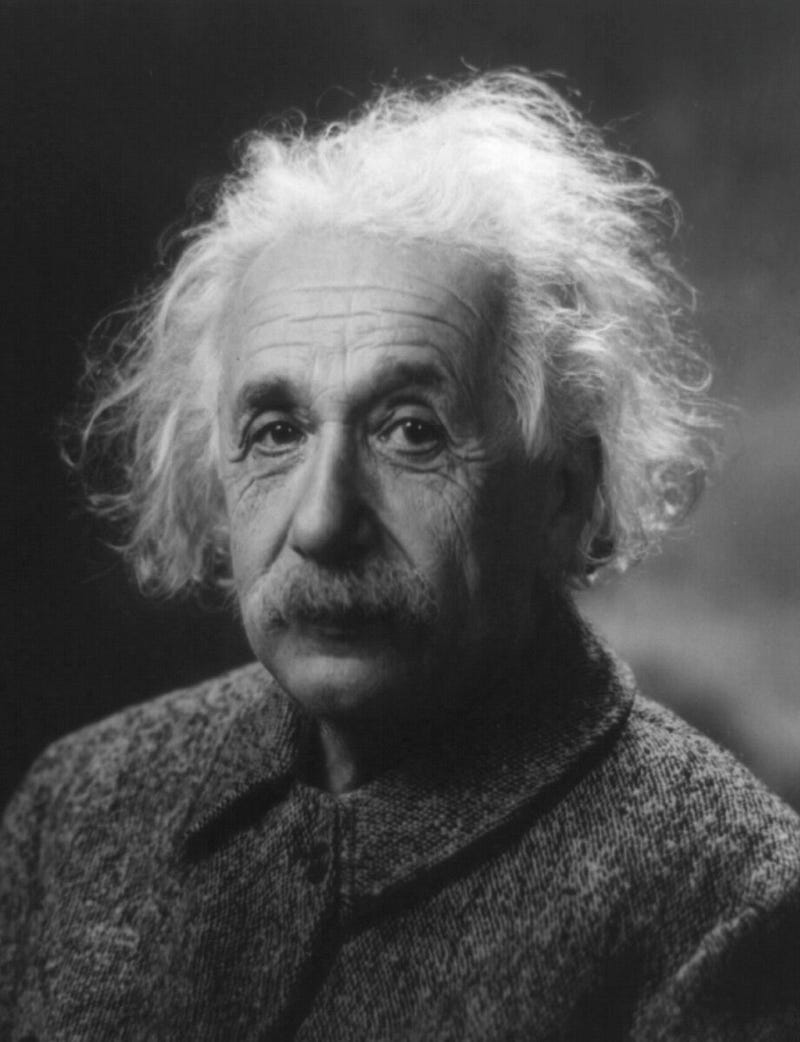

Einstein was famously unhappy with the bizarre rules of quantum mechanics, which he’d personally helped to discover, saying “God does not play dice.” And things would only get worse for Einstein’s WEIRD intuitions, as scientists soon realised that unpredictability is not limited to the quantum scale.
Chaos places limits on the ability to predict the long-term behaviour of a system, even though its short-term behaviour is at least fairly predictable. One way to describe these systems is deterministic but non-periodic. Deterministic because the system’s next few steps are at least partially predictable, and non-periodic because its long-term behaviour doesn’t follow a predictable pattern.


One example of this is the turbulent flow of water, which follows principles of motion, but does not behave in a way that can be accurately predicted in the long term. As James Gleick recounts in his book Chaos: Making a New Science, early research papers described this as “deterministic, non-periodic flow.”
Perhaps the best-known example of chaos is the weather. You can predict its next few steps reasonably accurately much of the time, but long-term accuracy quickly falls off a cliff. Chaos in weather is also related to the well-known butterfly effect. The idea is that subtle differences can magnify into large differences over time, but in ways that can’t be predicted in advance. The technical name for this is sensitive dependence on initial conditions.
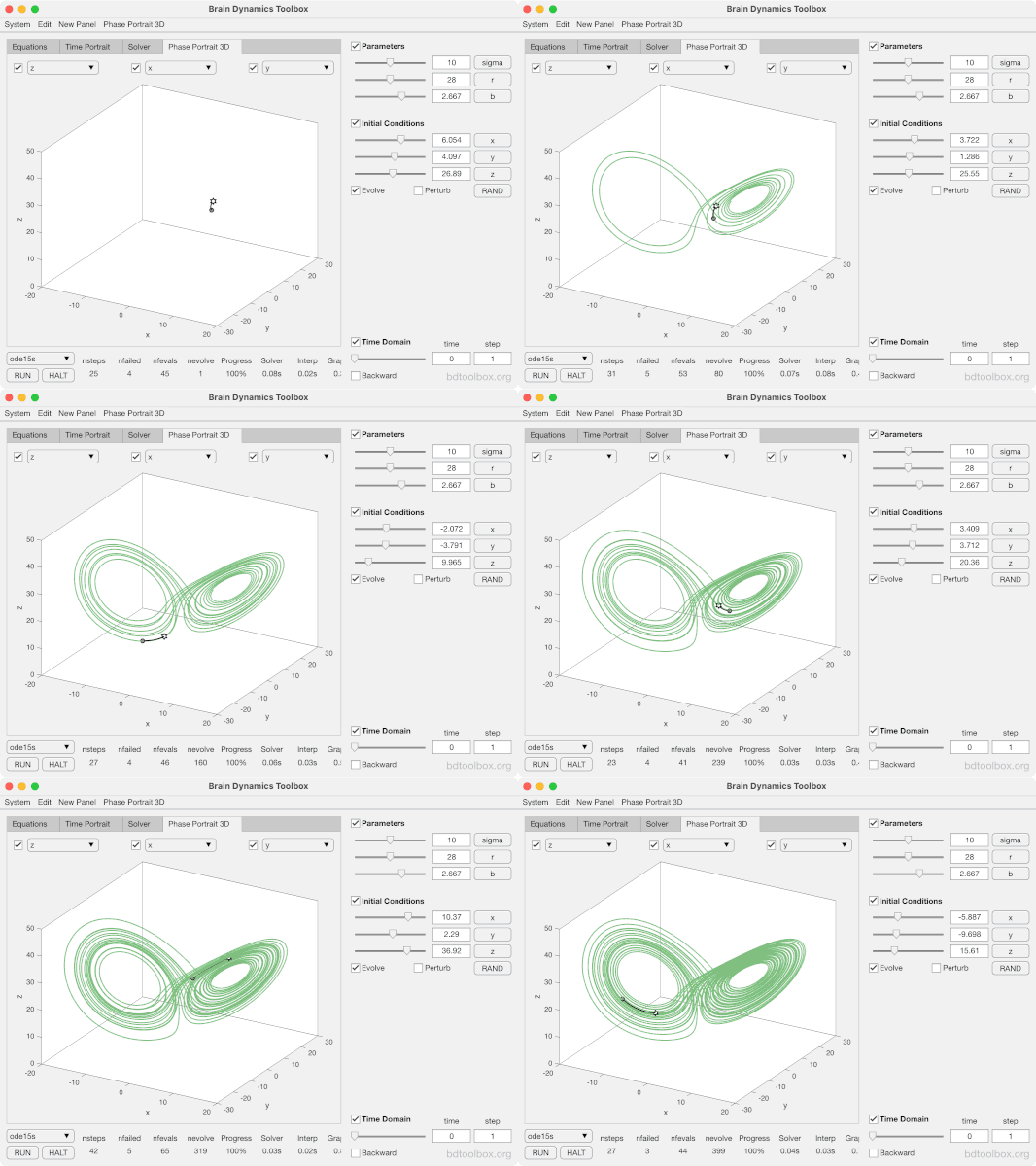

For this reason, even tiny changes, like the flap of a butterfly’s wing, could ultimately lead to a hurricane, at least in principle. This point is represented conceptually by the diagram below. It describes a system oscillating between two different states, like weather systems transitioning between warm and cold seasons. This was the original inspiration for the term ‘butterfly effect’.
But chaos shows up in even supposedly ‘simple’ systems, like the ‘three-body problem’. Suppose there are two stars orbiting each other. It turns out that their behavior can be accurately predicted, but add a third star to the mix, and suddenly all bets are off.
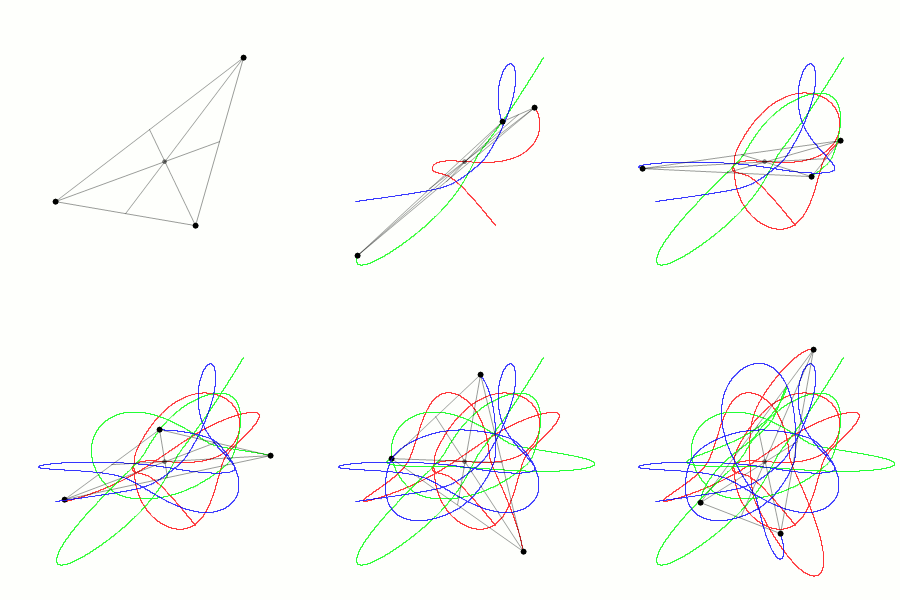

The third body introduces chaos into the equation, which cripples the long-term predictability of how the trio of stars will behave. This hints at the deep link between chaos and complexity, a concept which is closely identified with nonlinearity, and is not the same thing as being complicated.
Chaos in biology
If you get chaos and unpredictability in an example as simple as the three-body problem, we should also expect to find them in the much more complex and tangled world of biology. Indeed, chaos is found throughout our biology, from the turbulent rush of blood through our circulatory system to butterfly effects in the electrical fields and signals being generated by our nervous system.
There are many ideas, but the role of chaos in biology is mostly unknown. It could be that the prevalence of chaos simply reflects constraints that the environment places on predictability in complex systems. But even if that were true, there could still be more to it.
Life has a great knack for turning unavoidable problems into useful tools. A good example is our clever but cautious use of dangerous molecules, known as free radicals, to do important biological work. Could chaos be serving a useful biological function? This sort of speculation tends to focus on the brain.
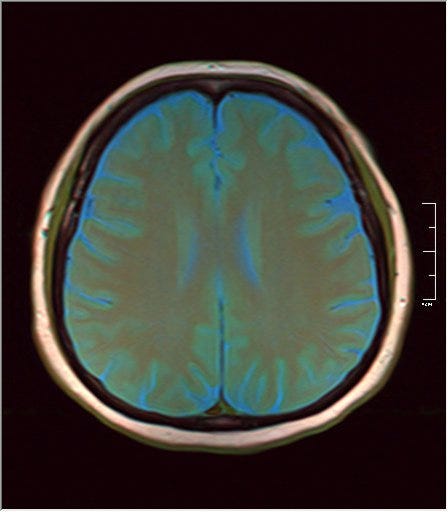

It’s easier to think about if you imagine that brain activity could be represented as a type of pattern. The details don’t matter, but the key point is that different brain states are each represented by different patterns. There’s an order and logic to how the brain progresses from one pattern to the next, even if the order and logic aren’t obvious from the outside.
However, chaos means that systems can behave in unexpected ways. Thinking in terms of patterns, this means that the brain manages to flip the script and jump ahead or even backwards to a pattern outside the normal linear chain of events.
In this way, it’s been suggested that chaos may allow the brain to rapidly shift between mental states. This could potentially be very useful for an animal that relies heavily on its brain, and regularly needs to think on its feet in complex and changing environments.
That’s an easy story to tell, but it’s honestly mostly guesswork at this point. It’s tempting to believe that chaos has to play a key role in biology. I mean come on, it’s found across every scale of existence, from the bubbling soup of the quantum vacuum to the swirl of galactic clusters, how could it not be doing something important? But that alone isn’t proof.
Researchers are increasingly finding that the brain is what they call ‘critical’, meaning that it sits right on the edge between predictability and chaos. This suggests that the brain is both predictable and chaotic, and the question is how those two modes combine to create our minds.
Maybe brief bursts of chaos help the brain to transition flexibly between states in complex environments. You could easily tell a story in which this improves the brain’s speed and minimizes its metabolic costs. But that’s just an idea right now, and there’s probably a lot more to it.
Lessons from chaos
Whatever the answers turn out to be, chaos highlights how little we still understand about complex systems, including ourselves. As our world gets ever more complex, it will be exciting to discover how chaos, and its sister science, complexity, shape our biology and societies.
These concepts have found a home in what today is called dynamical systems theory, where chaos and complexity help to advance our knowledge in diverse areas ranging from physics and chemistry to biology and economics. At a more mundane, everyday level, if we can learn from chaos and build nonlinearity into our intuitions, we may even be able to avoid some of the biases that come along with WEIRD psychology.