
What Is A Good Friend
The simplest trick to choose your best friends
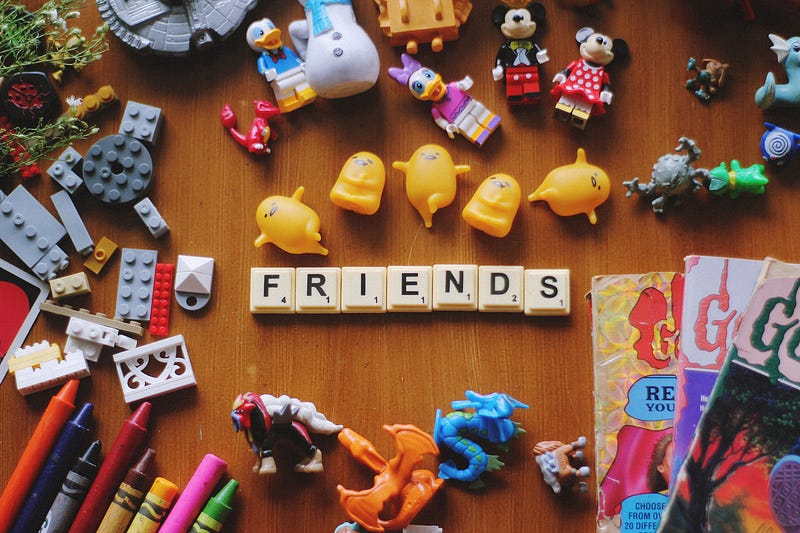
Last week I had a conversation about friendship with a group of people. I was surprised to hear how all of them shared the same idea: “A friend is someone who can be there to support you during the worst moments of your life.”
I was a bit confused as to why they got to that conclusion. Because on the one hand, we aren’t always facing difficulties. On the other hand, though; most people always have friends. Then, why do we define friends based on difficulties and misery? Is there any other way we can apprehend friendship?
What is friendship?

According to the dictionary by Merriam-Webster, a friend is someone “that is attached to another by affection and esteem.” This kind of relationship is the strongest and most exciting thing that could happen to anyone.
Unlike family members and colleagues, you have the power to choose who to be friends with, or at least it’s how that’s supposed to work.
Nevertheless, it’s obvious that we would only be friends with people that we have met throughout our lifetime, and to whom we are somehow linked. Although we have some limitations as to which types of people we can be friends with, within the categories that we can reach we have the power to decide which person is the appropriate one.
In a love relationship, we are most likely exclusive to each other; otherwise, we would establish some types of restrictions so that the relationship can be strong and last. However, for friendships, we have a lot of freedom. We can have several best friends at the same time, and we are still open to having other friends.
However, not all friendships are healthy and constructive. Depending on what type of friendship you are in, you can feel emotionally strong and secure, or the other way around.
How many types of friends are there?

According to my observation and own experience, I can say that there are four types of friends:
1) The most common ones are those that are only there to take profit from the relationship, either materially or socially. That’s why the more power you have, the more people tend to be friendly with you.
2) The second most common types of friends are those that are there to help during difficult moments, but usually disappear during the strongest points of their friends’ life. This pattern explains why we are inclined to lose many friends when we grow up in some aspects of our life.
Those two types of friendships are equally toxic, in that the first group of people doesn’t really care about you, nor your wellbeing, but their own interest; and the second group will only be there for you when you are hopeless and desperate; which will further instill a sense of victimhood in you, as if you weren’t supposed to be happy and healthy.
3) The third kind of friends is the type of people that are afraid of change. They can’t help you handle either your progress or your downfalls. They are more likely going to be present only during the most stable moments of your life. Those people are trapped in habits, and you are only a part of it. They don’t bring much to the relationship and don’t expect the relationship to change them either. They just need to have you around to spend time.
4) The fourth type of friends, however, is there during good and bad moments. Their purpose is not to overvalue your worth, but to help you become your best version. As a matter of fact, they rejoice when you do become it.
How to find the appropriate friends?

Finding an acquaintance is an easy thing, however, getting to be friend with someone requires an extra investment in time and experience. If you have never been in bad or exciting situations while in a relationship with someone, I think it’s too early to label this person as a friend.
However, depending on your own personal situation, a type of friendship that otherwise seems toxic can be helpful. The worst scenarios are to not have friends at all or to exclusively have friends that are not appropriate to your situation.
A friend who is only there because you have money, social status, or fame may work if you can manage to always be in a wealthy state.
Someone who is only there because you are doing badly financially or mentally can also be a fantastic friend if you often need support.
Friends who are there during stable moments help us stick to routines. That is if you want to establish a healthy habit, such as going to the gym each morning, a person who is into sports can help you stick to that specific habit. However, they might not go so far in helping you during your pick moments or the most difficult ones unless those ups and downs are linked to their main purpose.
Nevertheless, be aware that once your lifestyle changes, you are going to lose those types of friends; and that, in some cases, they might even put you in a situation where you can’t improve because they aren’t that sincere to help you, or they just don’t care.
However, a friendship that is unconditional is always going to be strong despite changes, it will help you challenge your limits, and it will eventually make you become a better person.
Subscribe | Instagram | Quora| Twitter | TikTok | Tumblr | LinkedIn | YouTube


