
What is a CDN & How do CDNs work?
Complete Guide to Understanding CDNs, their Working, Pros, and Cons

A content delivery network (also called as CDN) is a network of servers that are distributed around the world, and is designed to deliver content to users based on their geographic location. CDNs are often used to improve the performance and scalability of websites and applications by reducing the distance that data needs to travel between the server and the user’s device.
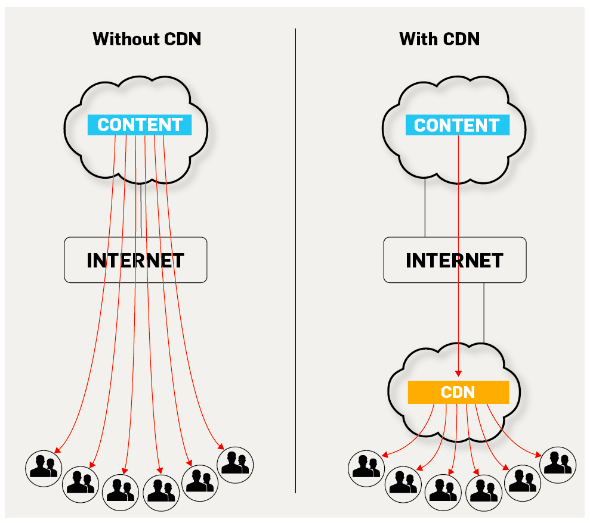
CDNs work by storing copies of a website’s static content, such as images, videos, and CSS and JavaScript files, on servers located in different parts of the world. When a user requests content from a website, the CDN will deliver the content from the server that is closest to the user’s location. This can significantly reduce the time it takes to load the content, as the data does not have to travel as far.
An Outlook
In addition to improving performance, CDNs can also help to improve the security and reliability of a website or application by distributing the load across multiple servers. This can help prevent a single server from becoming overwhelmed and reduce the risk of downtime due to server failures or other issues.
CDNs are often used by websites and applications that receive a large amount of traffic from users around the world, as they can help to ensure that the content is delivered quickly and reliably to all users. CDN services are typically provided by specialized companies, and are usually offered on a subscription or pay-per-use basis.
How does a CDN work
Here is a general overview of how a CDN works:
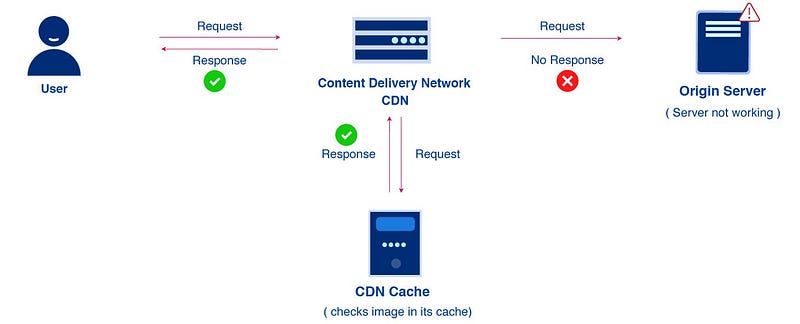
Step 1: The website owner integrates the CDN with their website
The first step in using a CDN is to integrate it with the website or application that it will be serving content for. This typically involves modifying the website’s code to point to the CDN’s servers, rather than the website’s own servers.
Step 2: The CDN stores copies of the website’s static content
Once the CDN is integrated with the website, it will begin storing copies of the website’s static content, such as images, videos, and CSS and JavaScript files, on servers located in different parts of the world. This process is often referred to as “caching” the content.
Step 3: The CDN delivers the content to users
When a user requests content from the website, the CDN will determine the user’s geographic location and deliver the content from the server that is closest to them. This can significantly reduce the time it takes to load the content, as the data does not have to travel as far.
Step 4: The CDN updates the cached content as needed
The CDN will periodically check the website’s servers for updates to the static content, and will update the cached copies as needed. This ensures that the CDN is always serving the most up-to-date version of the content to users.
This all results in the magic of improved performance of your website and a lot more. Let’s explore the pros of using a CDN now.
Advantages of Using a Content Delivery Network
CDNs are often used to improve the performance and scalability of websites and applications, and can provide a number of benefits to users. Here are some of the main advantages of using a CDN:
1. Improved performance
One of the main benefits of using a CDN is improved performance. By storing copies of the website’s static content, such as images, videos, and CSS and JavaScript files, on servers located in different parts of the world, the CDN can significantly reduce the time it takes to load the content for users. This can improve the user experience, and can also help to improve the website’s search engine rankings.
2. Increased scalability
CDNs can also help to increase the scalability of a website or application by distributing the load across multiple servers. This can help prevent a single server from becoming overwhelmed and reduce the risk of downtime due to server failures or other issues.
3. Enhanced security
CDNs can also provide enhanced security for a website or application by acting as an additional layer of protection against malicious attacks. By storing copies of the website’s static content on multiple servers, the CDN can help to reduce the risk of data loss or corruption. Cloudflare with Kinsta Web Hosting allows you to get an additional layer of data security and is proven to stop 99% of malware attacks on your website.
4. Reduced bandwidth costs
Using a CDN can also help to reduce the bandwidth costs of a website or application. This is because the CDN stores copies of the static content on its own servers, which reduces the amount of data that needs to be transferred between the website’s own servers and the user’s device.
5. Improved global reach
CDNs can also help to improve the global reach of a website or application by delivering content from servers that are located closer to users in different parts of the world. This can help to ensure that the content is delivered quickly and reliably to users around the globe.
Disadvantages of Using a Content Delivery Network
CDNs are designed to improve the performance and availability of websites by reducing the distance between the server and the user. While there are many benefits to using a CDN, there are also some potential disadvantages that should be considered.
1. Costs involved
One of the main disadvantages of using a CDN is the cost. CDN services can be expensive, especially for larger websites that require a lot of bandwidth and storage. The cost of using a CDN can be significant, especially for small businesses or startups that are operating on a tight budget.
2. Complexity in implementation
Another disadvantage of using a CDN is the complexity of integrating the service into your website. Setting up and configuring a CDN can be complex and time-consuming, especially for websites that are large and have a lot of content. This can be a challenge for businesses that do not have the resources or expertise to manage a CDN.
But if you are using Kinsta Web Hosting, you can enable Cloudflare CDN with just a single click!
3. Dependency on the provider
Using a CDN also introduces a level of dependency on the CDN provider. If the CDN provider experiences an outage or other issue, it can impact the performance and availability of your website. This can be a significant risk for businesses that rely on their website for revenue or critical operations.
4. Compatibility
Another potential disadvantage of using a CDN is compatibility with certain features or technologies. Some features or technologies may not be fully supported by all CDN providers, which can limit the functionality of your website.
Conclusion
Overall, using a CDN in WordPress can provide a number of benefits, including improved performance, increased scalability, enhanced security, and reduced bandwidth costs. If you are looking to improve the performance and reliability of your WordPress website, consider using a CDN to help deliver your content to users more efficiently.
Also, while there are many benefits to using a CDN, it is important to carefully consider the potential disadvantages as well before making a final decision. It may be appropriate for some businesses, but may not be the best fit for others.
In the end, I’d like to say that the future of content delivery networks (CDNs) looks bright, as CDN technology continues to evolve and adapt to the changing needs of businesses and consumers.
Struggling with WordPress? What if I told that you could,
- Improve your website’s performance
- Give you room to scale up your business more efficiently
- Perform server and platform updates and upgrades automatically
- Have a rapid-response support team made up of WordPress experts
- Get one-click integration with Cloudflare CDN
All for as low as $35/month? Yes, Kinsta Web Hosting offers all these premium features and guarantees 99.99% uptime for your website. This way, your business newer loses a valuable customer. Sign up today!
You may also like,


