
The Psychology of Brand Loyalty: Why We Stick to Our Favorite Brands?
In the beginning, it is most important to understand the difference between a mark and a brand
A brand is primarily a personality or company that evokes an emotion, whether positive or negative. Examples:
Brand: BMW, Tesla, Mini…
Mark: Fiat, Seat, Hyundai…
Why is a brand important to us?
A brand is important mainly because it is something abstract, something that is not tangible and exists only in our minds.
My former employer used to tell me how he started his career selling hats and scarves at a market in France.
His mother was an excellent salesperson and communicator and explained to him an important lesson at the very beginning.
She asked his son what he was selling. He said he was selling hats. His mother corrected him and told him that he doesn't sell hats but was actually selling a dream.
Using storytelling, you can evoke an emotion in people that makes them value your product more. Their story was that the materials used to make the hats and scarves came from Brazil. And that producers were actually small family-owned companies that engaged in organic production.
In this way, people have the impression that by buying these products, they are contributing to the ecology and our planet and also contributing to the development and survival of small family-owned companies… The truth is that the hats came from large factories in China, but that’s a different story. xD
People often think that expensive things are equal to brands, but that is not necessarily true.
In fact, there are many well-known car brands that are not actually considered brands.
They have huge factories, a large number of employees, and produce a large number of cars each year, but their products are just products. In the case of the aforementioned car brands, they are simply considered car manufacturers, while brands like BMW or Tesla evoke a wide range of emotions.
For example, even though they are considered luxury products, they also have models that are not as expensive, and may even be cheaper than some of the more expensive models from the aforementioned car manufacturers.
However, price is not the main factor here.
The main factor is the story behind these products and what the brand promises to its users.
For example, Tesla promises a clean and renewable future, and their car owners feel like they have contributed to the planet and often want to show off their “uniqueness” to others, while Rolls-Royce reflects a certain level of quality, prestige, and luxury.
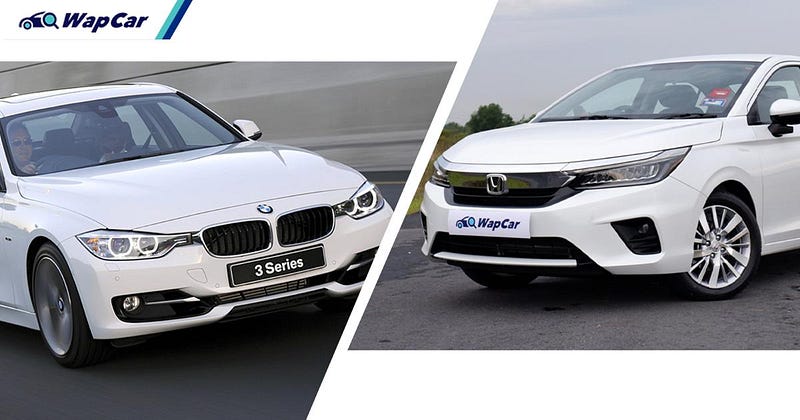
A brand can exist within a certain brand.
For example, the Fiat 500 is a brand in itself, although it is debatable whether Fiat as a company is a brand or just a car manufacturer.
USP (unique selling proposition) is the basis for a good brand, without which it is very difficult to build it.
Tesla is an example of this (innovative in many things, quality batteries, fast charging, autopilot, dancing doors, games in the car, etc).
Marketing raises the value of the brand over time.
Consistent identity is one of the main factors of a brand. This means a continuous visual identity, the same user experience in every location, the same look and specifications for every product… McDonald’s is the same everywhere in the world, and Coca-Cola has the same taste in every country…
Storytelling is one of the best tools for building a brand.
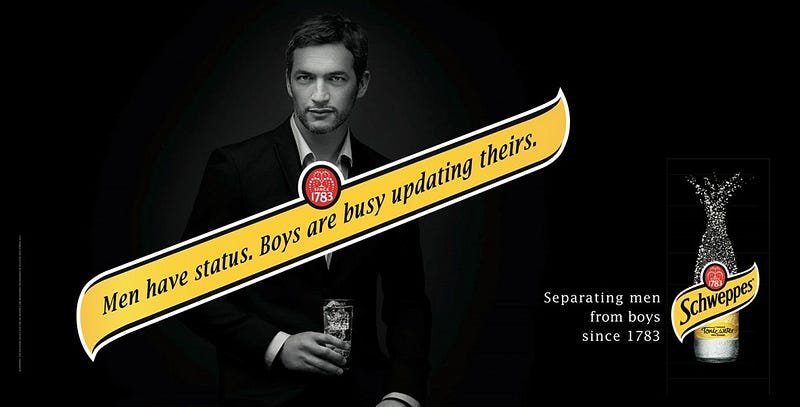
Brand positioning is very important. For example, Schweppes sacrificed a part of the market to position itself as a non-alcoholic carbonated drink for adults.
L’Oreal and Garnier are two brands with the same origin and ownership, but they have positioned themselves completely differently on the market so as not to compete with each other.
L’Oreal positioned itself as a scientific, laboratory-based, and technology-driven cosmetic brand, while Garnier positioned itself as a natural-based cosmetic brand.
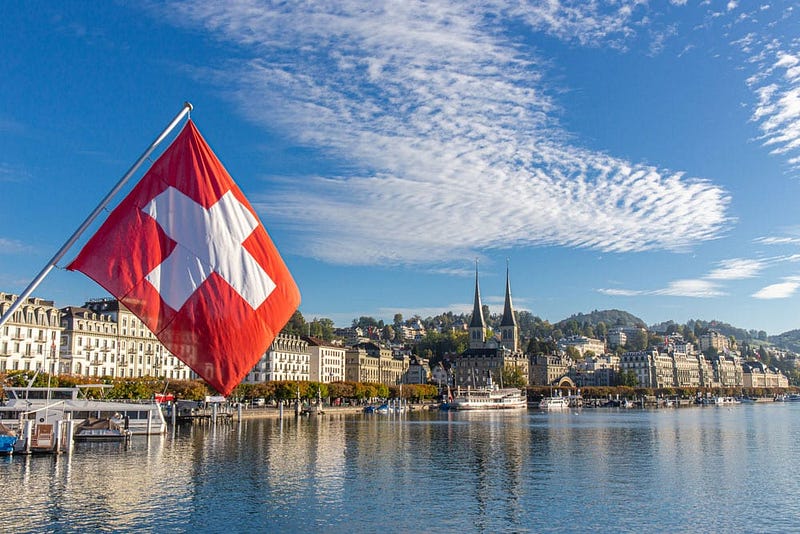
Brands can also be countries, cities, and people.
Examples: Amsterdam, Las Vegas, Trump, Andrew Tate, Elon Musk, Joe Rogan, Switzerland, Cuba, Japan…
Once, a group of scientists conducted an experiment using MRI machines.
The experiment was carried out on owners of Apple and Samsung devices.
Both groups received positive, neutral, and negative information about both products.
The scientists came to an interesting result. Samsung products did not elicit any reaction in the brains of their users at any point, while Apple devices caused a reaction in their users’ brains when positive aspects of Apple products were presented as if something positive and nice was being said about their family members.
It is also interesting that when negative aspects of Apple products were presented, Samsung users had a sense of satisfaction, which leads us to the conclusion that Samsung is a brand, and Apple is a true brand.
Another interesting study was conducted as well.
A group of students was shown subliminal messages on a projector. The first group was shown the logo of IBM, while the second group was shown the Apple logo.
Interestingly, the group that was shown the Apple logo achieved significantly better results in the area of creativity. This is because Apple is ingrained in our memories as a brand for creatives, such as graphic designers, musicians, etc.
The same goes for clothing.
We choose our clothes based on what the logo on them represents.
In this way, we identify with the brand and send people a subconscious message about who we are and what we value.
Nike as a brand can represent sports, motivation, and perseverance. THE NORT FACE and PATAGONIA can represent adventure, outdoor recreation, and environmental conservation (which is one of the main reasons why people who don’t engage in any of these activities still wear Patagonia jackets in the city).
On the other hand, brands like Lacoste or Versace leave an impression of prestige and quality. That’s why we often take an attack on a brand we like personally and emotionally and are ready to defend it because we see it as an attack on ourselves and our value system.
People like me who rarely or never wear branded clothes are also influenced by the anti-brand brand because they think it’s rational not to spend money on expensive clothes just because of the logo on them and in that way, they also send a message about themselves to the world and their surroundings.
Until the 19th century, most of the nations that are now known today had not yet been formed. So in Europe, and especially in the Balkans, it was still more important to people which religion they belonged to or which monarch and monarchy they served, as this was what determined their identity. Nowadays, brands and shopping centers have replaced religions and churches, while monarchs and monarchies have been replaced by famous personalities, corporations, and their owners.
If you are interested in how IKEA became the largest furniture manufacturer in the world and what tricks they use to continue expanding, click on the link below:
https://readmedium.com/this-is-how-ikea-tricks-you-into-buying-more-c376f6187e68


