
What Influences Our Fitness the Most?
Spoiler alert — it’s not the exercises that we do.
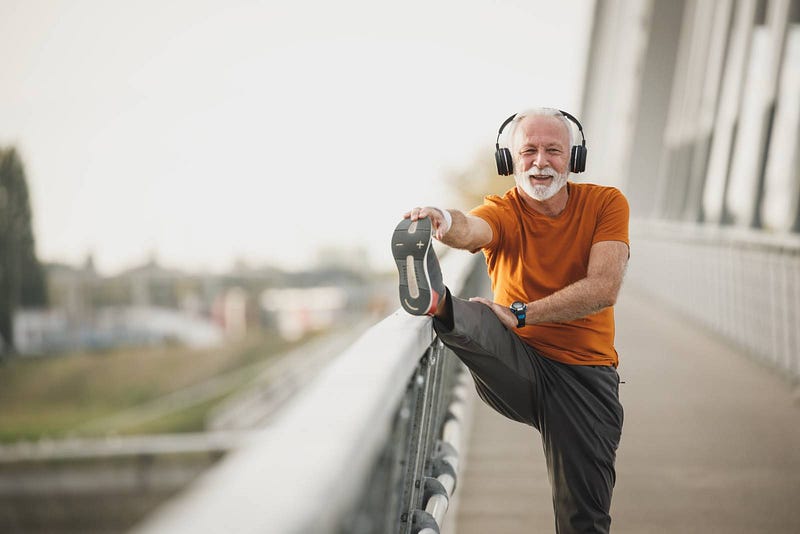
What single factor most influences our results in the gym? The answer may be surprised you…
What influences our fitness the most is not how many sets or reps we do, the exercises we choose, the supplements we take, genetics, or even how many times a week we train!
Don’t get me wrong, the more we progress with our fitness goals, the more these things matter.
However, they don’t dictate your progress as much as one thing…
Effort
Regardless of your fitness goals, the biggest driver of results in the gym is effort.
First, I should clarify that there are two different “paths” that you can take to reach your fitness goals — natural, or enhanced.
If you’re enhanced, as in using performance-enhancing drugs such as steroids; that will be your biggest driver. Period. But, this isn’t about you…
The vast majority of people at the gym are natural. And for somebody who’s natural, progress is going to be a lot slower.
Moreover, when it comes to an elite athlete with a goal of an Olympic goal, genetics is probably the biggest influence there — but it’s the effort that sets elite athletes apart from each other.
I’ve put effort into three overlapping categories — consistency, application, and intensity.
Consistency
Reaching our fitness goals takes dedication and commitment.
It’s not easy to smash your body in the gym week in and out. It takes the right attitude.

Equally, if your diet isn’t consistently good, you won’t reach your fitness goals.
You’ll need to start saying no to beers after work, you’ll need to be more practical with your food choices, and you might have to start drinking diet soda!
You’re still allowed to enjoy food — but, you have to avoid situations as much as possible where your diet will be compromised.
Create sustainable habits that empower your fitness goals. The reality is that “fitness hacks” don’t really exist. There are no shortcuts to reaching our fitness goals, despite the idea that fitness infomercials have been selling us for years.
To get fit, your life will look a little bit like below:
- You’re in the gym 4–6 days a week, every week without fail. You prioritise time for your workouts.
- You avoid bar food. Avoid the cake in the lunch room and other snacks.
- You prepare the meals that you take to work. You spend a lot of time in the kitchen.
- You are generally active — going for walks, playing sports, running around with the kids…
You will also need to be patient. Fitness is a long-term pursuit that becomes a lifestyle — it’s not a short-term fix. There are no “5-minute abs”.
Some days you won’t make it to the gym, and that’s okay. But don’t let skipping workouts become a habit.
Application
Consistency doesn’t matter if you don’t apply yourself to your fitness goals.
Many people are dedicated to turning up to the gym, yet don’t get the results they are wanting.
Just “turning up” isn’t enough — we must apply ourselves to any health and fitness goals we have.
First, learn the fundamentals behind your particular fitness goal. Your goal might be to build muscle, fat loss, or it might be to run a marathon.
Different fitness goals require a slightly different approach to optimise results. So, you need to structure your workouts based on your goals. Do you require strength training? Does mobility matter? Does cardiovascular fitness matter?
Do your research — there’s so much quality information available online these days. Continuously try to improve your fitness routine.
Reaching our fitness goals takes far more effort than just turning up to the gym and going through the motions with some typical exercises.
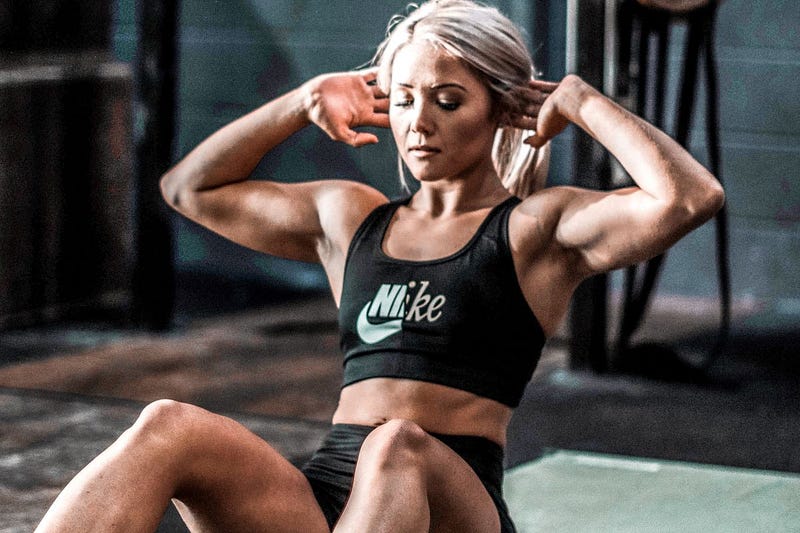
We need to be mentally prepared for each workout. Have a positive mindset about reaching your goals.
And technique matters.
Get better at the core lifting movements such as a squat or bench press. Get better at establishing a mind-muscle connection.
Also, don’t be too distracted by talking to people or scrolling through your social media feed. Focus on your workout and you’ll see much better results.
Intensity
Most people don’t train hard enough to stimulate the results they want.
Don’t believe me? Recent research suggests that around three-quarters of us don’t train with enough intensity in the gym.
As there is an intensity threshold that we have to pass to maximise our results, this is a problem.
We often underestimate how much weight we can lift for a given number of sets. A 2017 study found that participants underestimated the maximum repetitions they could do for a given load by an average of just over 3 reps.
“Ability to predict repetitions to muscle failure is not perfectly accurate amongst most trainees. However, there may be some increase in predictive ability with greater resistance training experience…
…For those not employing MF in their training but instead using sub-maximal efforts based upon proximity to MF, it is likely that they are systematically training with a lower-than-intended effort.” — Steele et al., 2017
A 2021 study found that participants could do 16 reps on average for a weight that they would usually lift for 10 reps.
So, we’re often doing fewer reps of weight than we can and should.
For the best results, we’re supposed to train to within around two reps of failure, with some sets going right to failure.
Only 22% of the participants in the above study were accurate with their estimation, meaning that over three-quarters of people aren’t training with enough effort to stimulate results.
People are either bad at estimating their maximum effort or they’re not willing to push themselves at the gym until they feel discomfort.
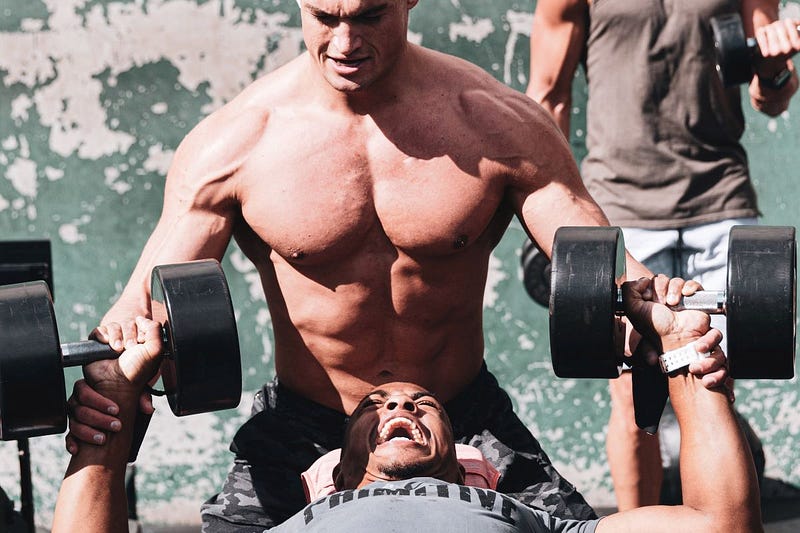
Are you one of those people? Do you still look relatively similar despite years of “gyming”?
If you only turn up to the gym to tick off that box, get used to average. We must create a strong enough stimulus to force our bodies to adapt.
Learn to embrace the pain! And don’t feel embarrassed about making funny faces as you push through those last few reps.
It’s hard! I feel a little self-conscious sometimes as I bend over in exhaustion after a set sucking in the air. It can feel like people are watching you.
From my perspective, if I see someone training hard, I’m impressed. If people want to judge you for putting in the work, that probably reflects poorly on them.
Final Words
In conclusion, a lack of effort is holding many of us back from reaching our fitness goals.
We’ve explored how to take action in the gym and general life, with consistency, application, and training intensity.
People have all sorts of excuses for not reaching their goals — but the effort is the one thing under your complete control.
If you take this advice on board and incorporate these tips into your lifestyle, you should be on the way to reaching your fitness goals.
Good luck!
Thank you for reading.
If you enjoyed the content, you might be interested in this article about ten nutritious foods that you should be eating.
Read More Medium Articles
Non-Medium members can only read 3 articles a month — become a Medium Member for unlimited access.
If you would like to read more articles like this one, sign up to become a Medium member for only $5 a month.
Subscribe to be notified when I publish new content.


