
10 Nutritious Foods That You Should Be Eating
Would you like to be healthier?
Our health is everything.
Yet, many of us neglect our health. We’re too busy living our lives.
And as obesity rates continue to rise, it doesn’t seem like our general understanding of the foundations of nutrition is getting much better.
We have the power to choose foods that provide our bodies with all the nutrients we require for optimal health. And, foods that both help us lose body fat and increase muscle mass.
You don’t have to be perfect — just a bit more calculated.
Here are ten nutritious foods to include in your meals.
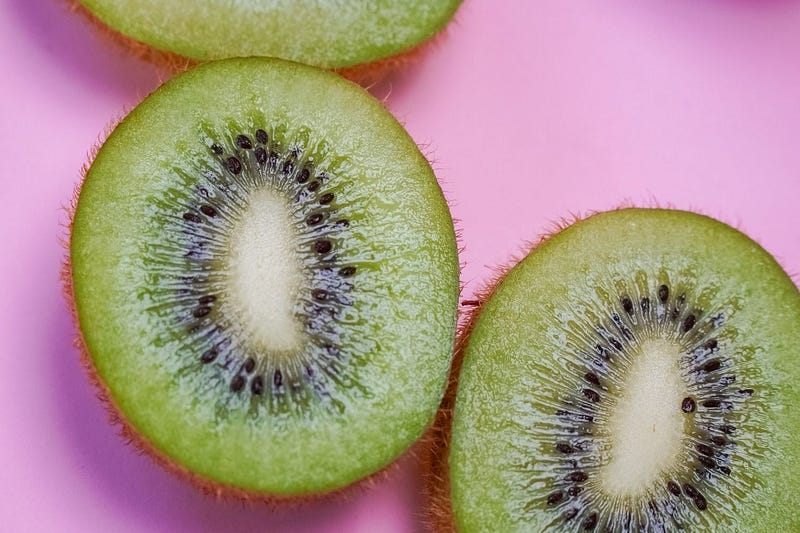
Kiwifruit
The silent assassin of nutrition.
Rumour has it that Jeff Nippard sleeps in a bed of kiwis. (Completely a niche joke to 99.9% of the population, sorry!)
Seriously though, eat Kiwi fruit. Not Kiwis (birds or New Zealanders)

Did you know that kiwifruit contains only around 42 calories on average?
Did you know that kiwifruit contains over 20 micronutrients?
You probably didn’t. Honestly, I live in New Zealand, and people here don’t even realise how nutritious Kiwifruit are. We even rebranded New Zealand-grown kiwifruit to Zepsri… (plot twist, kiwifruit actually originates from China).
Primarily carbohydrates, Kiwifruit has a small amount of fat and protein. It’s high in fibre and a particularly good source of vitamin C, vitamin E, vitamin K, and folate.
Kiwifruit is also high in alpha-linolenic acid, an omega-3 fatty acid, which can lower inflammation and strengthen our joints and tendons.
Eating kiwifruit might even have a laxative effect, reducing chances of constipation — probably due to the high amounts of fibre and actinidin that improve our body's ability to digest food and proteins.
Kiwifruit can improve people’s mood and sleep. A 2011 study found two kiwifruit one hour before bed for weeks improved sleep onset, duration, and quality, in adults with sleep problems.
Red meat
Along with being an excellent source of high-quality protein, red meat has several other nutritional benefits.
Beef, Venison, and Lamb are all red meats widely available throughout the world. Of course, the price and quality will vary, depending on how the animal was farmed and where the meat comes from.
I live in New Zealand where all our animals are pasture-raised, and we have a great reputation around the world for the quality of our meat.
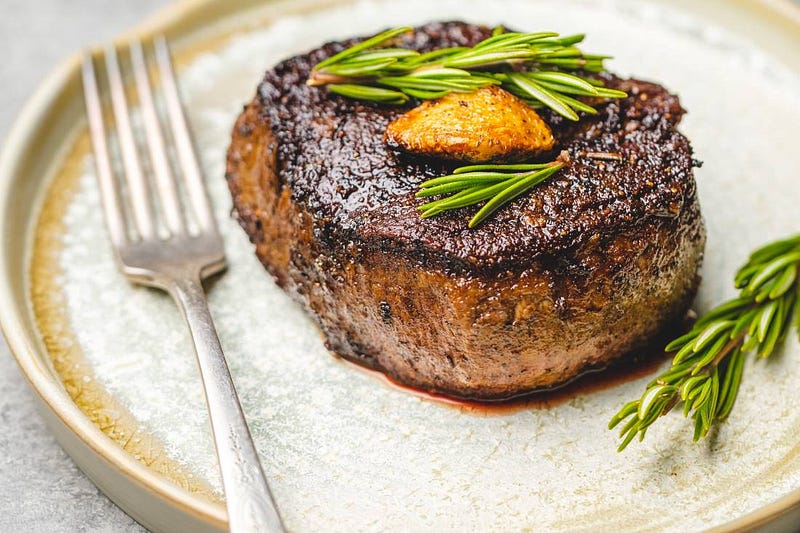
Anyway! Red meat contains around 20–40 grams of protein per 100-gram serving. The protein quality is very high, with a Protein Digestibility Corrected Amino Acid Score (PDCAA) score of 90–100, due to its full array of essential amino acids making it a complete protein source, and high bioavailability.
Beef is the most popular meat source across the globe for its nutritional value and relatively cheap cost.
Beef also provides good servings of the micronutrients Zinc and Iron.
Lamb shares similar nutritional qualities to grass-fed beef, though slightly higher in fat and calories than beef. Lamb also has higher levels of omega-3 fatty acids, conjugated linoleic acid (CLA), and selenium.
Lamb is high in the micronutrients Vitamin B12, Selenium, Zinc, and Niacin (vitamin B3).
Venison is generally much leaner than both lamb and beef. Most cuts will contain less than 2% fat. It is an excellent source of B vitamins, particularly vitamin B12, thiamin, riboflavin, niacin and vitamin B6.
PS — no, this isn’t a marketing video for New Zealand. Nice spot though.
Oats
Highly nutritious, oats are abundant in vitamins and minerals, fibre and antioxidants.
Oats are high in lipids, and as it’s a whole grain complex carb, the rate at which the body absorbs the carbs and releases glycogen into the bloodstream is slow, giving sustained and long-lasting energy.
Thus, oats are a great breakfast or pre-workout meal — especially when dieting and our muscle glycogen stores are low.
This study compared lifters who trained after eating carbs before and after the workout with those who only ate protein before and after the workout. People consuming carbs experienced better endurance through their exercise.
Oats have about 66 grams of carbs per 100 grams and 17 grams of protein.
Popular forms of oats are steel-cut, rolled and quick oats. Steel-cut is the least processed, slowest burning and has the least insulin-raising effect, meaning our blood sugar levels remain stable.
Sweet potato
Not all carbohydrates are made equal.
Simple carbs like sugars usually provide empty calories. Meaning, calories with no nutritional value.
On the other hand, complex carbs are a fantastic energy source. One of these is sweet potato.
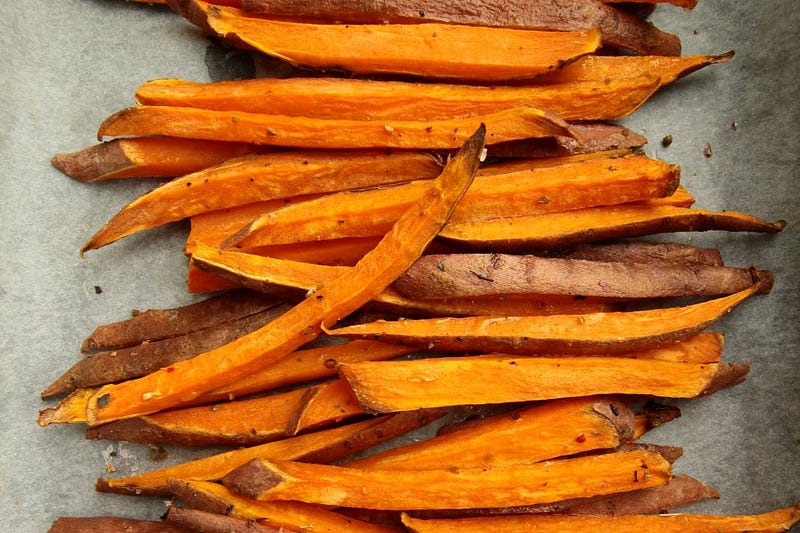
Low on the glycaemic index, sweet potatoes provide sustainable, slow-releasing energy.
Therefore, sweet potato is a great addition to a pre-workout meal with added fats and protein such as beef.
Fuelling your body with its preferred energy source of carbohydrates means that it can make better use of the protein source by using it to repair muscle damage.
A medium sweet potato has around 25 grams of carbs and 4 grams of fibre. Sweet potatoes are also dense in micronutrients such as beta-carotene and vitamin A.
There is a huge variety of sweet potato types and colours, such as yellow, white, orange and maroon/red. The darker varieties are especially full of antioxidants.
Tuna
The most widely consumed fish species throughout most of the world is Tuna.
Widely available and especially cheap in canned packaging, Tuna can last for several years in your pantry.
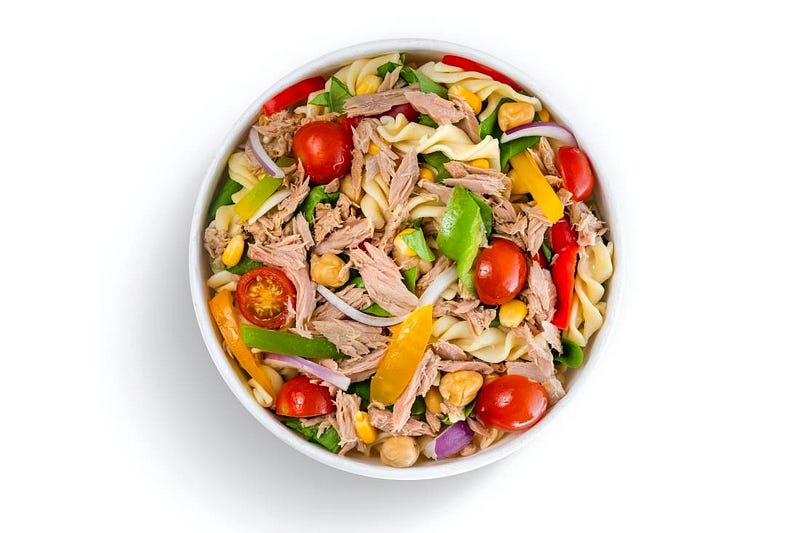
100 grams of tuna contains 132 calories — just one gram of fat, no carbs and 28 grams of protein. Like much other fish, the protein quality in tuna is very high, with a PDCAA score of 100.
As well as repairing and building muscle, a high protein diet has weight loss benefits of increased feelings of fullness and reduced cravings.
Despite being very low in fat, tuna is one of the best sources of omega-3 fatty acids.
Omega-3 fatty acids at dietary fats that keep our joints healthy — especially important as we age, come back from injury, and if we’re lifting heavy weights. Other benefits of omega fatty acids to our overall health include heart, eye, and brain health.
Finally, other micronutrients found in Tuna include iron, vitamin B6, potassium, selenium, calcium, cobalamin, and magnesium.
Broccoli
A cruciferous vegetable, broccoli is a low-calorie, tasty, and nutritious option addition to most meals.
And because of broccoli’s popularity with bodybuilders, it has become a bit of a meme with “Chicken, broccoli, and rice”.
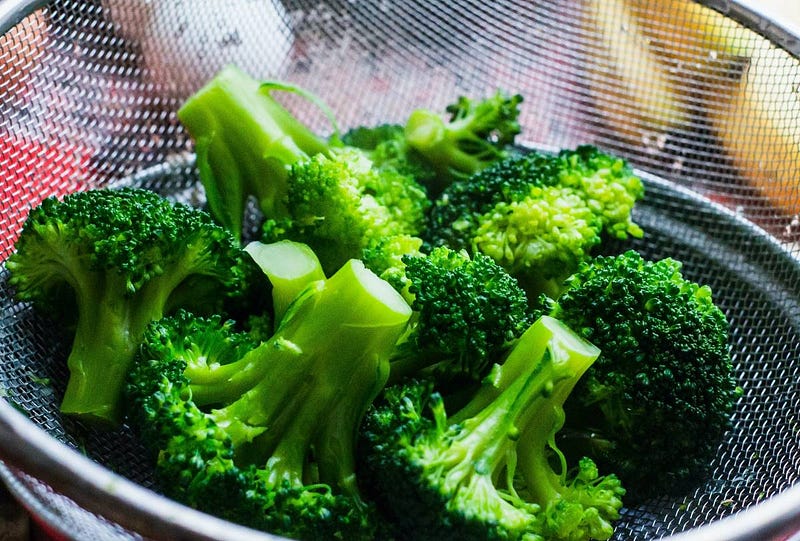
Broccoli is around 90% water and just 35 calories per 100 grams containing almost no fat.
Calories are made up of around 60% carbs and 40% protein. The same serving contains around 2.5 grams of fibre.
Broccoli is also dense in many vitamins and minerals, including folate, potassium, manganese, iron, and vitamins C and K1.
It’s a versatile ingredient, great in stir-fries or eaten steamed as a side.
Hence the popularity of the mighty broccoli!
Spinach
One of the most nutrient-dense foods that we can add to our meals is spinach.
Popeye was onto something…
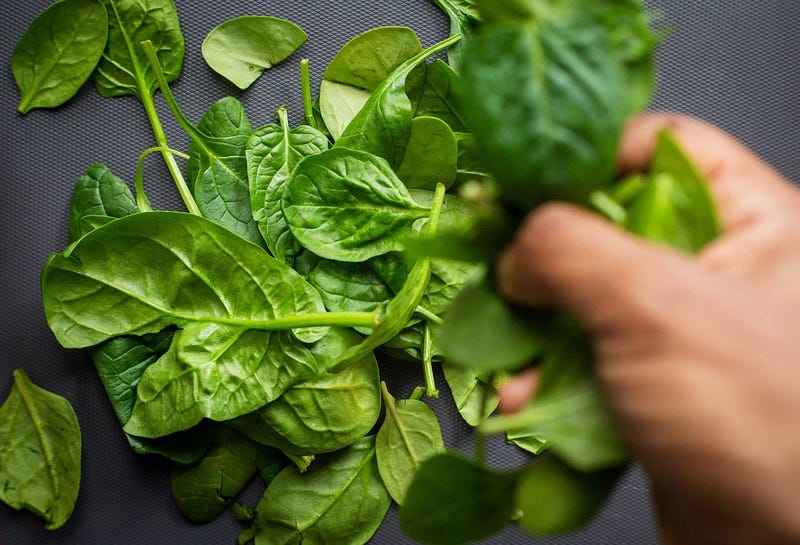
Spinach is packed full of iron, helping to keep a healthy immune system. It also contains high amounts of carotenoids, vitamin C, vitamin K, folic acid, and calcium.
Made up of 93% water, 100 grams of spinach contains just 23 calories. It has around 3 grams of both carbs and protein, negligible fat, and 2 grams of fibre.
“Receiving a thylakoid-enriched meal can decrease appetite and probably food intake in short term.” — Amirinejad et al., 2019
As it’s a leafy green, spinach contains thylakoids that may increase satiety to reduce hunger.
Eggs
A nutritional goldmine, eggs are a staple for any diet.
Eggs are especially useful for anybody wanting to build muscle. One large egg contains around 6–7 grams of protein, meaning you only need 3 eggs for around 20 grams.
Moreover, with a PDCAA score of 100, egg protein is of very high quality. Eggs are one of the most bioavailable protein sources — meaning we can efficiently digest, absorb and utilise the protein’s amino acids.
“The ingestion of whole eggs immediately after resistance exercise resulted in greater stimulation of myofibrillar protein synthesis than did the ingestion of egg whites….” — van Vlient et al., 2017
Eggs also contain micronutrients such as iron and zinc. Iron is a mineral that our bodies require for growth and development, and zinc boosts our immune system and metabolism function.
Other micronutrients in eggs include vitamin D and folate, and plenty of Omega-3 fatty acids.
Finally, cholesterol in the yolk of eggs yolk can help support healthy testosterone levels, crucial to building muscle.
Berries
Despite what many people think, berries are generally a low-calorie option. This is surprising given how sweet berries are — you think they’d be loaded with sugar.
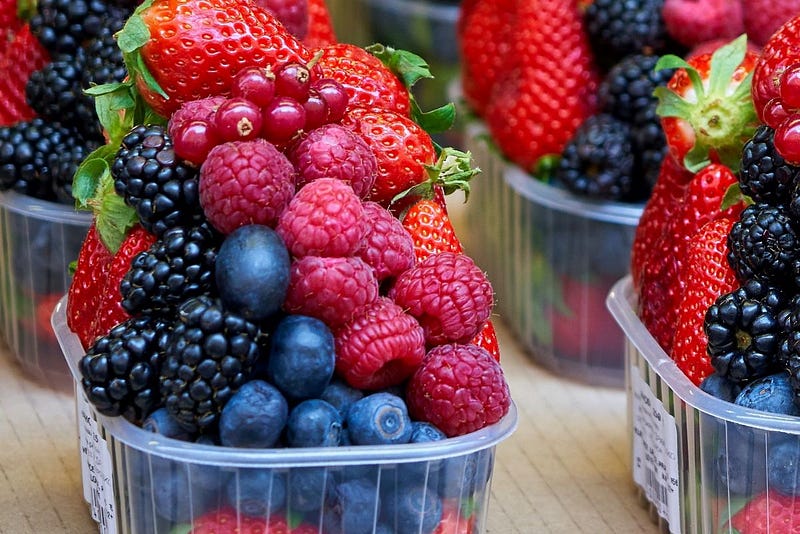
Berries are also high in anthocyanins, which could help retain lower body fat levels.
Two popular berry options are strawberries and blueberries. Both taste amazing of course and are great additions to Greek yoghurt or as a snack on their own. Strawberries contain just 30 calories per 100 grams and blueberries 57 calories.
Berries also contain many important nutrients that can improve our cholesterol levels and blood pressure, and reduce inflammation. Some of these micronutrients include potassium, manganese, folate, and vitamins K1 and C.
Berries are also high in fibre and also contain antioxidants and prebiotics.
Blueberries might even lower the risk of Type 2 diabetes and general berry consumption may reduce heart attack risk of heart attack and improve our cognitive ability.
Oranges
Citrus fruits are low in calories and high in vitamin c and fibre. One 140-gram orange contains around 66 calories, most of them from carbs.
With almost 3 grams of fibre, 86% of an orange is water, making it quite filling (satiating).
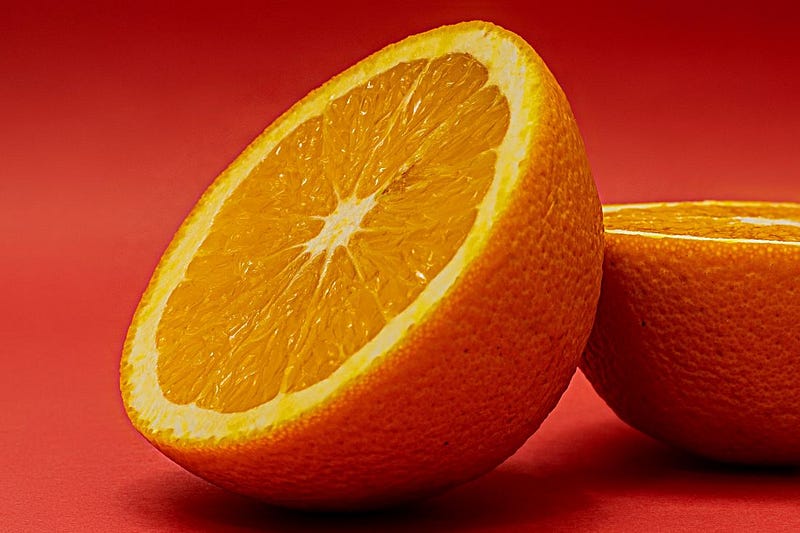
One orange will give you almost 100% of our daily vitamin C recommendations, as well as smaller amounts of folate, calcium, and potassium.
However, be very wary of orange juice.
Orange juice on average has 111 calories per glass and can have added sugar and low fruit content.
Eating two oranges is far more filling than one glass of juice and contains fewer calories.
Final Words
In conclusion, this article has discussed ten highly nutritious foods that are great additions to your diet.
In saying that, if your diet restricts you from certain foods such as vegans or keto, these won’t all be suitable. But most of us should try and eat all these foods! They are kiwifruit, red meat, oats, sweet potato, tuna, broccoli, spinach, eggs, berries, and oranges.
Include these foods in your day-to-day eating to ensure you get all the nutrients your body requires. And they could help you to lose weight and build muscle (with resistance training).
Good luck!
Thank you for reading.
If you enjoyed the content, you might be interested in this article about how I have gained over 40 pounds of muscle.
How I’ve Gained Over 40 Pounds of Muscle
My training and diet, and the science behind it.
medium.com
Subscribe to be notified when I publish new content.


