
What If I Edit an MLK Speech to Make It About Sexism?
Would so many men still think that women were out of line?
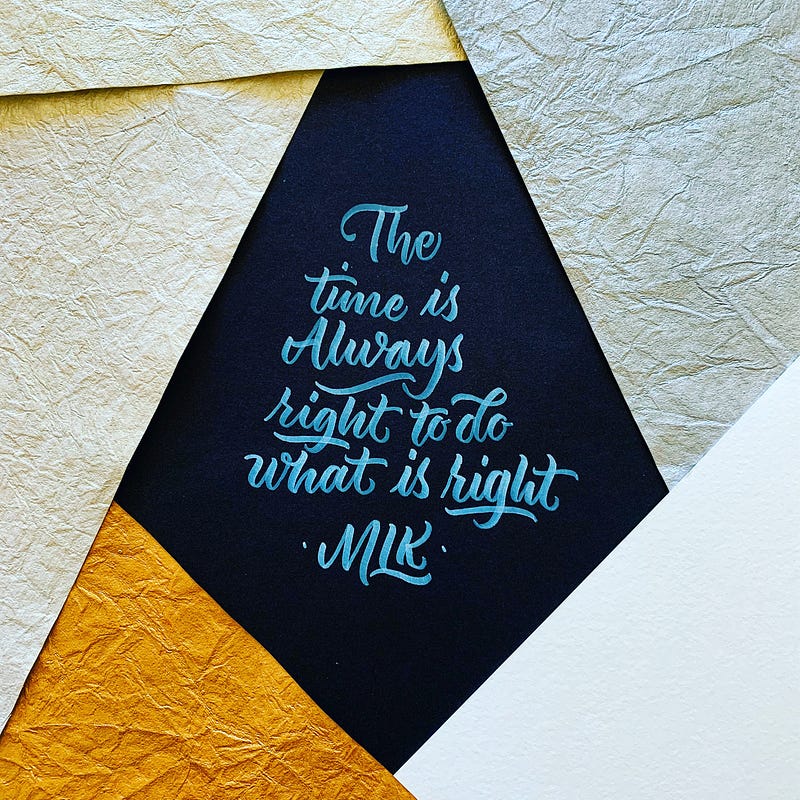
The purpose of this exercise is not to make equivalencies between racism and sexism. While some certainly exist, I acknowledge that there are other places where it’s not an apples-to-apples comparison. The purpose of this exercise is to demonstrate that what is often considered inflammatory and disruptive language when it comes to sexism is exactly the kind of pointed and unflinching rhetoric employed by Dr. Martin Luther King in order to get a complacent white populace to begin to wake up to the realities of ongoing racism in our culture. King didn’t mince words, and naturally, a lot of people hated him for it, but his tell-it-like-it-is speeches also eventually led to the adoption of the Civil Rights Act of 1964 as well as a significant cultural shift in the direction of greater equality.
In 1967, King wrote a speech, Where do we go from here? I’ve edited it below to reflect what a similar speech might look like if he were speaking about sexism rather than racism. Is it too angry? Too inflammatory? Too hateful? Or is it saying, just as King did in his original speech, the truth about what is really going on in our society — something that needs to be said — so that we can begin to really wake up to the realities of sexism and violence against women in our culture?
First my edited version and then the original for you to compare.
Men, it must frankly be said, are not putting in a similar mass effort to reeducate themselves out of their sexist ignorance. It is an aspect of their sense of superiority that the men of America believe they have so little to learn. The reality of substantial investment to assist women into the twenty-first century, adjusting to female colleagues and bosses and genuine safety and acceptance as equals, is still a nightmare for all too many female Americans… These are the deepest causes for contemporary abrasions between the sexes. Loose and easy language about equality, resonant resolutions about equality fall pleasantly on the ear, but for women there is a credibility gap they cannot overlook. She remembers that with each modest advance the male population promptly raises the argument that women have come far enough. Each step forward accents an ever-present tendency to backlash.
This is the original:
Whites, it must frankly be said, are not putting in a similar mass effort to reeducate themselves out of their racial ignorance. It is an aspect of their sense of superiority that the white people of America believe they have so little to learn. The reality of substantial investment to assist Negroes into the twentieth century, adjusting to Negro neighbors and genuine school integration, is still a nightmare for all too many white Americans…These are the deepest causes for contemporary abrasions between the races. Loose and easy language about equality, resonant resolutions about brotherhood fall pleasantly on the ear, but for the Negro there is a credibility gap he cannot overlook. He remembers that with each modest advance the white population promptly raises the argument that the Negro has come far enough. Each step forward accents an ever-present tendency to backlash.
Where do we go from here… 1967
I hear a nearly constant drum beat, even from male allies, that women are too angry, and that this anger is counter-productive to change. If we want to move faster toward equality they say, we really ought to tone it down and be a little bit nicer. Unsurprisingly, “Watch your tone” is something that many assertive women hear throughout their lives. Something that is almost never said to men. The cultural expectation is for women to be pleasing and accommodating. When they fail to do that, it reads like a transgression, rather than the passion and assertiveness that are considered to be assets in men.
While I agree that we need to find more ways to work together and to get men bought into championing this cause by bringing them into the fold, I do not agree with the nicer part. How does one effectively talk about one’s pain at the hands of a male-dominated society without actually noting that this pain does not arise from the ether — it comes from a harmful and problematic pervasive culture of masculinity?
Individual men who take this personally are using that defensiveness as an excuse to not have to grapple with the ways that they absolutely do help to uphold and maintain these oppressive dynamics — either with their actions or their inactions, their words, or their silence. If that makes them uncomfortable, perhaps it should, because despite some real advances, violence against women is still pervasive, and inequality is real.
Just yesterday a friend told me that she’d recently received a settlement because the company she works for determined that men were being paid more for the same work than women were. When my husband headed his company’s HR department a few years back, he commissioned a gender equity study that determined the same — in many cases, men were being paid more than their female colleagues for the same work. This stuff is still going on today all of the time. Not in every company, but in plenty of them.
If you are a member of a dominant group, you have a responsibility to challenge other members of your group who are acting in oppressive ways. If you do not, then your silence is tantamount to complicity in their abusive behavior.
Katz, Jackson. The Macho Paradox (p. 68). Sourcebooks. Kindle Edition.
And if you are a man who is already doing that work, then you ought to realize that the term men when used in this way is not referring to you — it is referring to a societal dynamic and demographic. There were white abolitionists and anti-racism advocates for over a hundred years before Dr. King came along and there were white anti-racism allies in 1967 when King made that speech.
They did not feel offended or defensive when MLK spoke of whites who give lip service to equality but don’t want to do the actual work to make it a reality because they knew he was speaking about the wider culture — not them in particular. Put your individualism aside for a moment and accept that you are part of a society that you help to co-create — and in this society, violence against women by men is a real problem, and we are not remotely close to actual equality.
Sexism and violence against women are mostly not perpetrated by monsters, or by so-called bad apples, it is perpetrated by fathers, brothers, sons, uncles, cousins, friends, colleagues, neighbors, and clergy because it is deeply woven into the fabric of our society. Every single man knows men who have said or done sexist things and even violent things, and every single man knows women who have been on the receiving end of that since they were young children. Yes, sometimes this stuff is done by women too, but the overarching dynamic is men harming women because domination of others is a central aspect of masculinity in our culture.
To be honest, as bad as the statistics around sexual violence are, I think they still underrepresent the true problem. With very few exceptions, all of the woman I’ve ever met, of any age, political affiliation, or geographic region has experienced at least some level of sexual violence and most of them have experienced a lot of it. Women may exist who never have, but I think they are in the distinct minority. Nearly all girls experience sexual harassment before the age of 17 and for many of them, it begins at around 10 or 11 — and continues on for decades.
I don’t think that this horrendous state of affairs, or anything else that is negatively affecting women’s lives to that degree, is something that we will effectively address by being nicer about it. I was first sexually harassed 45 years ago, and I haven’t seen any marked improvement in that dynamic for younger women since that time. How long are we supposed to wait? How many children have to be traumatized before a male-dominated culture takes action?
I think what men need to understand is not just how pervasive a life experience this is for every woman he knows or cares about, but how this dynamic has also impacted him more directly, in ways he may not even be conscious of. If your mother, your grandmothers, and your sisters have ever been physically or sexually assaulted by a man (or men) — as many, many of them have, what does that trauma do to their ability to be present in your life in a caring and supportive way? What does that do to children who have to witness that? How does this, along with women’s pervasive marginalization at work and in society at large impact their mental and emotional health? And how does that trickle down to you? We really are all in this together. These are not just “women’s issues.”
If women have to, as a matter of safety, be wary of all men until they have proven themselves to be trustworthy, what does that do to their ability to openly connect with and relate to a man from a place of friendliness and optimism? If women are angry and distrustful, maybe it’s because they are fed up with being told that they shouldn’t be and that this is the problem, rather than all the upsetting and demeaning things that they constantly have to navigate, most of which men have no experience of.
Nobody likes to feel criticized, but unless you’ve specifically done these things, we’re criticizing the culture, not you as an individual. It’s also not the job of women to soft-pedal what their lifelong experiences have been and the toll that this has taken on them. Most men honestly have no concept of just how bad it really is, and instead of listening to our stories, and accepting the gravity of that, many want to instead remind women that things are better than they used to be, or that men suffer violence and have systemic issues as well. It’s not that we don’t care about that, but we want you to listen to us when we speak — without deflecting. Then we’ll listen to you.
As Mark Greene notes in Avoiding the Grief of Male Allyship,
“It’s not easy for men to own our collective part in all of this. It’s much easier to default to “But what about men’s suffering…” I get it. I feel the urge to turn away, too, to shut it all out. For boys and men, growing up in our bullying and violent Man Box culture, such self-protection becomes reflexive, ingrained in our strategies for staying safe.”
“But the first step for us is to FEEL, to open ourselves up to the emotional experience of what is happening to women and girls in the world. Brothers, if our allyship isn’t driven by some degree by grief and sorrow for what women face, it is too safe, too well-insulated. It is incomplete. It is from within that disconnected space of emotional self-protection, that millions of men allow the status quo to continue when we should be ripping down our generations-old dominance-based culture of masculinity for the sake of our own souls.”
Not only do women need to be allowed to speak the truth about their experiences and the ways that it affects them, we need men to understand that overwhelming this is about men because they stem from “men’s issues” — men’s issues with a dominance-based culture of masculinity, men’s issues with turning a blind eye to things that are uncomfortable to confront; men’s issues with the belief that this mostly doesn’t have anything to do with them and that perpetrators are bad apples, rather than mostly just regular men that they know and like operating out of the box of masculinity they have been raised in by our culture.
To paraphrase Dr. King once more, “Why is equality so assiduously avoided? Why does male America delude itself, and how does it rationalize the evil it retains?
We need more male allies, but we also need to be able to tell it like it is. And we need guys to be “man enough” to take part in and responsibility for the ways that this social system desperately needs to change — for the sake of women, but also for the sake of men, and everyone else.
© Copyright Elle Beau 2022