
What I Want in a Man
How to take the toxic out of masculinity
Gender is ubiquitous in the news these days. I like the new Gillette commercial about men aspiring to improve, despite the (mostly made up) controversy. And I’m fascinated by these debates on “toxic masculinity” and the new American Psychological Association guidelines about how to counsel troubled boys and men.
But reading top thinkers on gender issues just serves to confuse me and raise more questions. What is an ideal man? What is an ideal woman? Are these ideals in opposition? No one lays it out clearly. So here’s my attempt.
First off, let’s discard the conservative vs. liberal lens. Most articles state Republicans favor “traditional” masculinity while Democrats consider that model “toxic,” framing the matter of manhood as if the U.S. is equally divided in two opposing camps. Don’t fall for that old trick. Because according to the latest Gallup poll, most Americans are Independent (39%), followed by Democrat (32%) and then Republican (26%). So the idea that we’re lining up in equal numbers behind two opposite models is hogwash.
Next, take a moment to consider what you want in a man, if you’re the kind of person who wants (or is) a man. I have no doubt that different people want different things in men. But what are your things? Do you and I hold some things in common? Because that’s the underlying question, isn’t it? What kind of man do we actually want to have, as opposed to see in the movies? What kind of real man do we want in our lives?
As for me, here are my top favorite characteristics:
- Intelligence: I want someone I can talk to, who is able to understand what I am saying and spark new ideas in my thinking.
- Humor: I want to be entertained. I love to laugh. When life kicks me in the teeth, as it so often does, I want someone who can help me see the funny side of it.
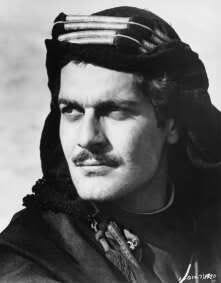
- Good Looks: I want to be sexually attracted to my partner. In my particular case, this means a man who is not too muscled. I don’t want to feel threatened at any time. I don’t like the idea that I could be overpowered. My personal preference is a slender man with dark hair and soulful eyes. In my youth, I had a celebrity crush on Omar Sharif, who looked like this back in the day:
- Moderate Ambition: I want someone who has a job, but who isn’t consumed by it. I want help paying the rent, but also a partner who is home enough to pay attention to me and the children.
- Kindness: Any sign of a mean streak is an automatic disqualifier.
- Good Parenting: This trait is hard to gauge accurately before having children. Afterwards, it becomes invaluable. So if you have children and you’ve selected a man who is a good parent, it feels a little like winning the lottery, or inheriting a small fortune from a distant relative. You couldn’t absolutely depend on its arrival, but you’re really glad it showed up.
- Loyalty: I don’t want a man who flirts with or even looks too closely at other women (or men). I don’t like feeling jealous. I want my man to be devoted to me.
- Even temperment: I get enough drama outside the home. I don’t need it in my partner. I want my home to be a place of comfort and security.
Now that I look at my favorite male traits, I realize that none of them are specifically male. Yet there have been times over the years when I appreciated a particular masculinity in my husband.
One time I saw the tail of a large rodent walk by the bedroom door in my apartment, and was grateful when my husband jumped out of bed to go chase it. That seemed like a very manly thing to do — protect me and my home. Walking on city streets at night, I feel safer and calmer with my husband walking beside me. And towards the end of three pregnancies, I was so physically disabled that I felt like I needed a bodyguard, and that was a service he was able and willing to provide.
So perhaps I should add protector to the list? But the problem is, I don’t want to need protection, and most of the time, I don’t. And if we’re talking about ideal values here, surely the world we aspire to is one in which people of all sizes and abilities can move about without fear of violence? Plus, mothers protect their children just as fiercely and effectively as men protect their partners and property, so I’m not sure that protector can be classified as a specifically male trait.
Maybe, when we come right down to it, the real problem is in setting up a male vs. female system of ideals in the first place. Maybe instead of trying to be the best men or the best women we can be, we should be focusing instead on how to be the best human beings.
For further reading…
My writing is free to readers who follow my links from Twitter, Facebook, and LinkedIn, but if you’d like to read more, click here to join Medium for $5 a month and they’ll give me some of that money. For an email whenever I publish, click here. Find more stories about Sex, Love & Family this List. And for more of the good stuff, follow Fourth Wave, where we’re changing the world for the better, one story at a time. Got one of your own? Submit to the Wave!


