
What I Learned When a Thief Held a Gun to My Head
No one prepares you for a moment like this.
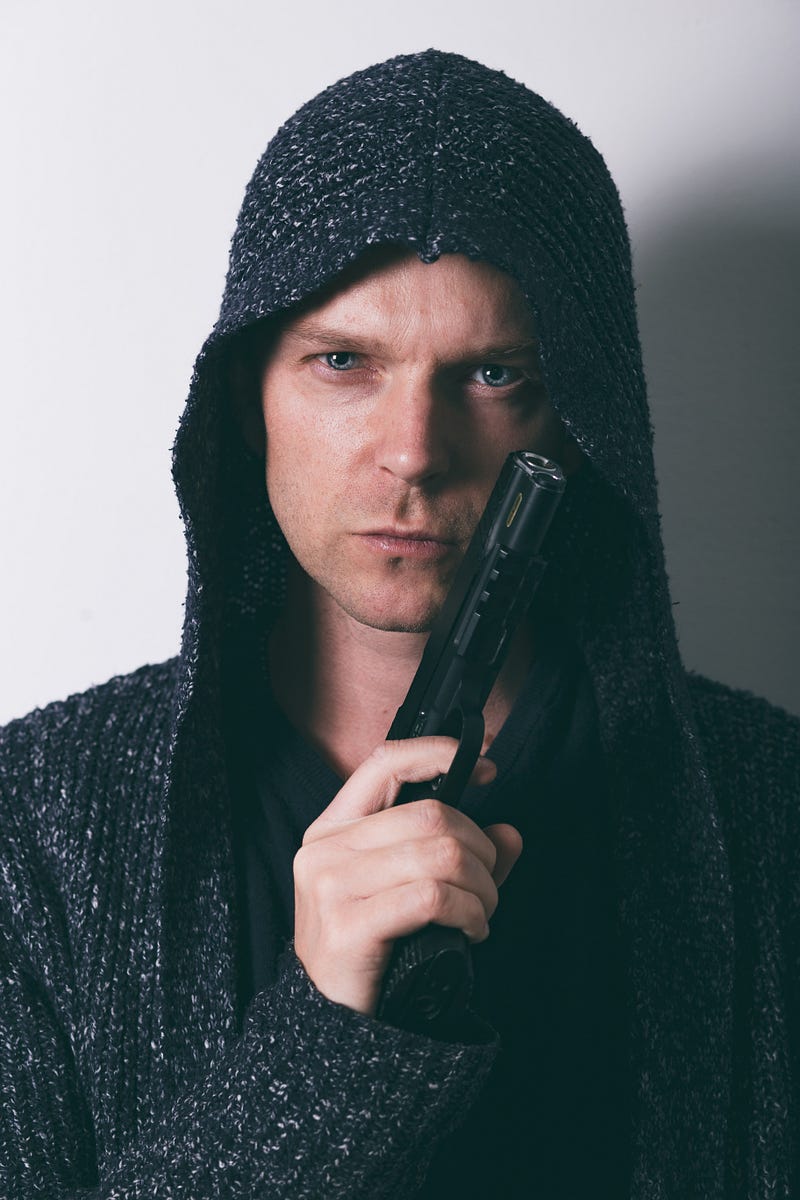
I remember when he raised his shirt, a seemingly innocent gesture. He wanted me to know he had a gun tucked in his breeches. He wanted me to be scared.
I wasn’t.
My mind couldn’t reconcile the fact that he sold phone chargers in the street and that now he wanted to steal mine. It was ironic, ridiculous — but painfully real.
Panic building in my gut, I clutched my car’s steering wheel and looked around me. I was stuck in traffic. My door was unlocked. My phone wouldn’t stop buzzing; my grandmother wanted to speak with me.
She had no idea her call would attract the attention of a man selling phone chargers. She had no idea he would knock on my window, demanding my newly purchased phone.
She had no idea he would hold a gun to my head.
“Give me your phone!” the thief screamed and banged the gun against my car window’s glass.
I flinched, but my hands wouldn’t release the steering wheel. Pulse racing, I did the single, most stupid thing I’ve ever done in my life: I shook my head.
“I’ll kill you!” He threatened me, holding the gun to my head.
At that moment, I thought of my uncle. He’d been shot dead in a robbery. Would I end up like him?
Even so — even though my skin was slick with sweat, I shook my head for the second time. I had been saving for months to buy my phone. I couldn’t give it up. I would protect it with my life.
If my reaction sounds idiotic, it’s because it is. Before this moment, I had attended at least four lectures on what to do when someone threatens your life to rob you.
According to every expert in every part of the world, you must give the thief what they want. No questions asked.
But silly, young me didn’t. Adrenaline pumping through my veins, I refused the thief’s demand. I decided that the money I’d spent on my phone was more valuable than my life.
That day I learned shock makes you do stupid things. No matter how many lectures you attend or how well prepared you are, when your heart is hammering against your chest, you can’t think straight.
I was extremely lucky because the woman in the car behind me started screaming for help. Seizing the thief’s distraction, I drove in a frenzy between the street’s two lanes. Though it suffered a few scratches, my car was small enough to fit. Who knows how many laws I broke that day.
All I know is that as soon as I had put enough distance between the robber and me, I wept. The gun, the evil gleam in his eyes, my stupidity — everything crashed down on me.
Tears fell hot and angry across my cheeks as I drove home. And for a long time afterward, I mentally insulted myself for being stupid, for being reckless.
It has taken me several years to accept I wasn’t acting rationally, to forgive myself.
But it’s necessary, fair.
If you ever find yourself in a high-stress situation, remember you weren’t fully yourself. Accept it’ll be part of the learning process.
When I arrived home, I didn’t speak with my mother straight away. Shame reddened my cheeks.
Over and over, my mother had repeated the same advice: “Don’t check your phone while driving.” Not only because I could have an accident, but because where I lived, there were lots of thieves waiting to pounce.
But I’d always ignored her. I’d always thought I knew better.
Until that day.
Now, whenever my mother — or another loved one — offers me advice, I remember the shimmering black gun, I remember the terror that gripped my bones, I remember to listen.
People who genuinely love us wish us happiness and health. No matter how annoying their unsolicited advice feels, we should try to consider it. It could literally save our lives.
I could have died. I could have died. I could have died.
Those four words banged against my skull for weeks after the attempted robbery.
As a twenty-two-year-old, death wasn’t something real to me. Yes, other people died, but not me. I was too young. Too healthy. Too untouchable.
Wrong.
The phone charger guy could’ve blown my head off. He could’ve cut my life short. He could’ve left my parents without a daughter.
From that point on, I’ve become uncomfortably aware of death. Whenever I hear a young person has died of cancer or in an accident, the hairs on the back of my neck rise to attention. I no longer believe myself immortal. Though at first it felt depressing, it has become the fuel that drives my life.
If everything can change in an instant, I want to ensure my days are what I want them to be. I want to avoid procrastinating on the things that matter. I want to love as fully as possible.
I want to live.
Since then, I’ve changed jobs, written four books, started a micro-business, and married the love of my life.
I now understand Steve Job’s words: “If you live each day as if it were your last, someday you’ll be right. Every morning I looked in the mirror and asked myself: If today were the last day of my life, would I want to do what I do today? ”
Remember everything can change in an instant, so don’t wait.
Don’t wait to mend problems with people you care about. Don’t wait to pursue your dreams. Don’t wait to have a life-or-death experience to wake you up.
Go.


