
What I Learned Hiking in Iceland
Along the trail, I discovered what “less is more” means.
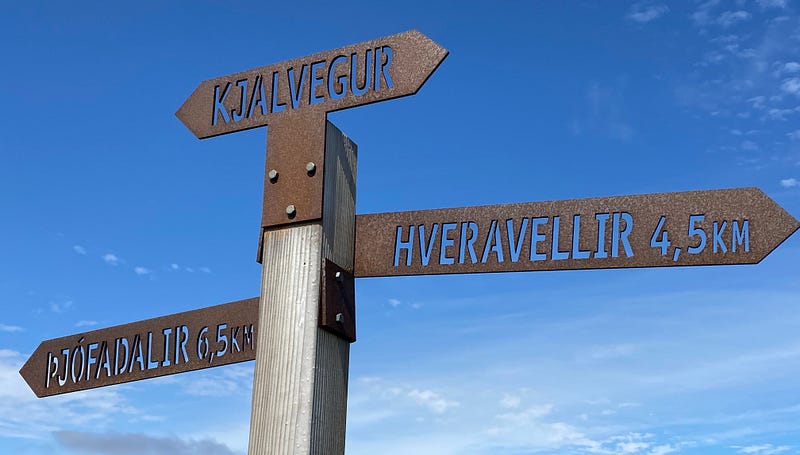
A week hiking hut-to-hut in the Central Highlands brought the truism, less is more, into stark relief.
The expression came into focus for me through different lenses.
I expected Iceland to offer trekking across spectacular scenery, the much-touted restorative Geothermal pools, and daylight that never quite ends.
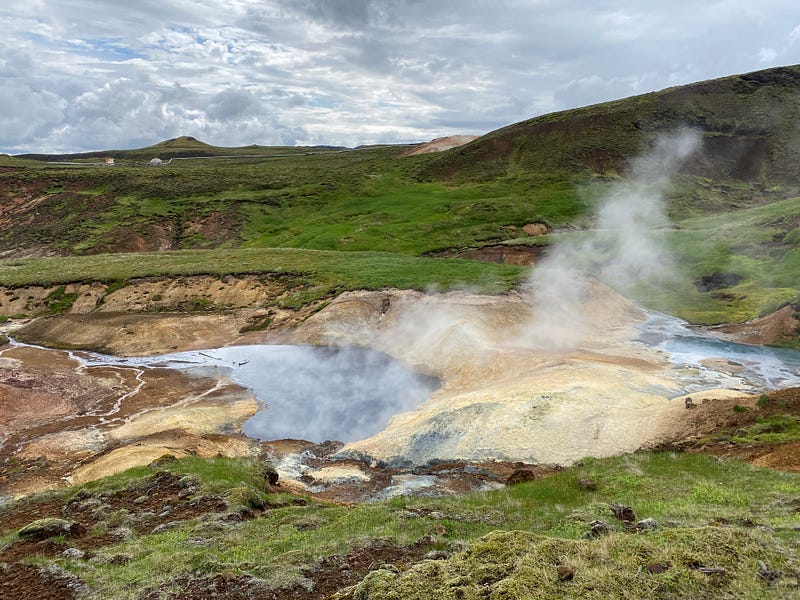
I didn’t expect Nordic minimalism to climb inside my head. I didn’t expect the unlikely aggregate of simple food, carefully apportioned alcohol, a sparse array of clothing needs, and basic accommodations to result in an unequivocally transformative travel/life experience. I didn’t expect less to be more.
Here’s how reality veered off the track of my expectations as simplicity ruled.
Accommodations
Hut-to-hut trekking, the tour operator’s marketing material read. I was all in, even with the small print about detached toilet facilities, some without showers. “Some” meant “none” with showers and some without water, except for the rudimentary kitchen setup.
Let’s just say these huts were not geared to the glamping market. Bunks were either built-in bunkhouse style or pulled down from the wall, attached by leather straps.
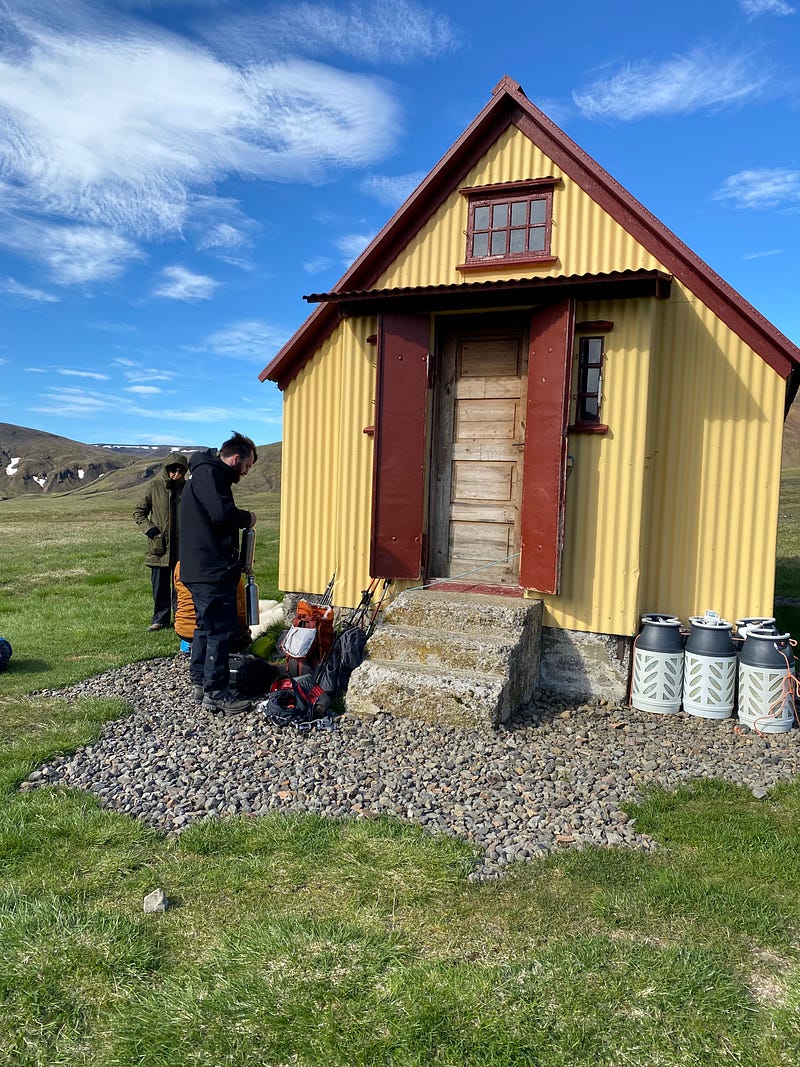
The huts were tiny, with sleeping for 12, which sometimes included a loft. Our party of 12, seven women and five men, also two charming young and capable Icelandic guides, Magnus and Arnie. Pretty cozy.
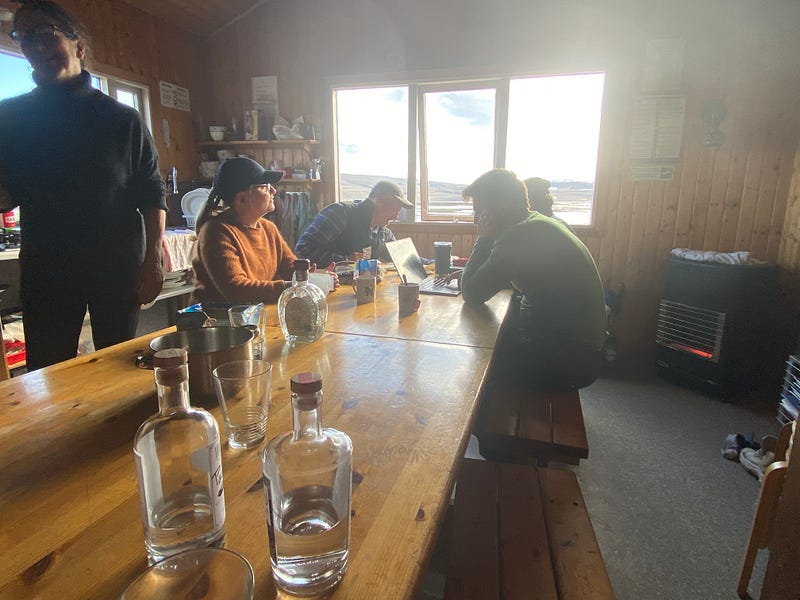
In the spirit of adventure, we soon became an extremely compatible group. The median age was 53, nine Americans and a game Norwegian woman all thrown together in a 5-day roving sleepover.
We ate breakfast and dinner in the huts, made coffee in the morning and sandwiches for lunch, played cards, had some sing-alongs with Arnie and his guitar, and had some drinks from inspired duty-free shopping. Decent cell service powered Spotify for some impromptu dance parties. (Sorry, but what goes on in the huts stays in the huts).
It was sparse, it was joyous, and it was a hell of a lot of fun.
Ultimately we stepped outside or to the kitchen sink for nightly ablutions before curling up in sleeping bags and eye masks.
Perhaps it was the novelty, but the group’s camaraderie in the hut was reminiscent of a carefree summer camp. It just worked.
The material comfort was adequate, nothing more. But the blush of meeting new people, aligned trip goals, a passion for nature, and curiosity to explore a new corner of the world offset any nuisance. The hut experience made the trek more exciting and enriching, not to mention providing storytelling fodder for years to come.
Food
As part of a cultural embrace, Americans often tuck into what they believe to be national fare in destination countries. Particularly for breakfast. Full English breakfasts in London, omelets in France.
But Iceland? Traditionally, the main elements of the Icelandic diet are dairy (skyr, a thick yogurt), fish, and lamb. With little agriculture, the population lived near the coast, where fish are abundant, and grazed goats and sheep.
But we were in total cultural immersion. To eat “traditional” Icelandic food meant high protein skyr, the Icelandic breakfast staple, topped with apples and muesli. A simple, fortifying breakfast, with minimal cleanup. We had miles to cover.
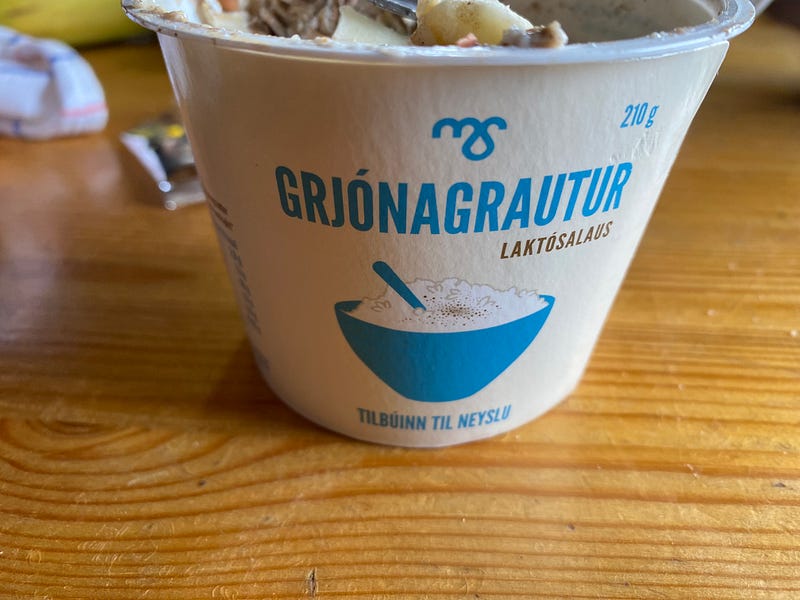
Stepping out of the Icelandic norm, our picnic lunches were typical: cheeses, cold cuts, condiments, cookies, and fruit.
Dinners consisted of local grilled arctic char and local grilled lamb, both with a hefty side of potatoes. In a bow to tourist expectations, there was packaged salad on the side.
Did the clean, cool air make the simple dinners so delicious? An entire day of exercise, covering ten miles or so? The light dusk of 10 pm? Was it the duty-free Icelandic gin and vodka with a chaser of Aquavit?
Bottom line:” gourmet” comes in all incarnations. The simplicity of fewer choices seemed sumptuous. Less was more.
Clothing/Gear
I was doubtful, looking at the packing list sent with the itinerary. It seemed ridiculously short on “necessary” clothes and appropriately more focused on gear. Top-notch gear was essential; otherwise, clothing seemed like an afterthought.
In what universe would I wear the same outfit three days running? In what dream scenario would I not change for dinner, assuming I was neither hospitalized nor incarcerated?
In what corner of my existence would clothing options not be important? How could I not take those cute flannel pants for evening lounging?
The packing list was, in fact, correct. We needed only the basics — the luxury add was plenty of clean, dry socks. Cocktail wear was not required.
Less was more.
Why “less” was really “more.”
It was somewhat revelatory that “less” actually made the experience transformative. The kind of experience that lingers long after the wheels hit the runway on the flight home.
Without the accouterments of modern life, with possessions scaled back, comes a certain freedom. It was liberating not to have to worry about “stuff” or what I was wearing or would wear.
With less, I could focus on more and cut out the middleman, the bullshit of life.
What does “more” mean in this context? It means getting into the rhythm of life of walking, observing, and thinking. It means having the time, over days, with no other pressures, to be meditative. To contemplate where I was in life, where I might be going, and where the world might be going.
These weren’t profound thoughts, just meandering ones. Sometimes in conversation with others, often in my own rather pleasant company.
Nothing matters in a universe of vast openness. Least of all “stuff” as long as it provides warmth and protection from wind and rain.
The experience reduced me to my essence. I vowed that my long-lasting souvenirs would be the sense of purity from unshackled emotions and an odd spiritual lift I often experience in nature. At the Arctic Circle’s edge, I found humanity’s essence.
The upshot
Good travel experiences teach you something about yourself, peeling back layers of your psyche to reveal inner truths. In an ideal world, the best travel experiences stick. Insight and self-discovery become integrated into your worldview and daily habits.
That doesn’t sound like “less” to me. It sounds irrefutably like “more.”
© 2023. All rights reserved. Jane Trombley


