
What I Learned From Writing Two Hundred Days In a Row
…and how you can increase your productivity too, without losing your mind

As a writer there’s a razor’s edge between madness and productivity. What starts as a simple daily habit can turn into a full-out obsession if we’re not careful. It’s a good obsession, but without a work plan, all that daily writing won’t amount to much.
I’ve been experimenting over the past two hundred days.
Although I’ve written most of my life I wanted to build a permanent, daily writing habit and accomplished said habit once I hit the first hundred days. You can read about the first half of the journey below.
The second half of my two hundred day writing journey got more interesting.
I lost my way and found it. I lost it again. And now I’m in the process of building a personal work plan to ensure all my daily writing accumulation is silo-ed towards the right projects. I’m working my way to designing a writing franchise of one.
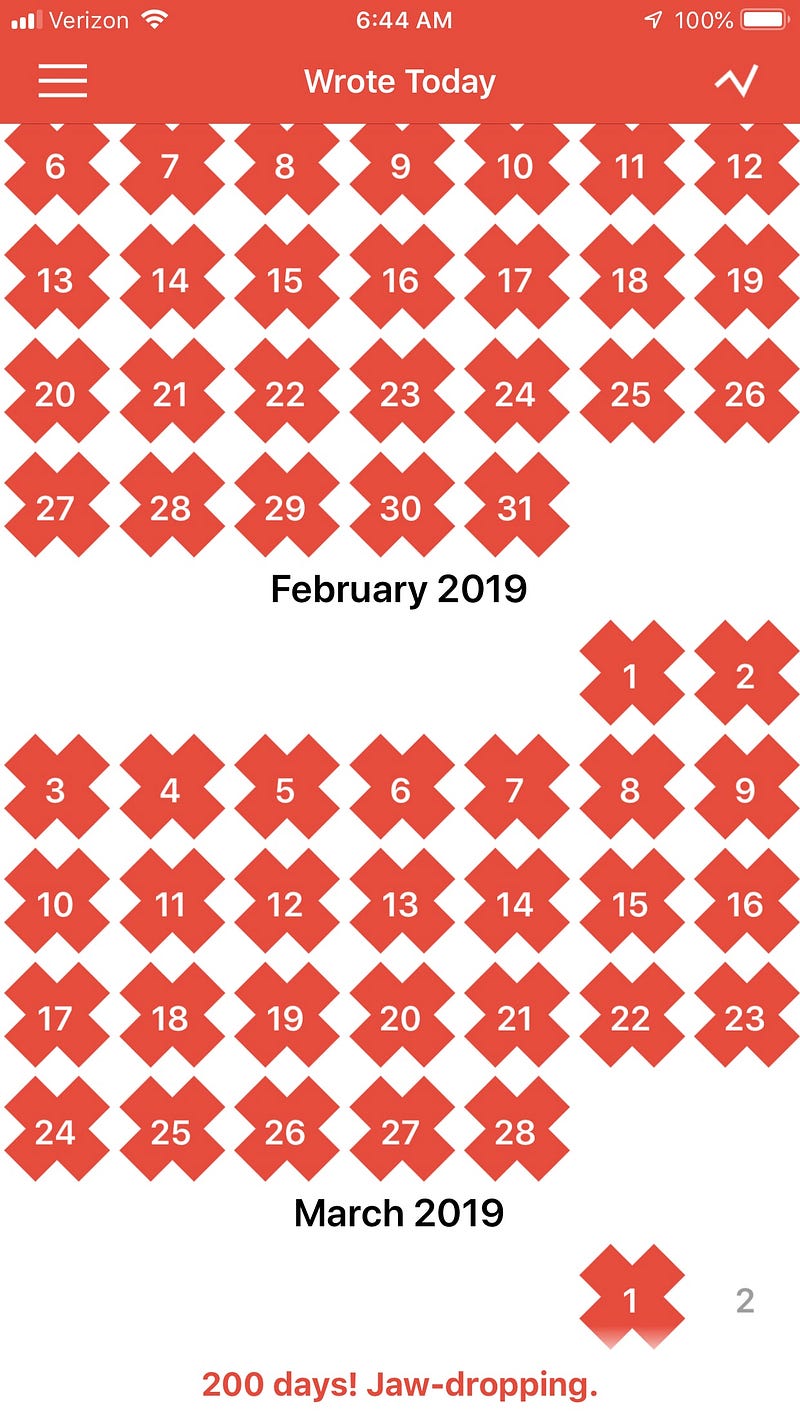
The first phase was the habit-building — check. The second phase was the implementation of the daily, lifetime effort to improve my craft one-percent per day — check. Now we’ve reached the third phase — deliberate practice.
Here’s the original hundred-day story:
Leaning towards madness
Once I hit one hundred days of consecutive writing things got weird for me. My income almost tripled. But the hamster wheel of production got to me. I started to abandon my big fiction projects in exchange for non-fiction. I’d write a little here. And a little over here. Then I swing back and work on a third, big project.
Without a clear work goal I wrote a lot with little to show.
As both a fiction and non-fiction writer I’ve got hands in both fires. I have big plans for my publishing business and my squirrel’s attention span hums full-time in the background begging me to go off on a tangent and start something new.
There was no way I could, nor should sustain the work process I’d been following.
I wanted to keep the production level. No complaints there, but my focus was straight in the toilet. I’d completed phase one, but my good intentions for phase two were slipping, because I got trapped in the hamster output wheel.
It was time to change course.
As freelancers and indie writers it’s easy to work ourselves to death. I mean, if we’re not hitting our goals all we have to do is write more, correct? Nah, son. Writing more won’t solve anything if we don’t have a work plan. I didn’t want to write myself into a straight jacket so it was time to clean things up.
Forging the work plan — deliberate practice
We need maps for everything. Even the most loosey-goosey writer on earth could use a little structure. My work process had become so frantic the quality of my writing was losing its soul. I got the balance back.
I got my inspiration from Micheal Gerber’s quintessential book, The E-Myth Revisited.
What Gerber teaches us there are three people inside a business (managers, technicians, and entrepreneurs). As freelancers and indie writers we’ve got to wear all three hats. Most of the time, as writers, we’re technicians. We like to write so we do it a lot.
But if we don’t think about the design of the writing business (entrepreneur), the purpose of the writing (entrepreneur), and the daily work schedule (manager), all the writing effort can slip into madness.
It probably sounds strange, but I discovered how important it is to make my writing business operate like a franchise if I want to be a successful commercial writer.
This sounds odd even writing it, but my two hundred consecutive writing days taught me a work plan was the only way to write sustain-ably (for me).
We’ve got to back away from our technician’s thinking (as writers) and move the design of our writing business to the entrepreneur’s thinking — franchise thinking. We’ve got both pieces inside our heads, but sometimes the entrepreneur gets squashed when we’re in manic writing mode.
Before you get all upset and shake a shameful finger at me, you don’t have to look like a McDonalds to be successful in operating your writing business like one.
As creators its easy to live in our heads. Who needs systems when we’ve got gut feelings, inspiration, and new shiny ideas? I need a system. You might need a system. Discipline isn’t enough. I’ve got a ton of discipline. My problem is I lack deliberate direction and the franchise-of-one is the way I plan to get there.
How keep writing 200+ consecutive days with purpose
I have no intention of opening little August Birch writing franchises all over the world. I want a franchise of one. A working model to match both my writing goals and the needs of my readers.
“The system runs the business. The people run the system.” — Michael Gerber
I’m working on a simple business model where I write some fiction and non-fiction every day. I give myself publication and marketing quotas. Once I hit the quotas I stop for the day. I don’t want an endless wheel or production. When I write too much the quality suffers.
Now, this may not apply to you. If you write for fun, or you’re working on a book in your spare time this work plan model may be overkill for you.
But if you want to write commercially, you’ve got to publish. If you want to make a decent living you’ve got to publish a lot. If you want to publish a lot you’ve got to build up a body of work. If you want a body of work you’ve got to write everyday.
I found it’s much easier to write everyday than to worry about skipping a day.
I can’t imagine skipping a day at this point. I’m sure it’ll happen, but once you build a permanent writing habit all you need to do is give direction to your new, high level of output.
The first hundred days were the hardest.
The second hundred days were nothing but enjoyable. Yes, the writing is hard, but I’ve found my calling. It doesn’t feel like work, even if I write eight hours straight.
It’s time to keep writing.
It’s time to give all the daily effort some solid direction.
We’re waiting for you.


