
What has Art got to do with Spirituality?
The psychology behind the goosebumps in one word.
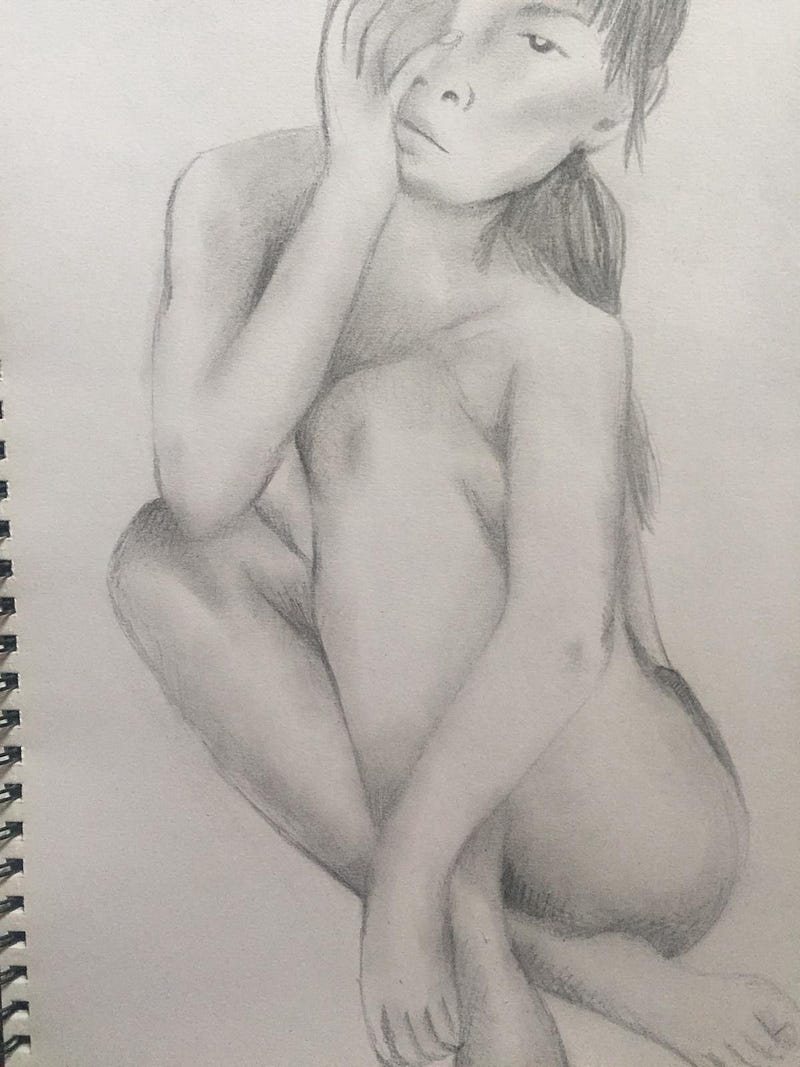
Like so many people, I enjoy dabbling in various kinds of artistic expression. From piano-playing to life-drawing, oriental dancing to writing. I am kind of into the whole expressing-yourself-via-different-mediums thing.
Actually, I think that everyone is — whether or not you see yourself as the “artistic” type. It is human nature to be creative or to yearn to create — and this could in the traditional sense of oil paints and canvas, but it could just as well be via your blog, eye makeup, or carefully curated Instagram feed.
We are essentially getting our ideas or emotions out of us in some form to be consumed by others. Because we like to express ourselves in a way that goes beyond a regular conversation of direct information-sharing. We yearn to be heard and understood on a deeper level by our fellow humans.
But I’m not even here to talk about the anthropological reasons behind our collective love for art per se. Rather, what it is about art that we instinctively look for and recognize as something artistic — whatever the medium, or our particular tastes.
All artistic endeavors in one word?
As a perhaps more welcome consequence of the strange times that we’re currently living, and the copious amounts of alone time which this new socially isolated reality is gifting us with, I, like many others, have had the rare opportunity to dedicate more time and energy to these precious creative outlets.
From posting on here more regularly to dusting off my sketchpad and pencils. This sudden spike in creative activity and at least attempting to put whatever raw materials I may be experimenting with that day into a somewhat pleasing ensemble, made me realize something resonant about what we enjoy as recipients of all forms of art.
Contrast.
Contrast is key to every piece of creativity we throw out into this world — whether that is in the verbal, visual, musical — or whatever other sense.
What do I mean by contrast?
Quite simply, contrast is the juxtaposition of extremes. This could indeed be the light and shadow in your Instagram photo. But of course, this idea also translates to other forms of expression.
Take for example the word “contrast” written a couple of paragraphs above as a stand-alone word. This is preceded by a long and winding sentence, building up to the idea in question. Here, I juxtaposed a long sentence with a one-word punch for this desired artistic effect.
It may not seem like much. You probably didn’t even think anything of it in this humble example. However, any kind of writer will tell you, a healthy variation of sentence length is vital for the flow of your prose — as well as a hack for ensuring your audience doesn’t doze off… (please don’t — this is going somewhere I promise!)
Without an awareness of contrast in your writing, you end up either with endless hard-to-follow sentences, or a text so disjointed and snappy it begins to grate on your nerves. Whether one extreme or another, we instinctively don’t care for this lack of variety.
The same goes for speakers or orators of any kind. Why do you think we hate monotonous voices so much? Think of the speeches which defined the eras past, the most powerful TED Talks you’ve watched, or spoken poetry you’ve heard.
We are drawn in by that crescendo of fast-flowing ideas to gradually and intentionally build tension.
And then, BAM.
That oh-so-popular dramatic pause.
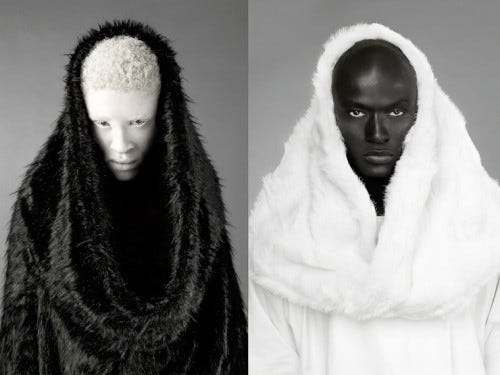
Similarly, any keen visual artist — whether sketchers, painters, photographers, or otherwise — will tell you how fundamental contrast is to their work too. Combinations of soft gradients and blunt lines. Heavy-handed shading, T-junctions, and gentle, soft strokes. The juxtaposition of strict, rigid elements with a flurry of disorder. Such is the language of visual art.
The same can be said for dance. As any showstopping choreography — no matter what the style — will juxtapose fast and slow, bold and dainty, soft and harsh movements. An abrupt pause, or twist, or turn. A sudden switch from a soft glide to a jarring pose. The aim of any type of dance to create something that teases the expectations of the spectator, and keeps their attention hooked.
And yes, the idea of a “hook” is also used in music. Defined as a memorable melody that sticks in your head and makes you want to play the track on repeat — contrast also plays a key role here. Whether it’s the tones, the tempo, or the volume variations, for a song to truly make an impact on us — whatever the genre — it must have a carefully curated combination of contrasts to make this particular tune have a unique footprint and stand out from the crowd, and keep on swirling around your head long after you’ve listened to it.
And don’t get me started on cooking and contrasting flavors. (You get the idea!)
Why we go crazy for contrast
Essentially, art is anything man-made. It is whenever humans create something. And so, if we see nature as random, art is the opposite. Art has been consciously put together: from the earliest cave paintings to the symphonies and poetry we have in the modern era— all human art is essentially our manipulation of the raw materials around us.
Contrast in Nature
Even when we see contrast in nature — such as the jarring silhouette of a mountain range, or the intense color and shape contrasts of a tiger, tropical fish, or flower. When are eyes are tantalized in this way with two or more extremes, this translates as beautiful to us.
After all, it is not a monotonous grey sky which we tend to find inspiring, but rather a highly saturated sunset, or an intensely bright moon and stars upon a canvas of inky black.
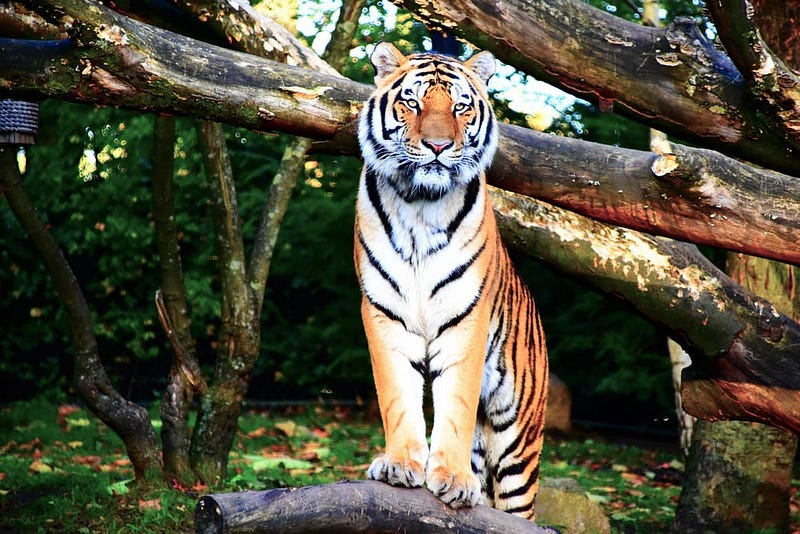
In nature, this contrast makes what we’re viewing seem important somehow. On a subconscious (and perhaps anthropocentric) level, we cannot comprehend how such extremes came to be together without human intervention. As such, it is received by our brain as a statement or message. Essentially, as art.
Whatever your religiosity, the existence of such improbable contrast in nature is visually stimulating and suggests an intelligence is behind it. And so, we cannot help but attach emotion and awe to it. Whether you believe this is evidence of a divine creator, or feel emotionally overwhelmed that such a thing could exist by chance alone — this juxtaposition of extremes of color, shape, or whatever it may be are unanimously received as a thing of wonder and beauty.
Contrast and Human Intervention
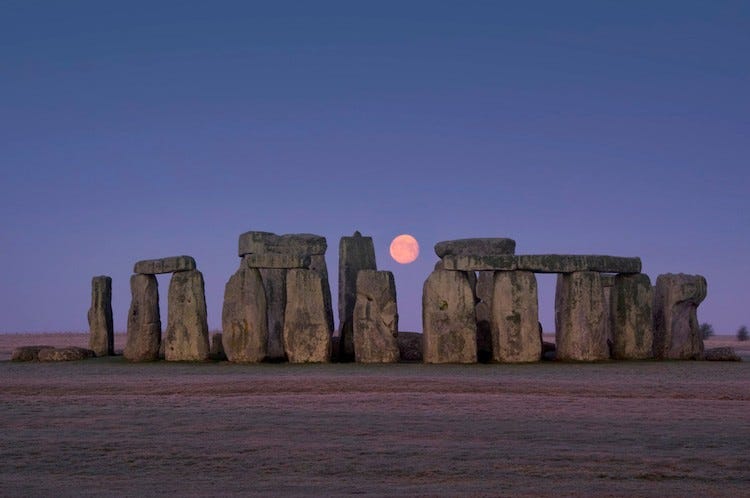
Now think of an obvious human statement — even in a relatively basic form such as the Stone Henge. The mere placing of these large and geologically incongruous rocks into an unnatural pattern is enough to show that humans intervened. That they manipulated nature somehow. The meaning, we may not know for sure. But, as humans, we instinctively look for contrasts and improbable juxtapositions identify the difference between a random arrangement and a piece of art, intended to communicate with us.
We struggle to explain how we know the difference between music and noise — but we are still somehow all capable of noticing the difference (Cue a joke about your least favorite music genre here.)
Think about it — if your cat or dog hears music playing, they don’t regard it as any different than any other noise of the same volume. However, even if a one-year-old baby hears a piece of music, they often perk up and may even try to bounce to the rhythm. They are able to recognize the sounds they are hearing as special somehow. There is some order and intention behind the noise which human beings naturally and very quickly recognize as music.
This seemingly simplistic observation speaks volumes when it comes to what makes something art.
The more sensitivity and depth in a particular arrangement of the elements — the more twists and turns or highs and lows in a song, a dance, a piece of writing, or a painting — even when done in a subtle way — the more of an emotional response we derive from it.
Essentially, art simply equates to human. The artist’s particular manipulation of their chosen materials carries an imprint of their humanity and emotion behind it. (How you choose to interpret nature is up to you!)
Roxanna is a British-Iranian content writer specialised in human rights and health. Also an enthusiast of culture, psychology and anthropology, she has a languages degree from King’s College London, an MSc in European Studies from LSE, and an EU communications background.
Twitter/ Instagram: @roxannayasmin


