
So, you’re an Introvert?
Don’t worry – we prefer not to have a club.
Do you sometimes feel you put on a persona in social settings? Smiling and small-talking your way into people’s high estimations, only to curl up and revel in your “alone-time” afterwards?
You may, dear reader, be an introvert. (Don’t worry, we prefer not to have a club.)
I’m sure most of us learned back in school that it’s not just the loudest who will be listened to. It’s the one who patiently raises their hand and waits for their turn to speak. It’s the one who can go off quietly and let their ideas speak through the great work they produce.
Although looking around at those in positions of power in 2020, with the likes of Trump and Johnson calling the stops, we may all be reluctantly reconsidering this introvert mantra — but I propose that the point largely still stands. There are always introverts working tirelessly behind the scenes. Doing the research, the writing, the reading, and the advising. I tell myself that introverts have the last laugh.
This is because, even if you are on the reserved side and aren’t one to shout over your peers, there is something powerful in the restraint to not speak absolutely everything on your mind. The capacity to truly listen, to study, to ponder. And to then respond or act accordingly. Although they may not always take center-stage — behind every powerful extravert there will be at least one extraordinary introvert.
But aren’t introverts just shrinking violets? Wallflowers? Cripplingly shy, socially awkward, insecure individuals? Many believe they need counseling— not celebration. But contrary to popular belief, being shy and being introverted are not synonymous.
Being introverted essentially means a need for regular alone-time to recharge — especially after being around people for a while. Introverts may seem to be the most social of butterflies at the party— but too much social interaction can leave them feeling a little worn out. Think of it as a socializing hangover. Indeed, the difference between introverts and extraverts is how they spend the day after the party.
On the other hand, shyness is the fear of certain social situations. Shyness is social anxiety; an insecurity to overcome. It may be more common among introverts because we are more sensitive to social interaction and tend to be painfully self-aware. But these traits don’t always manifest as shyness. And if they do, though introversion cannot (and should not) be “cured,” shyness can be.
You can be an empowered introvert. This realization could be the first important step towards you feeling your most authentic, introverted self; Indulging in the self-care measures required, but quietly confident about the social interactions required of you.
Moreover, being a so-called “highly-sensitive person” often goes hand-in-hand with being introverted. If you tend to be hyperaware of every sensation — from bright lighting, to distracting sounds and smells, to the way that stranger looked at you just then — this way of existing is part of the fabric of your identity and is undoubtedly linked to many of your strengths and achievements.
Just look at the countless introvert heroes and heroines of yesteryear. That’s right — despite what we are led to believe, introverts have always been in the picture and have always had crucial skills and perspectives to offer. But by their very nature, they were not so inclined to basque in the limelight.
From Rosa Parks to Plato, Martin Luther King to Gandhi — introverts have long proven that we don’t have to feel comfortable with the attention to get it when it really matters.
There are a lot of misconceptions regarding introverts. Some may think being introverted must mean someone has low confidence, or hates to socialize at all. However, whether you’re introverted or extraverted is all about how we behave when no one else is around.
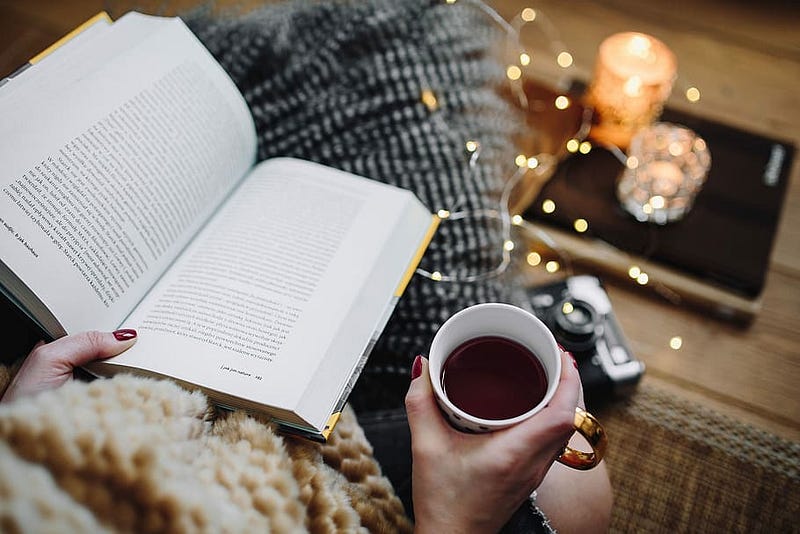
From the outside, it may not even be obvious whether someone is introverted or extraverted — it all depends on whether they finish a day of socializing feeling energized and wanting more, or ready for a cup of tea and a book in the safe seclusion of their home.
Whether a Sunday with no plans other than resting at home alone invokes the dread of boredom and loneliness, or the introvert’s familiar exhilaration at the prospect of some precious recharge time.
And of course, in truth, no “type” is better than the other. Just like extraverts, introverts have been responsible for some of the greatest achievements in history — they just enjoy curling up at home afterwards to celebrate their successes!
In order to protect your “highly-sensitive,” introverted self, and thrive in any situation, you must acknowledge the quirks which make you different.
Learn to adapt to them, and ultimately, to embrace them as your superpower.
Roxanna is a British-Iranian content writer specialised in human rights, health, and welfare. With a languages degree from King’s College London, a Masters in European Studies from LSE, and an EU communications background, she strives to increase the visibility and encourage debate around ethical and sociocultural issues around the world. http://roxannaazimy.com @roxannayasmin


