
What Happens With Your Brain When You Make a Decision?
If you‘re struggling with procrastination, and you feel it’s hard to focus and be creative, this article is for you.
We’ve all been there: we wish to be more creative, more productive, just to find ourselves sometimes doing the complete opposite… thus feeling overwhelmed, and stressed, trying to implement a new daily habit, and punishing ourselves for our ‘laziness’.
The good news is: changing our habits is hard not because we are lazy, but because our brains are designed to save energy. So it’s really not your fault.
The bad news is: changing our habits is hard, but it’s sometimes imperative that we do so, in order to achieve our goals.
So, what can you do?
According to a 2009 study published in the European Journal of Social Psychology, it takes 18 to 254 days for a person to form a new habit. The study also concluded that, on average, it takes 66 days for a new behavior to become automatic.
You need to know this in order to better understand how your brain works (and how you might be working against it).
In a modern world where everything seems to be at high speed and the average human being now has an attention span of only eight seconds (according to a study by Microsoft), our brains are simply constantly under an insane amount of stress…
…And yet you need to make decisions every second of the day. So it’s impossible for your brain not to feel tired at times —and this has nothing to do with being lazy.
Besides, how can one make good decisions under stress?
Simply put, one can’t. We don’t make good decisions under stress or under pressure, for several reasons — being the first on my list is the fact that Stress tends to narrow the scope of what we see.
That becomes a problem because a good decision is one when we consider all the options, and if we can’t see the full scope of things, it’s impossible to see those options fully and choose wisely.
What Happens With Your Brain When You Make a Decision?
This is actually a question that has a ton of research on, and years would not be sufficient to explain what we know — and what we don’t know.
But in general, if you think about it, our brains are not adapted to modern decision-making.
The Human Brain Is Not Designed to Make Decisions in Modern Life.
Let me explain. Think about something like money: it’s not a concept that is built in us evolutionarily. We are very good at detecting faces (think about how many faces you can detect in an instant — unless, of course, you have prosopagnosia). We’re also very good at detecting light and color (unless you are colorblind).
But when it comes to money and making money decisions in modern life, our brains are simply not designed for that. We take brain mechanisms that are not designed to deal with money or a large society, and we try to use them. And because of that, we often fail (*if this is a subject that interests you, let me know in the comments, and I’ll address it in a new article).
But the difficulty is not just with money. Think about attention: 2000 years ago, how much attention did people need? Not that much.
However, today people have cars — that require a lot of attention since a fraction of lack of that attention can cost someone’s life. The problem is: we are not built to drive with high accuracy all the time.
On top of that, we have cell phones… …and we put cellphones and cars together (a combination poised for disaster!)
Bottom line: Our brains are not designed for the modern environment, which is why we need to slow down, write, and think…— we need all kinds of tools to help us make better decisions — including in cars, where we have alarms, gadgets that tell us that we’ve switch lanes,… and so on.
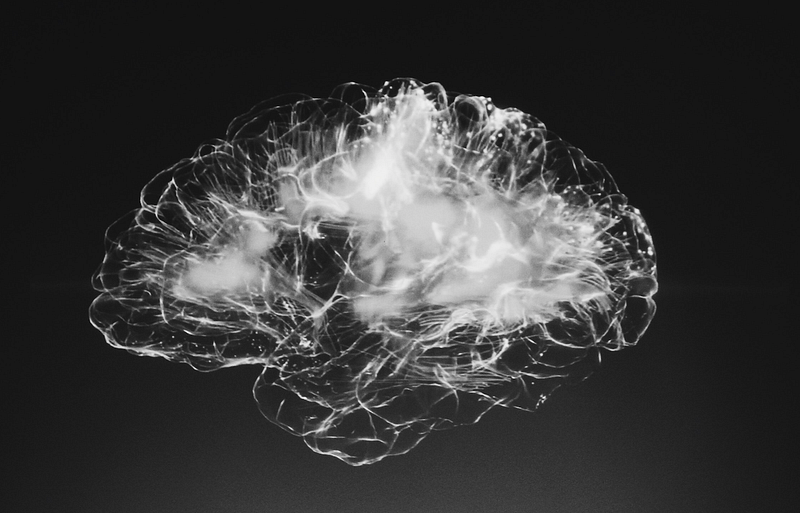
Did You Know Human Brains Are Designed To Save Energy?
We need more effort, attention, and help to live in modern environments, but that requires more energy, and as I’ve told you before, the human brain is simply just not designed to spend a lot of energy — it’s designed to save it.
So the brain doesn’t want to have all its parts talking to each other (to preserve that energy). But from time to time we do get these connections — our brain creates new connections and new links between things when we do other things such as sleep, daydream, meditate, … (and there are a few psychedelic experiences that create that as well, but I wouldn’t recommend it).
Bottom line: when we are forced to make decisions in this modern high-speed multitasking supercharging society, we are working AGAINST our brain — we make a huge effort in trying to be more focused, productive, creative, and energetic, while our brains want to save energy. That’s why we sometimes find it hard to concentrate and focus, it’s like our brains are begging us to leave them alone. That’s when we feel ‘lazy’ and overwhelmed.
Takeaways…
Slow down, write, think, meditate, practice mindfulness, and then make your decisions.
You’ll notice that you’ll become more aware, and the outcomes will start to be more aligned with what you need.
Don't try to do everything at once, and don’t try to go over the top when you feel stressed out and overwhelmed. By the way, multitasking is overrated. Learn to listen to your body and mind.
Take your time, and find time for yourself every day — not just on weekends.
If you only find time to rest at weekends, your daily life deserves a serious and profound reflection.
Your family loves you, so they will understand and help when you say ‘This is my time, I need it to be in my best shape for you as well.’
Resting is something absolutely necessary for your body and brain health. It should sum to your joy — not act as an exception to your anguish.
I promise you will find it easier to focus, concentrate, create, and make better decisions with less effort and more happiness in your daily life. Remember: happiness comes from within, not from outside inputs. Start by taking care of your Brain. And if you’re trying to change a habit, give it time and be kind to yourself: it takes 66 days to make a new habit automatic.
— Can we increase our creativity, increase the connections between our brain parts, do more things and be more effortful in how we think, focus, and concentrate?
“Yes. Absolutely. Not easy, but absolutely. There will come a day where we will know much more about the Neuroscience on decision making, and maybe even predict other people’s decisions slightly before they make them”. - Dan Ariely, researcher in behavioral economics.
Until then, and in the pursuit of more focus and concentration, I personally like to take a few moments per day to relax the mind with simple meditation techniques to relieve stress.
How about you? Do you find it hard to concentrate, focus, and be creative? What tools do you use to alleviate anxiety and help you make better decisions? Let me know your thoughts and experiences.
🧠 Join my VIP List to access Exclusive Content. To learn more and subscribe, click here (it’s free).
Thank you for reading. With ♡ Sally _