
HOW TO TAKE FULL CONTROL OF YOUR LIFE ACCORDING TO SCIENCE — PART I
Discover Little Matthew’s Story of How He Got to Live With Only Half His Brain
Matthew’s story is a lesson for all of us to learn about how our brains truly work, and why you cannot — EVER — doubt your potential.

For you to take control of your life, the first step is to understand how your mind works. And so today I’ll be taking you on the first part of a journey through the human brain — and in the end, you will understand the importance of change in your life, and why the majority of people are wrong when “change” is the topic of discussion.
This might seem pretentious, but having neuroscience to back me up (and intensive research on the matter), I’m going to share what you can do to take the reins of your life and live a life that is truly Yours.
To start our journey, I’m going to tell you a true story: a story of a little boy named Matthew who has literally lost half his brain.
Years ago, a lady called Vallery was getting ready to go to work when suddenly she heard a strange sound coming from her son’s room. He was 3 years old, and she found him on the floor in excruciating pain, while his lips started to get purple — a sign of lack of oxygen.
In a panic, she and her husband called an ambulance, to take their little boy to the hospital. He was observed by several specialists, who could not pinpoint the root of the problem. Because he made a recovery, they thought it could have been a unique episode in time, and all was good.
However, that was not the case.
One month later, while eating, Matthew started showing strange signs, with an intense expression on his face and eyes wide open. His arm was up in the air, rigid, and he would stand still just like that for about 1 minute without reacting to any stimulus. His parents took him again to the hospital, just like any of us would do. And again, no doctor could really tell what was going on.

Eventually, a neuroscientist doctor decided to investigate the electric activity on Matthew’s brain using a technique called electroencephalography. The results showed a few signs typically related to epilepsy — a sort of an electric storm in the brain’s circuits, as you probably know.
The boy then received medication for epilepsy, but that didn’t work. A few weeks later, he started having a continued series of crises, one after the other, and they simply wouldn’t respond to the treatment for epilepsy.
Once again, he went to the hospital where he would stay for 3 to 4 weeks. This would become a routine for the next three years.
In the middle of all that, Matthew was still trying to live a life of a child, while his parents had to deal with feelings of sadness, frustration, loneliness, doubt, and impotence — as any of us would in a similar situation.
By then, they decided to take little Matthew to a bigger hospital, with more resources: the Jonh Hopkins Hospital, in Boston, where the little boy was submitted to new exams. It was only then the specialists discovered and revealed to his parents that Matthew had a very rare disease: Rasmussen’s encephalitis.
To explain how it works: The brain is divided into 2 hemispheres — right and left, as you probably know, and as shown in the picture.
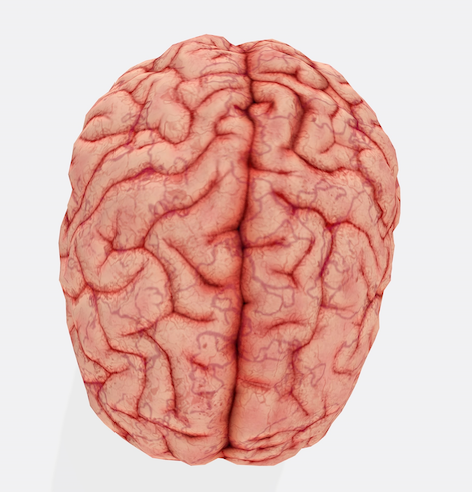
Rasmussen’s encephalitis causes a constant inflammation of one of the hemispheres, and in the majority of cases, it affects children less than 10 years old.
And here is the problem: it doesn’t just affect a little circuit of the brain, it affects the entire hemisphere.
Mathew’s parents started analyzing possible treatments, and they soon discovered the only way to save the boy was to submit him to a surgery called hemispherectomy — a radical surgical procedure where half of the brain is completely removed and fully disconnected from the normal hemisphere.
Needless to say, his mom panicked. She couldn’t listen to anything else after hearing the sentence “half of the brain is completely removed”.
They rejected the surgery and tried to find alternative options, but there were none.
Contemplating the suffering of their beloved son, they realized there was no choice; they had to go forward with the surgery. Mathew was now six years old.
“Who will my son be after all this, with only half brain?… What will happen to his life?…” — his parents kept asking.
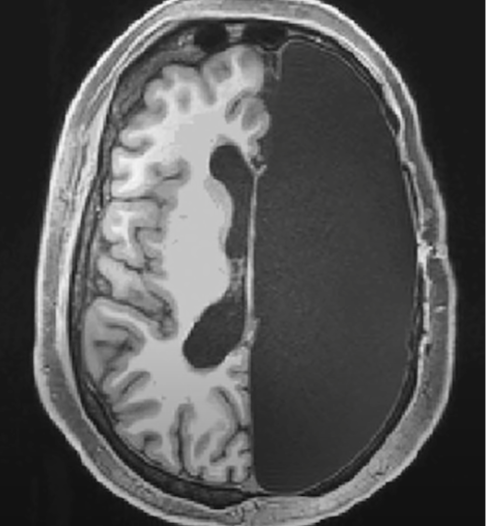
By now you’re probably wondering similar questions. You are probably also wondering what this story has to do with getting control of your life and living your full potential.
Simply put: what I’m trying to show you, is that our brain has the incredible capacity to rearrange itself — Even when half is missing! If you still have your 2 hemispheres, imagine the possibilities… as long as you don’t sabotage yourself by doubting your capacities.
The Human Brain is the most complex machine known in this universe. The very idea of ‘complexity’ is a human idea, created by the human brain — you’ll never see cows, dogs, cats, or any other animal reflecting on the complexity of their existence. They don’t study physics, neuroscience, philosophy, or any other ‘complex’ subjects.
Your brain is responsible for your thoughts, emotions, plans, and everything in between, It’s your brain that makes you demonstrate love, kindness, compassion, empathy, and dedication towards others, and it’s also responsible for the engagement you have with your personal and professional projects.
On the other hand, your brain is also responsible for your self-sabotage, your difficulty in changing and finishing what you have started, your fears, insecurities, expectations, etc.
By the way, if you’re struggling with procrastination, lack of focus, and lack of creativity, I invite you to read my previous article to better understand how you might be working against your brain ⬇️
What this means to you:
Understanding your brain is understanding what makes the best — or worst — version of yourself.
That’s why it’s so liberating! I speak for myself: this type of knowledge allows us to see with absolute clarity what is keeping us where we are at this precise moment in our lives— being that the life we want or not —and see clearly why we can’t bring about the changes we wish to make, and even why we have a specific emotional pattern that prevents us from having better relationships, for instance.
The problem, however, is that too many people seem to be talking about the brain these days, and not that many seem to actually know how it works.
For instance: you probably have heard that the brain is formed by several ‘pieces,’ and each one of those ‘pieces’ is responsible for a function. Some say we have in our brain a ‘center for love,’ a ‘center for sadness,’ and so on and so forth— and this couldn’t be more wrong.
There is absolutely no center in our brain for ANY complex functions such as those. Current scientific knowledge has uncovered that our brain is like an interconnected network of circuits and systems. Everything in our brain is connected to everything, the brain is ONE, so there really isn’t any specific center for something as complex as your intelligence, your emotions, etc., etc.
Moreover, besides being connected to everything inside itself, the brain also dialogs with our experiences — this means that every single word you are reading here, every new idea you are receiving, is creating a new experience in your brain, thus changing it.
The brain has the capacity to reorganize itself.
Your brain has neurons among other cells, as you know — but neurons are the ones responsible for the connections inside your brain. When you challenge yourself, your neurons grow more connections, in order to function better.
Imagine a tree with branches, being the tree a neuron: the more you challenge and stimulate your brain, the more and better branches your neurons will develop.

On the other hand, if a person lives in a poor environment where there are no good stimuli for the brain, then the neurons will have fewer connections, working in a poorer way while losing their ability to form new connections, opening the doors to all kinds of diseases that affect our brain such as Alzheimer’s, depression, anxiety, just to name a few.
In order to have healthy growing neurons, you need to have good nutrition in terms of what you actually eat, regular physical exercise (that’s right, exercise — or lack of it — also affects the brain), and you also need to feed it with intellectual and emotional nutrition as well: you need to nurture your brain with rich experiences that challenge you to be a better person.
Your brain is changing by the minute, whether you know it or not.
But — and this is a big but — it can be changing for the better or for the worst, depending on your choices.
A person that has a sedentary life, eats poorly (lots of carbs, sugar, and transfat foods), has a very bad sleep quality, is always sick due to stress, and doesn’t acquire new knowledge (particularly self-knowledge) in order to grow, that person is condemning her/his own brain.
Your humor gets worst, you become a negative person, you feel you have no energy to do the things you need to do, you start having difficulties in remembering things, and you open the doors to self-sabotage, living in fear, always postponing what needs to be done, etc.
If you’ve read my previous article, by now you know our brain is designed to save energy — which is why we sometimes feel ‘lazy’. That being said, saving energy is not the same as having a sedentary life that will lead you nowhere. Your brain needs stimuli, it needs to be challenged— just don’t go overboard while stressing out trying to do it all at once: it simply won’t work. Balance is key.
Your choices can take your brain into a vicious cycle, or they can make it become stronger, and healthier, with more and better connections — thus improving your life while taking your brain into a virtuous cycle.
A good night’s sleep (no less than 7h and no more than 9h), a healthy lifestyle with regular exercise and a good nutrition plan, constant nurturing of your brain with knowledge, challenging it a bit more each day, changing your way of dealing with obstacles, developing your emotional intelligence,…— all these are choices that transform your life.
Your brain is a living being, changing each second at each experience you live. It doesn’t matter how old you are, if you have a healthy brain, it has the capacity to reorganize itself, and even recover lost connections while creating new ones.

Back to Matthew’s story…
…After the surgery, his parents’ worst fears came to life: he was debilitated, and could not walk, speak, or even understand things. But his parents dedicated themselves to recovering his health and life. Step by step, he learned to talk again. He had to start all over, from scratch.
Three months later, he was already with the intellectual capacity adequate for his age, and he could walk — although with a little difficulty in his right leg, but besides that, he had a normal life. If you walk by him in the street today, you will never know half his brain was removed when he was six years old.
He now works at a restaurant, taking care of customers and doing all that needs to be done without difficulties.
You might be wondering: “HOW is this possible, with only half a brain?”
It is possible because, as science tells us, the other half that remained has created new connections, rearranging itself in order to do what the other half used to do. In other words, his brain has transformed itself.
That’s why a blind person has a much higher sensibility to sounds and tact than other people, for instance. This happens because the circuits responsible for sound and tact spread themselves to where the visual circuits used to be.
The Big Takeaway…
The human brain is an incredible machine of transformation. Of course, in Matthew’s case, the fact that he was still very young when he made the surgery, was an important factor in his astonishing recovery.
However, no matter how old you are, your brain is always changing and creating new connections, rearranging itself, as part of a living organism that changes every second with each experience lived by you.
If you still can’t believe that you can have control over your life while living your full potential, stay tuned to my next article.
✅ Until then, I would like to leave you two questions for you to answer:
- How do you imagine your life will change in 10 years?
- How has your life already changed in the past 10 years?
Let me know in the comments below; I would love to hear from you and get to know you better.
🧠 Join my VIP List to access Exclusive Content. To learn more and subscribe, click here (it’s free).
Thank you for reading. With ♡ Sally _