

What Happens When Walmart Leaves A Neighborhood?
Here’s what’s happening in my city

Introduction
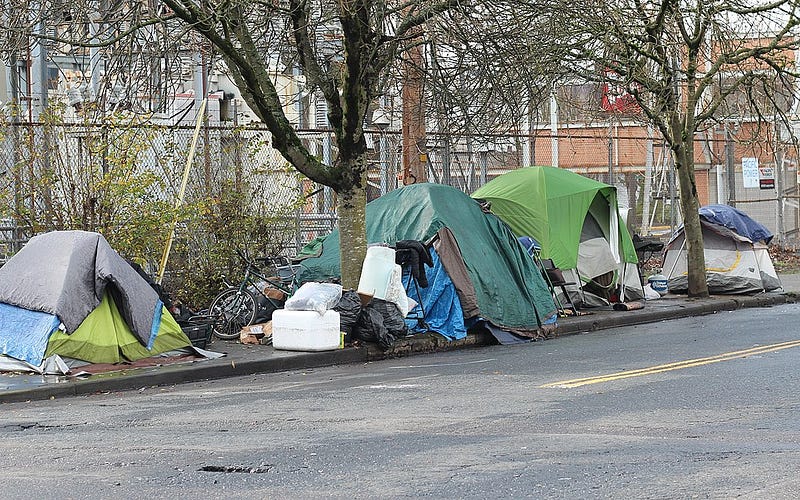
If you live in Los Angeles, San Francisco, or Portland, scenes like this probably won’t surprise you.
In fact, it’s probably not a surprise in most cities across the country. Its causes run deep, and they started long ago. Now it is coming to a crescendo. You cannot avoid it. You cannot turn your back on it because it’s there also.
The culprit? Economic inequality. I blame that on a host of viral problems facing the nation.
And then, if asked who started it, I look to the 80s and point my finger squarely at Ronald Reagan. His administration’s policies, which deinstitutionalized and defunded psychiatric care, caused a spike in homelessness in the 1980s. Reagan blamed the people themselves:
In early 1984 on Good Morning America, Reagan defended himself against charges of callousness toward the poor in a classic blaming-the-victim statement saying that “people who are sleeping on the grates…the homeless…are homeless, you might say, by choice.”
He cut the budget for Section 8 and public housing in half. By 1985, the country was 3.3 million units short of affordable housing. He cited stories of welfare cheats that were untrue.
He was his own FOX news.
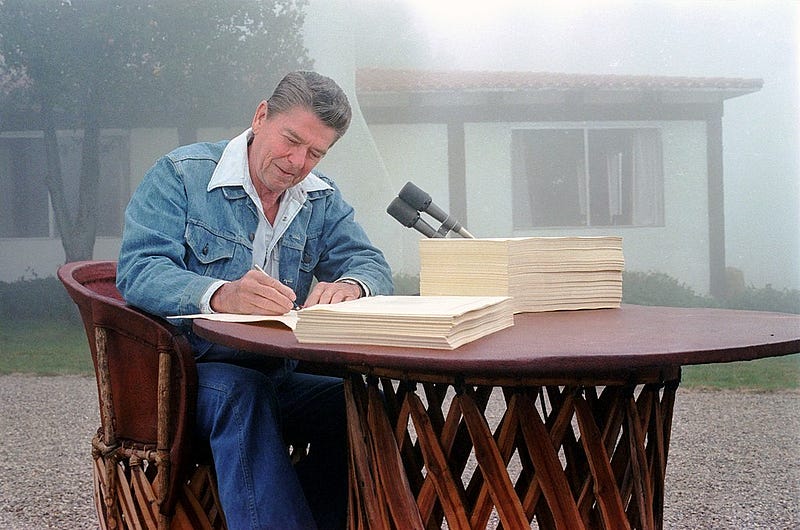

Like Trump, Reagan was great — if you were already rich. Before Reagan, I knew single mothers with families who could at least eke out an existence based on their menial salaries.
This is way too big of a problem to present, analyze, and solve in five or six minutes. But there are a few no-brainers:
- There is a lack of affordable housing, and housing costs have skyrocketed. A 2018 study by Zillow found that homelessness rises when people have to devote more than 32% of their income to rent. Hell, based on that, even I am at risk.
- There is a considerable gap between affordable housing units and the number of people needing them.
- Mental illness: 25% of all homeless people suffer from a severe mental order, like schizophrenia.
- 33% struggle with drug and alcohol addiction.
My Own City’s Issues: A Microcosm of the Rest of America
I’m unsure if Albuquerque has ever been known as a middle-class city. New Mexico is perpetually at the bottom of the list of states in economic vitality. We rank low in quality of education, the number of high school graduates, and the number of citizens with bachelor’s degrees. We’re not a corporate headquarters city, but some of the best and brightest work at Sandia National Laboratories.
Do you read “Nextdoor,” the social network built for and used by neighbors and neighborhoods? In my city, its most significant use is for postings about lost and found dogs and cats. Coyote sightings are common posts. Want to sell something or get something for cheap? Nextdoor is your place. It’s an alternative to “Angie’s List,” where people look for reputable products and services.
Unfortunately, it is also a place to disseminate news of crime and our homeless problem. Much of this emanates from what we call the “war zone” in the Southeast part of the city. At its best, this area has been a lower-class community dotted with economically-appropriate stores, restaurants, and other businesses.
I’ll drive through the war zone if it’s the most direct route, but I will not go there at night. There are tent “villages” set up throughout the area, and crime is rampant. I’d never park there for fear that my catalytic convertor or my whole car might be stolen.
It wasn’t always this way. This mess was created.
Walmart is known for putting smaller ma and pa stores out of business when they come to a new neighborhood. However, over the 40 years that the store in the Southeast part of Albuquerque has been in business, other smaller stores have learned to compete, just without the variety and quantity.
But the company has announced that this store will close its doors for good around March 10. While they did not disclose a specific reason for the closure, it’s worth noting that according to an Albuquerque Police Department report, 708 calls were made requesting service at or near the location in 2022. No doubt this was mainly for shoplifting, as I’ve witnessed it myself.
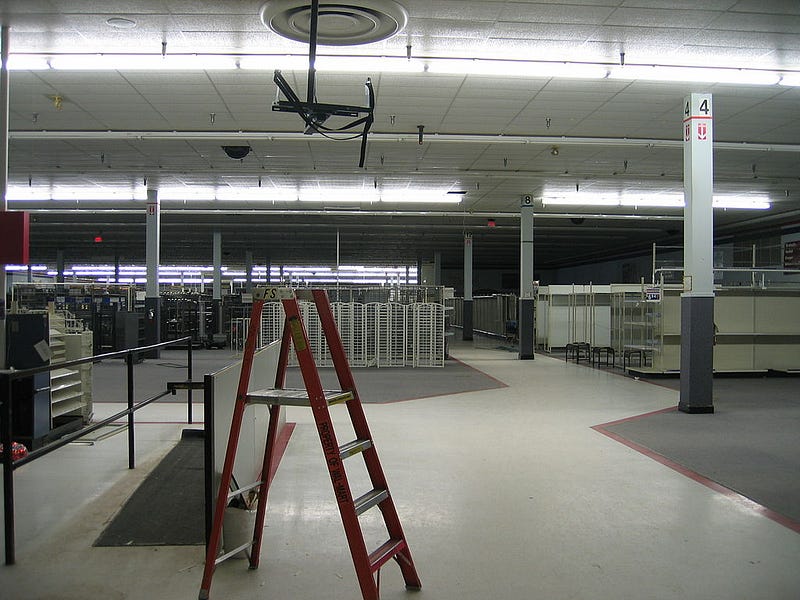
While I’m not a big proponent of Walmart, I understand its importance in the neighborhood for those lacking transportation and needing essential foods. But it leaves a big hole as a place to shop for fresh foods. This part of the city has truly become a food desert. So now it will just be chips and soda at the local convenience stores.
And what will become of the vacant property? The entire parcel will likely be fenced, but fencing is easy to overcome when you need a place to sleep for one or more nights. I see another tent city rising, and the police unable to do anything about it.
What other retailer is going to take its place? It may be razed and be another vacant eyesore in this part of town. If this doesn’t stop, we’ll start looking like another Detroit. While other cities in the Southwest are bustling, Albuquerque’s growth rate for 2023 is predicted to be only 1.38%, the lowest it has ever been.
Murders in the city reached 120 in 2022, ten more than the record-setting year before. We’re fourth in the nation in terms of automobile theft. In all, we broke into the top ten for violent crime last year. There are about 13,000 homeless on our streets.
It’s complicated. I love this place. I like to extoll its beauty. I want to see it thrive. But I don't see a bright future until we solve some of these issues.
Sources:
- “Understanding America’s Homelessness Crisis” in The Week, 5/1/2022
- “Reagan’s Legacy: Homelessness in America” by Peter Dreier in Shelterforce.org, 5/1/2004
- “Walmart Near Highland High School To Close Next Month” by Raul Flores and Matthew Narvaiz in the Albuquerque Journal, 2/8/2022
- KRQE-TV News, Albuquerque, 9/9/2022 and 1/10/2023
- Macrotrends.net
Also by Arthur Keith:
For just pennies a day, you could save talented and creative writers like me and all the other writers from future homelessness! In addition, you’ll get to read every single article on Medium.com. Please, won’t you help?