avatarDani Mini

Free AI web copilot to create summaries, insights and extended knowledge, download it at here

4121

Abstract

p id="db15">For example, my husband put a stop to my way of trying to get our son to eat his meals and stop being fussy because it just wasn’t working. After a certain period of time of him implementing his own way of doing things, which was firmer and stricter than I would’ve liked, I started to see some changes in my son and how he would sit down to eat the entire plate of food in front of him.</p><p id="21fa">Now, Andriel looks forward to sitting down next to his parents and mostly eats his entire plate, including the veg. My husband was right, and I was wrong — at least for a period of time (because no one knows the future and kids are unpredictable!)</p><p id="60fc"><b>But my husband didn’t say “I told you so”.</b> He didn’t discredit me as a mother, even if I did question my own decision making. He understood that being wrong is not a bad thing, and also, that <b>I wasn’t “wrong” to begin with</b>. Some things work, and some things don’t work for our children. And some things work for a while and then need to be changed. And that’s OK.</p><p id="4e9d">Parenting, while continuous, is flexible.</p><p id="ec93"><a href="https://readmedium.com/how-to-successfully-wing-it-d39222a3d808">And we are all winging it.</a></p><h1 id="101b">Lowering Expectations Is Empowering</h1><p id="cde5">I have this constant need as the main caregiver to simply know what to do and get it right — especially after all the research I do on many aspects of parenting. But the thing is, it is only because of my own expectations that we get upset when things don’t work out. We paint a picture of how things will go, and when they don’t go our way, we self-criticise.</p><p id="3b33">Recently, I have been struggling to make the decision of whether to send our son to daycare. Because of the recent lockdowns, I feared that he wasn’t getting enough social stimulation and he needed to spend more time with other children. We decided to send him to a local nursery two mornings a week.</p><p id="fec8">But that wasn’t my only reason for wanting to send him there. I also needed more time to really step up my game as a writer, begin marketing myself and really work on my book.</p><p id="fa4a">But I’m tired of questioning myself, and <a href="https://readmedium.com/how-to-get-what-you-want-1973fd008ecb">since taking the road to self-care</a> in order to be a better mother and person, I decided that my reasons were as good as any to send Andriel to daycare at the age of 27 months.</p><p id="d466">It has only been a few weeks, and so far, he does not look forward to going there. I feel in fact he has become shier and clingier than usual. This makes me question once again whether what I am doing is right, and whether the caregivers at the centre are doing right by my son.</p><p id="93a8"><b>I’m ready to assign blame and judge because this is what we do as people growing up in today’s society.</b></p><div id="5778" class="link-block"> <a href="https://readmedium.com/learning-to-enjoy-motherhood-guilt-free-966e7fa38d58"> <div> <div> <h2>Learning To Enjoy Motherhood Guilt-Free</h2> <div><h3>undefined</h3></div> <div><p>undefined</p></div> </div> <div> <div style="background-image: url(https://miro.readmedium.com/v2/resize:fit:320/0*o44YftcYVXjSo_va)"></div> </div> </div> </a> </div><p id="d0f8">But I have to remember that it will solve nothing. I need to readjust my expectations and remind myself that everything takes time and that obstacles are all part of the journey, including my son’s settling in time at daycare.</p><p id="1231">He will get there because he is a strong and sociable little boy. He will be fine because he will still have an abundance of love at home waiting for him when he gets back and throughout the rest of the week. But I cannot decide how and when he will be running happily into nursery in the mornings — that’s a picture I need to let go of, but treasure if it happens.</p><p id="b15a">Sometimes, it

Options

is our expectations that need change, not our circumstances. We have to be OK with hiccups in parenting. Rather, we need not see them as hiccups, but as part of the process of bringing up children. After all, we are only human.</p><h1 id="7806">Takeaway</h1><figure id="facf"><img src="https://cdn-images-1.readmedium.com/v2/resize:fit:800/0*0ZLtDIAU40LQtOeo"><figcaption>Photo by <a href="https://unsplash.com/@drezart?utm_source=medium&amp;utm_medium=referral">Andrae Ricketts</a> on <a href="https://unsplash.com?utm_source=medium&amp;utm_medium=referral">Unsplash</a></figcaption></figure><p id="f3a0">I believe in a mother’s instinct, but I don’t believe in the expectation that it will be there when we need it. If that expectation isn’t met then we will be more than ready to assign blame, and it won’t help us grow as parents or as individuals. In fact, I think that the constant need to meet these expectations is what causes us to feel like a failure at some point in our lives.</p><p id="b5d4">Instead, I recommend a more supportive plan, where advice can be handed out without coming across as all-knowing and dismissive of the parent. We can learn not to feel offended at others’ suggestions in the same way that others can learn not to be judgemental. I advise that others do get involved in taking care of kids, in a non-judgemental “I-told-you-so” way when the main interest is that of the child — not of themselves.</p><p id="1680">Most importantly, we have to learn that <b>mistakes are normal</b>, and most of the time, they’re not life-threatening. We are all human after all, and that makes us susceptible to countless errors over the course of time. In modern parenting, most parents are learning not to scold their kids when they make mistakes because it’s detrimental to their confidence building. <i>We should take that same approach with ourselves and other adults.</i></p><p id="93d5">So, let’s cut ourselves a little slack, and lower that pressure to get it right. Nobody is born a parent with experience.</p><div id="2a67" class="link-block"> <a href="https://readmedium.com/redefining-the-concept-of-happiness-16e5524c2b2d"> <div> <div> <h2>Redefining the Concept of Happiness</h2> <div><h3>How I’m learning about fulfilment from my toddler son.</h3></div> <div><p>medium.com</p></div> </div> <div> <div style="background-image: url(https://miro.readmedium.com/v2/resize:fit:320/0*6xDaJcMnjn9r6Bow)"></div> </div> </div> </a> </div><div id="88c4" class="link-block"> <a href="https://readmedium.com/my-battle-with-anger-as-a-parent-24e7837c5fac"> <div> <div> <h2>My Battle With Anger As a Parent</h2> <div><h3>Ensuring our son feels loved regardless of our feelings.</h3></div> <div><p>medium.com</p></div> </div> <div> <div style="background-image: url(https://miro.readmedium.com/v2/resize:fit:320/1*Me4slkvdZGGCbsbjqQ_7bg.jpeg)"></div> </div> </div> </a> </div><div id="c95b" class="link-block"> <a href="https://readmedium.com/my-husband-is-a-damn-good-father-de20d1ef2217"> <div> <div> <h2>My Husband Is A Damn Good Father</h2> <div><h3>And he deserves praise.</h3></div> <div><p>medium.com</p></div> </div> <div> <div style="background-image: url(https://miro.readmedium.com/v2/resize:fit:320/0*Oqw-YSI_IVOLn-k0)"></div> </div> </div> </a> </div><p id="7dcc"><b><i>Sylvia Emokpae, thinker and philosopher, is passionate about self-love, relationships, and motherhood. <a href="https://medium.com/@sylviaemokpae">See more work like this</a>.</i></b></p><p id="f728"><a href="https://twitter.com/SylviaEmokpae"><b>Follow her</b></a><b> on Twitter.</b></p></article></body>

What Does It Even Mean to Be a Person of Color?

It depends, in some measure, on where you come from
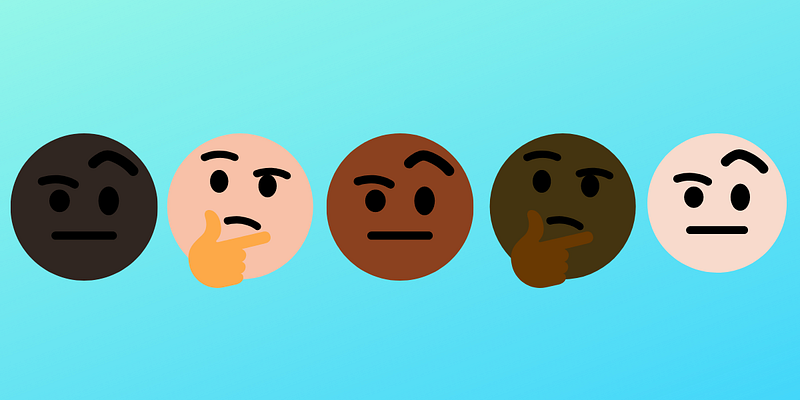
Image by Author, created on Canva

The meaning and baggage or race and racism vary a great deal from country to country. In the US, the weight of racism is definitely greater than it was (and hopefully still is) in Venezuela, my country of birth.

This is not to say Venezuelans aren’t racist. People make racist jokes and the legacy of slavery persists. Skin color gets perceptibly lighter the richer the group.

Yes, though it manifests differently than here, racism is alive and well in Venezuela. But it is both more subtle and less institutionalized than in the US.

Blonde and blue-eyed is certainly more exotic, rare and desirable. Even if you have the features of a Halloween witch, as long as you’re blonde, you’ll be seen as beautiful.

At my Catholic school, we used to joke that the nuns always picked the fairest-skinned girls to crown the Virgin Mary on Coronation Day.

Technically, almost half of Venezuela’s population is “white” and the other half “mixed”, with black and indigenous Venezuelans making up less than 4% and 3% of the population, respectively. A common terminology used for black people is “person of color” (“persona de color”), and, for the most part, only people who look to be 100% of black African descent are deemed de color.

I’ve been living in the US long enough to find it hilarious and confusing when someone definitely not de color by Venezuelan standards is considered by others, or by himself, as a person of color here. I know for a fact that some of my Venezuelan friends are white in Venezuela, and of color in the US.

Venezuelans of all races fear for their lives and bodies for many reasons. Race is not one of them.

Perhaps it has to do with the fact that so many people who’d be counted as white by those who keep count consider themselves mixed, while so many counted as mixed think of themselves as white. Or with the fact that we never had Jim Crow type of laws after slavery was abolished.

I’m no expert in race studies, but there are obviously historical, institutional and social components to racism, race and racial terminology. I just finished reading Trevor Noah’s memoir Born a Crime: Stories from a South African Childhood. In South Africa, I learned, a “coloured” person is one of mixed white and black (or Asian) ancestry.

In Venezuela, race is not an issue that’s at the forefront of any national conversation. For most Venezuelans who live in the US, it’s really confusing to be asked to pick a race when they fill out forms. As far as I can remember, we’re never asked to provide this information on any form in Venezuela. Is this one reason, however insignificant, we think about race less?

Though I’ve lived in the US for 25 years, I’m still fascinated by how race, skin color and identity can be viewed so differently from one country to another.

I’ve always considered myself white, knowing that, on my mom’s side of the family, there probably was some indigenous or African ancestry (as recently confirmed through genetic testing). Such is the case in most families of predominantly Spanish ancestry who’ve lived in Venezuela for many generations.

Most Americans see me as white too. Because of my accent, I’m often asked where I’m from. Once in a while, someone will say “Oh, you don’t look Venezuelan.” Hmm, I think, “What does he think Venezuelans look like?” Not white, I guess.

While I get the you-don’t-look-Venezuelan comment occasionally, my sister Rosanna, who’s blond and blue-eyed, tells me that she hears it ALL the time. Sometimes, people actually hear Minnesota when she says Venezuela. Despite her accent, which is far thicker than mine, her looks point to a place like Minnesota, where, I assume, lots of people are blonde?

My son Andres, who arrived with us to the United States when he was 4 years old, told me a few years ago that he identified as a person of color. Given my background, this caught me by surprise. He certainly doesn’t look de color. His skin’s so white it doesn’t even tan. Because my son and I grew up in different environments, we certainly view race differently.

Andres once told me someone had said to him. “You’re lucky you don’t look Hispanic.”

The comment disturbed me. At first, I found it upsetting that someone would say that. Later, though, I recognized the statement as true — which is sadder and more disturbing still. My son’s skin color and look make it possible for him to benefit from White Hispanic immigrant privilege at the expense of those who “look” Hispanic. Such is the case for me too.

Hispanic, mind you, is not technically about race. It’s about identifying as a person of Latin American or Spanish heritage. People of all races and looks can be Hispanic, or for that matter, American.

Our biases, prejudices and perception on race, ethnicity, ancestry, heritage are just incredibly messed up.

If you ever happen to travel to Venezuela, know that, while you’re there, you may temporarily cease to be a person of color. Also, if you don’t look like a member of the original cast of Baywatch, don’t be surprised if someone says you don’t look American.

Related stories:

Race
Racism
Equality
Venezuela
Immigration
Recommended from ReadMedium