
My White Hispanic Immigrant Privilege
Even amongst immigrants of similar origin, race confers immense privilege
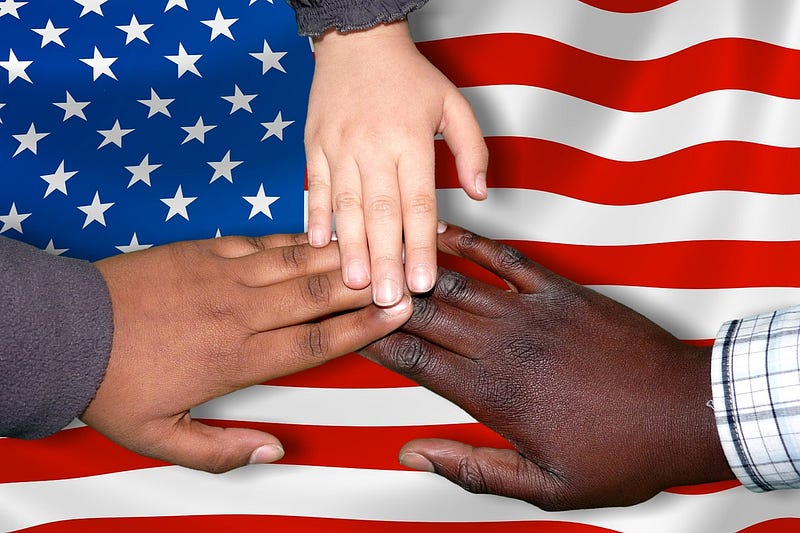
Last week, I was reminded of the privilege I have as a White Hispanic immigrant.
I live on one of the main avenues of a wealthy Connecticut town. Across from my house and perpendicular to the avenue is a neighborhood where houses go for several million dollars.
Weather permitting, I’ve been running in this neighborhood a couple of times a week over the past six years. The streets are quiet, with lots of trees and beautiful houses, and offer various loops to choose from. I love spotting wildlife and, on occasion, I come across a beaver, coyote, fox, turkey, deer, and, once, even a black bear.
As an immigrant from the high-crime, yet breathtakingly beautiful city of Caracas, Venezuela, I feel grateful and free every single time I step out the front door of my house to go on a nice run without giving a thought to my personal safety.
Lately, with the quarantine and all, I also see more people when I go out. Whereas on a fine spring day last year I might have passed -or been passed by- two bikers, one runner and three walkers, I now come across twice that number at least.
Yesterday, my friend Pati, who’s quarantining at our home, went out for her daily walk. She was by one of the houses in this neighborhood, contemplating the seven beautiful trees with white blooms that line the property, when a man walked out of the house and approached her.
He asked Pati, in a rude tone of voice, where she lived, and then said she was not allowed to walk on that street because it was part of a private association.
There are many streets in my town that have “Private Association” signage. I’ve run through many such streets over the past twenty years and I’ve never had a problem. If anyone interacts with me, it is to kindly say or wave hello.
I will bet you my right arm that the real reason this man cautioned Pati is that she looks a certain way. She’s quite short and plump, has a wide face and dark eyes and hair. She has a “native Central-American” look, a beautiful smile and the friendliest eyes.
This man saw a decidedly non-White Hispanic woman in his rich, white neighborhood, and he didn’t like it. To him, she did not belong — unless she was a nanny or a male member of a landscaping crew.
I will bet you my other arm, the left one, that no one will ever come out and ask me why I’m running or walking there. Like Pati, I’m a Hispanic immigrant. Unlike her, I don’t “look” it.
When people hear my accent, they don’t know where I’m from because they’re not looking for a given accent. When they find out I’m from Venezuela, they assume that I’m a contributing member of society and make me feel welcome. And I appreciate it. Overall, I always tell people how grateful I am to have found so many great opportunities and wonderful people in this town, state and country. Because I have.
I believe good people vastly outnumber bad people. Still, when I hear things like what happened to hard-working, bright, generous Pati today, I feel a wave of sadness and impotence, tinged with a bit of shame and fear.
My impotence and sadness come from people assuming I’m “OK” because they have a “not OK” stereotype to compare me with. Pati fits the “not OK” stereotype. In this sense, my privilege of being instantly and uniformly accepted comes at Pati’s expense. I’m the exception that proves the rule. The problem, though, is that the rule is made up and based on a single story.
My fear is based on this single story, on what novelist Chimamanda Ngozi Adichie so aptly describes in her compelling TED Talk, “The danger of the single story.”(2009 TED Global).
For many Americans, the single story of people who look like Pati goes something like this: She’s an undocumented Hispanic immigrant who has taken away an American job, abuses America’s social safety network, has minimal education and will never learn to speak English or improve herself. And this story is woefully wrong.
Why is it so hard for us to accept that we internalize single stories about whole categories of people, whether immigrants, Hispanics, red-heads, Muslims, fat people or White Americans? We all do it!
At the moment, for example, I’m hearing many people I’ve thought of as open-minded painting all Chinese people as wildlife eating, lying folk who only make low-quality stuff we should never ever again buy.
The only way we can deliberately expand our stories is to first recognize the single one and know that it can’t be the only one.
When we consider a whole group of people “not OK”, we always discriminate because we don’t see their full humanity. We may go as far as accepting (or even promoting) shutting them away, denying them life-saving health care, banishing them — or worse.
This is especially the case during challenging times such as the current pandemic. We want to find an enemy to blame and fear.
Who better to personify this enemy than groups of people whose single story conveniently paints them as less or as evil?
Very related read:


