
What Does Evolution Tell Us about Human Intelligence?
A comparative analysis of AI with the biological brain
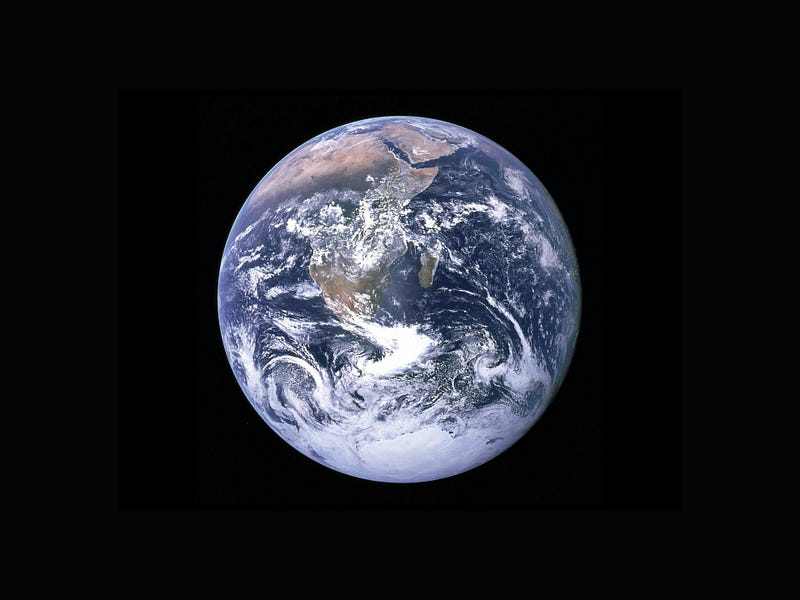
The human brain is a product of millions of years of evolution. Humans share most of their genes with mammals: 98 to 99 percent with chimpanzees and roughly 90 percent with mice, dogs, and cats. The degree of gene overlapping indicates how closely the species are related to the same ancestors. It is also the foundation for scientists to use animal models to study the neural mechanisms of human intelligence. For example, the mechanisms of learning and memory that inspired AI deep learning came mainly from the studies of the rat hippocampus and the neural net of Aplasia, an invertebrate animal living in the sea.
In light of the evolution of the brain, we raise many questions about ourselves, such as: What kind of brain function and intelligence do we share with the animal kingdom? What is unique about the human brain, if any? Is artificial general intelligence (AGI) a sensible goal for AI? What role will AI play in the evolution coming ahead of us?
We will address these questions in this article. Once we understand that the roots of many human daily behaviors are much more ancient than we initially thought, we will have much deeper insights into our behaviors, perception, and cognition, particularly why humans have multiple decision systems. Then, we can dissect the main differences between AI and human intelligence, what AI still lacks today, and how to think about the human-like general intelligence that AI aims for.
Moreover, understanding our past gives us perspectives on where the human mind is going and how the advances of AI will impact humans’ course on the evolution ladder. After all, Earth has a life span of 11 billion years and already traversed 4.5 billion years. Human society still has a long time to evolve as long as it continues to exist, and learning about evolution becomes immensely relevant for us to conjure the future of humankind.
The Tree of Life
In 1859, Darwin published his ground-breaking work “On the Origin of Species.” He concluded that present-day organisms, including humans, have evolved from earlier forms over long periods of time, much longer than the several thousands of years accounted for the human history.
Building on his observations of nature, supported by earlier philosophers and scientists, Darwin argued that the relationship between organisms is more like a branching tree, later called the tree of life. The existing species can be represented by top twigs on each major branch. Each major branching point represents a common ancestor that had been extinct from Earth long ago. In Darwin’s words,
“The affinities of all the beings of the same class have sometimes been represented by a great tree. I believe this simile largely speaks the truth. …the green and budding twigs may represent existing species; and those produced during former years may represent the long succession of extinct species.”
There are six kingdoms on the twig of each major branch. As listed from the bottom up, they are Bacteria, Archaea, Protista, Plants, Fungi, and Animals. The first three are single-cell organisms, while the latter are multi-cellular.
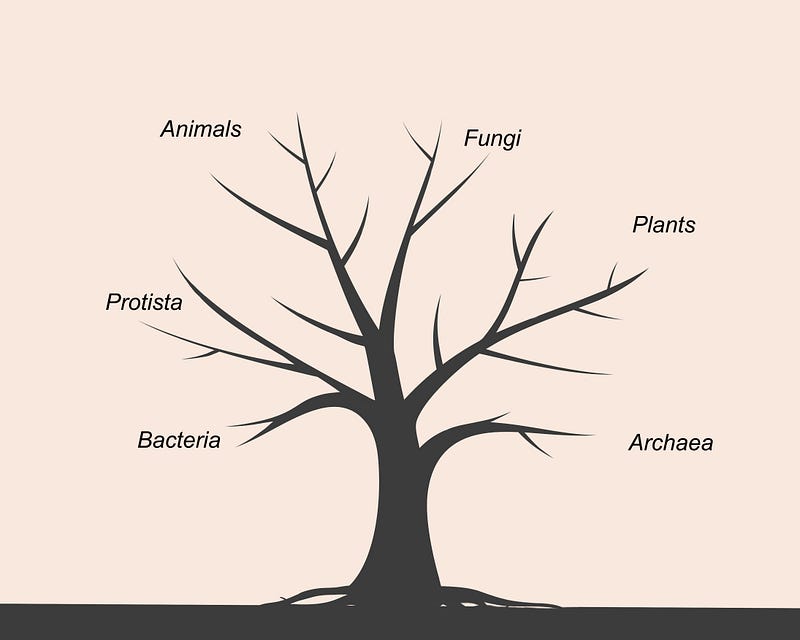
A kingdom is further divided into phylum, class, order, family, genus, and species. The animal kingdom has more than 30 phyla: Chordata consists of vertebrates, and the rest are invertebrates. Under the Chordata, there are classes for fish, reptiles, birds, and mammals. Finally, primates come under mammals, and humans fall into the taxonomy of Homo Sapiens:
- Kingdom: Animalia
- Phylum: Chordata
- Class: Mammalia
- Order: Primate
- Family: Hominid
- Genus: Homo
- Species: Sapiens
The organisms living on Earth today do not directly relate to each other. Instead, they are the surviving species from their original ancestors that have been gone long before us. For example, other primates, such as chimpanzees and bonobos, are the species closest to humans in the tree of life, but none of them is our ancestor, and their common ancestral primate was extinct from Earth a long time ago.
Natural selection drives organisms’ evolution toward a better fit for their environment, and genetic mutations introduce the variability for natural selection to take effect. Moreover, a livable environment is crucial for organisms’ survival and subsequent evolution. The fossil records showed an explosion of various animal species of complex body forms and advanced sensory organs around 540 to 480 million years ago. This period is called the Cambrian explosion, which gave rise to all major phyla that live on Earth today. Scientists believe a surge of the oxygen level in the ocean and atmosphere occurred during that time, which provided enough energy for larger organisms to survive. It then gave rise to the rapid evolutionary race between predator and prey species, accompanied by the emergence of neurons and nervous systems, the precursor of the brain humans have today.
Before we delve into the evolution of the brain, let’s take a bird’s view of the long history of evolution. Earth is about 4.5 billion years old, and the earliest undisputed evidence of life dates from at least 3.5 billion years ago. Bacteria were the offspring of the earliest ancestor and have survived on Earth for over three billion years. Over 600 million years ago, multi-cellular organisms began to appear in the oceans. After another 100 million years, vertebrates, plants, and fungi emerged and proliferated during the Cambrian explosion. The reptiles started to show up around 350 million years ago, and birds around 150 million years ago, followed by mammals about 20 million years afterward. Our primate ancestor appeared 6 million years ago, and finally, homo sapiens came into existence between 200 and 300 thousand years ago.
The Evolution of the Brain and Its Decision-Making
Neurons appeared in multi-cellular organisms over 500 million years ago, during the Cambrian explosion, when different cell types emerged, each specializing in a specific function. As skin cells were divided to protect an organism’s surface, neurons arose to improve the efficiency of sensory-motor integration with their innate capability to connect via plastic synapses. Groups of neurons gradually evolved into centralized networks for information processing, from simple neural links to functional groups called ganglia, and to the sophisticated brain with conglomerates of various structures.
From the beginning, the purpose of a neural network was to enable an organism to take intelligent actions upon the stimuli from an environment. As the environment became more extensive and complex with more predators, the neural network grew with more neurons and function divisions. To survive, animals must constantly be on alert using their senses, and act promptly and effectively to forage for food and defend against predators. It is, in essence, the decision-making process.
Based on decades of research, psychologists and neuroscientists have identified four decision-making systems across animal species:
- Innate Reflexes: automatic, genetically wired immediate responses to stimuli usually sensed as dangerous or unpleasant.
- Pavlovian Classical Conditioning: automatic elicitation of a fixed behavior by a specific stimulus paired with the original stimulus that triggered the same behavior. It is named after the famous Russian physiologist Ivan Pavlov.
- Procedural or Habit Learning: learning a sequence of actions given a situation. Once the situation is given, the whole action sequence occurs without consciousness or deliberate control.
- Deliberate Decision-Making: goal-directed learning and model-based decision-making. In humans, it typically involves imagining, reasoning, predicting, and planning. Therefore, it is slow and resource-consuming while being flexible (for reference, you may check out my previous article on decision-making).
As humans, we can relate all of them to our daily lives. A reflex is a hard-wired response to a specific stimulus. We automatically withdraw our hands when touching a hot surface. It does not need to be learned. When I see the sign of my favorite restaurant, my mouth starts to salivate, even though I have not tasted the food. This is a Pavlovian Classical Conditioning. Learning to ride a bicycle is a typical procedural learning for everyone. Making mental calculations of the distance and time by various means of transportation to figure out the best route to reach your destination is a typical deliberate decision-making process.
Human decision-making is complicated because multiple systems work in parallel and sometimes in conflict. Daniel Kahneman thoroughly describes these systems in his book Thinking, Fast and Slow. Why do we have these multiple systems, and where do they come from? A simple answer is that they came from the evolutionary waves through millions of years across the animal kingdom.
Generally speaking, typical evolution stages of the animal kingdom include:
- Invertebrates (e.g., worms)
- Lower vertebrates (e.g., fish)
- Higher vertebrate mammals (e.g., cats, rats, dogs).
- Primates and humans
Let’s examine how the brain evolved through these stages and the corresponding decision-making behavioral changes through learning.
(Note that there have been more fascinating changes in the brain throughout its evolution history besides decision-making. One involves the motivation system, including emotions and the effects of neural modulators such as dopamine and serotonin. Another is the origin of sociality and language. Each is beyond the scope of this article as it warrants its own topic in the future.)
Early Stage in Invertebrates: Innate Reflexes and Pavlovian Classical Conditioning
Today’s popular representatives of invertebrates include sea stars, earthworms, sponges, jellyfish, lobsters, crabs, spiders, snails, clams, squid, and many more. They all have neural nets to integrate their senses and movements, with sensory neurons covering their body surface and motor neurons controlling their muscle cells. Many of them also have clusters of neurons in between, called ganglia, which are the precursor of the brain.
At this stage, synapses between neurons have formed to enable basic associative learning. Because of the simplicity of the neural net in invertebrates, neuroscientists frequently use them as animal models to study the underlying mechanisms of learning and memory.
A typical example is Aplysia, also known as sea hare. It has about twenty thousand neurons (compared to 100 billion in a human brain), clustering into nine ganglia. Each ganglion controls several simple innate reflex responses. The renowned neuroscientist Eric Kandel used Aplysia as the research model for most of his career. He won the Nobel Prize in Physiology or Medicine in 2000 due to his ground-breaking work in discovering the neural mechanisms of learning and memory at cellular and molecular levels. We can look through his lens to understand what basic learning looks like in invertebrates.
Kandel modeled three learning behaviors in Aplysia: habituation, sensitization, and classical conditioning. If you simply give Aplysia a light touch the first time, it will startle and briskly withdraw its gills — the innate reflex that protects Aplysia from danger. If you continue to give the same light touches, it will learn to stop withdrawing its gills, which is called habituation.
Suppose you next apply a strong shock to its head or tail. The animal will produce an exaggerated gill-withdrawal reflex. If you then give the same light touch to the siphon as before, it will respond with the same exaggerated gill withdrawal, which is called sensitization. However, if you stop giving the strong shock, its sensitization response will eventually disappear and return to the previous habituation.
Now, if you consistently pair the light touch with the shock a few times, even after you remove the shock, any light touch will result in gill withdrawal since the animal anticipates the same danger as the strong shock. This is a typical classical conditioning, where the light touch, as the conditional stimulus, is now associated with an existing reflex behavior (gill withdrawal) after learning.
These simple behaviors signify the basic associative learning achieved by synaptic plasticity, which is foundational throughout the animal kingdom, including humans. During the habituation, the synaptic strength is weakened such that the same stimulus elicits no response in the motor neuron. In contrast, the synapse is strengthened in the classical conditioning with more permanent changes because of the consistent pairing of the stimuli (gentle touches and shocks).
In real life, we encounter classical conditioning everywhere. Here are some examples: a red sign stops us on the road; a familiar ringtone in a meeting room makes us grab our phones unconsciously; the aroma from a restaurant makes us hungry. Next time it happens to you, you will realize it is the most ancient learning our ancestors had millions of years ago.
Vertebrates: Procedural and Habit Learning
The brain officially emerged in vertebrates, as represented by the species of fish, reptiles, mammals, and birds. Its initial development in the embryo is remarkably identical throughout all species, including humans. Three bulbs first appear as the forebrain, midbrain, and hindbrain. Then, the forebrain unfolds into four critical structures: cortex, basal ganglia, thalamus, and hypothalamus. Except for the cortex in the forebrain, all the structures are mostly identical and deliver the same functionality across all vertebrates.
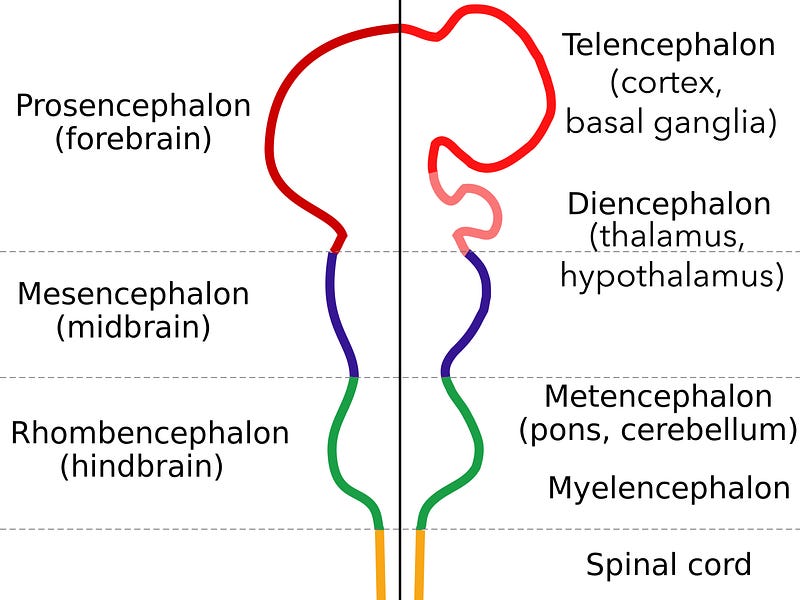
The brain enables more complex behaviors and richer perceptions of the surrounding environments. In early vertebrates, procedural learning emerges. More specifically, it is learning the optimal behavior through trial and error to obtain maximum reward or avoid punishment.
We are all familiar with procedural and habit learning. Since childhood, many of us have learned to play instruments, sports, or any other skills that require motor skills. This type of learning requires many hours of practice and usually progresses incrementally. Once it is learned, however, the procedural memory is not available to consciousness and is inflexible to change.
At the beginning of the 20th century, American psychologist Edward Thorndike pioneered studying animal learning behaviors. He cleverly designed a wooden box with a latched door and studied how fast a cat can learn to escape it. When first placed into the box, the cat showed many random behaviors. After accidentally pulling the door latch, it found the door open and escaped out of the box happily to eat the reward. After many trials, the cat improved gradually and could perform the exact actions to escape immediately. Thorndike discovered the animal’s procedural learning by trial and error.
Interestingly, Thorndike proved the same learning by trial and error in fish. He designed a water tank with one side dark and the other under a light bulb. In between, there were transparent walls with hidden openings. When a fish is placed on the bright side of the tank, it would attempt to swim to the dark side to stay safe. Thorndike discovered that the fish exhibited the same trial-and-error learning as the cats. At first, the fish tried many random things in an attempt to get across the tank. Gradually, the fish learned to zip through each hidden opening accurately without delays.
Numerous experiments have replicated this result using different tasks with various rewards or punishments. The learning process is the same in all these tests: fish first exhibited random behaviors and then progressively learned the sequences of actions depending on what gets reinforced. Moreover, fish could remember these tasks for months or even years after the training.
Neuroscientists have confirmed that the basal ganglia in the forebrain and cerebellum in the hindbrain are crucial for procedural and habit learning. It is not surprising that fish can learn complex behaviors similar to those of other higher vertebrates like cats or dogs. Unconscious procedural and habit learning in humans is another capability our ancestors developed about five hundred million years ago.
Mammals: Deliberated Decision-Making
Fish do not have a neocortex, reptiles show the emergence of it, and mammals have it officially. As reviewed in my previous article on consciousness, the structure of the neocortex homogeneously consists of 6 layers across numerous function-specific areas. It is also true across species of mammals, with the only difference in the area size. The neocortex of rats looks smooth, monkeys start to show shallow folds, and humans have the deepest folds.
The significant expansion of the neocortex along the evolution ladder implies that it is associated with higher brain functions lacking in early vertebrates. One of those functions is the ability to make predictions and decisions from multiple options, which is enabled by three cognitive pillars:
- Comprehensive cognitive maps of the world (e.g., spatial, somatosensory, semantic knowledge in humans)
- Episodic memory to store past consolidated experiences
- Imagination to play out different scenarios to predict potential outcomes.
Moreover, predicting requires significant mental resources, notably attention and working memory (e.g., working space). This decision-making capability is a huge step above learning by trial and error, mainly for two reasons.
First, mammals now have cognitive goals. In contrast to habit learning, goal-oriented learning is more flexible to change. The English psychologist Tony Dickinson has demonstrated the differentiation between these two types of learning in rat instrumental learning. In his experiments, after the rats learned to push a lever to release the water or food reward, the scientist used various ways to cause rats’ aversion to the rewards. Then, he observed two types of behaviors. Those rats who learned the task around 100 times reduced their frequency of pressing the lever by over 70%. However, the other group of rats who were over-trained 500 times continued to push the lever seemingly with no purpose in mind. The results indicate that the latter group had built the habit of automated leveler pressing behavior itself. In contrast, the first group associated the level-pressing with the rewards, manifesting goal-oriented learning.
Second, predicting before actions can proactively reduce errors, which are usually costly. Executions with minimum errors are crucial for mammals to survive in a complex environment. In contrast to trial and error in action, mammals can play out each option in their mental simulations and avoid making mistakes in the first place. Moreover, mammals now can do counterfactual reasoning to adjust their strategy when encountering errors. For example, in the experiment where monkeys were taught to play the game of rock, paper, and scissors, if a monkey lost because it chose scissors while its opponent chose rocks, it would most likely pick paper (which would have won against rocks) next time. In other words, if the current option did not play out as expected, mammals could return to the option they did not choose and act upon it at the subsequent trial.
Compare AI with the Biological Brain
Animals have been constantly foraging and seeking in their environments for millions of years. Synaptic-plasticity-enabled learning existed at the very beginning when neurons came into existence to form neural networks. In this aspect, AI has similar building blocks in artificial neural networks (ANN), and the foundation has led to its unprecedented advances in recent decades. However, in light of the evolution of the biological brain, it becomes evident that today’s AI still lacks fundamental architecture and capabilities that hinder it from learning by itself and interacting with an environment directly.
The Lack of Integration between Sensory and Movement
In the animal kingdom, the brain started with an integrated decision-making system end-to-end, and each part — including sensory information gathering, information processing, and controlling movements — evolved in parallel so that the organism could interact with and adapt to their ecosystems quickly and effectively through learning.
The sensory-motor integration was initially extremely simple: a given stimulus triggers a fixed response. Then, as shown in classical conditioning, it could respond to an associated environmental cue or neutral stimulus from learning its cause-effect relationship. Subsequently, the biological neural networks can learn any arbitrary sequence of behaviors by trial and error and, eventually, perform simulations and predictions to choose the best action.
However, successful AI models today, including the convolutional neural network (CNN) and large language model (LLM), require careful preparation of training data by engineers and data scientists, and each performs a narrow function. In other words, AI is a tool designed, trained, and manipulated by humans. It can’t gather information and learn by itself nor interact independently with the world.
The Lack of Continuous Learning
As stated in my article “How the Brain and AI Overcome Forgetting”, AI systems cannot continuously learn because of their catastrophic forgetting. Each AI system can only learn a specific task to tackle a specific problem. If an AI system needs to learn three tasks, the training data for all three tasks must be provided simultaneously. If the same network is trained with a new set of training data for the fourth task, it would suddenly forget what it had learned previously. Engineers avoid the problem by freezing their AI systems after training before releasing them for use.
On the other hand, the biological brain doesn’t have this issue. Its ability to continually learn new tasks without forgetting what was learned previously is essential for survival in dynamic environments. From early vertebrates like fish to advanced species, animals have had this endowment over millions of years.
All in all, the gap between AI and biological brains in continuous learning calls for significant breakthroughs to overcome the hurdles that AI is facing.
The Lack of Generalization across Multi-modalities
The evolution of the neocortex enabled mammals to make predictions among multiple options. The three pillars stated above — the comprehensive cognitive map of the world, the episodic memory of the past, and the ability to imagine possible future outcomes — all require integrating multi-modality information, which happens in the neocortex.
AI has made great strides in generative models, which produce impressive outputs in graphics, text, music, and others. One limitation is that each AI model is implemented for one specific modality. Can any of those be generalized to a different input modality, like the neocortex? Can they work together to scale up when one input type is replaced by another?
Furthermore, the neocortex does not stand alone in the brain. It acts as executive headquarters for long-range planning, working with multiple decision-making systems internally to make more complex decisions with intense deliberations. The executions of these tasks require inputs from long-term declarative memories and attention-based information gathering from external environments. This implies that a suite of interconnected, modularized systems is necessary for AI to achieve more complex decision-making.
In the past decades, each significant AI breakthrough has marked a remarkable convergence of ANN and the brain. CNN achieved image recognition that surpassed humans, and its architecture was inspired by the animal visual cortex. The LLMs have shocked the world with their superb language capability. The language-specific function, however, is mapped to a relatively small area in the human neocortex. Reinforcement learning performs procedural learning by trial and error, which has inspired neuroscientists to make new discoveries in animal procedural learning.
A conceivable step for AI is to integrate the existing successful models into super systems that can perform end-to-end decision-making with self-learning. As the computer scientist Cal Newport says in his New Yorker article:
“If you’re excited or worried about artificial intelligence, the right thing to care about is not how big we can make a single language model, but instead how smartly we can combine many different types of digital cognition.”
What is General Intelligence?
The term “artificial general intelligence” (AGI) has become popular in the AI community. AWS defines it as “a field of theoretical AI research that attempts to create software with human-like intelligence and the ability to self-teach.” OpenAI’s mission is “to ensure that artificial general intelligence benefits all of humanity.”
The evolution tells us there is no specific underlying structure responsible for general intelligence. On the contrary, the brain has evolved in an integrated fashion with multiple decision-making systems, each with its own advantages and limitations. In the end, the survival of humans and animals relies on all of them, a balancing act of leveraging each system to fulfill specific goals. Professor Melanie Mitchell said it well in a recent article published in Science:
“Whereas cognitive science has no rigorous definition of “general intelligence” or consensus on the extent to which humans, or any type of system, can have it, most cognitive scientists would agree that intelligence is not a quantity that can be measured on a single scale and arbitrarily dialed up and down but rather a complex integration of general and specialized capabilities that are, for the most part, adaptive in a specific evolutionary niche.”
As AGI emphasizes AI to match “human-like” intelligence, the evolution tells us that the most well-studied cognitive functions had emerged in animal kingdoms long ago before humans. Furthermore, an important aspect of human intelligence is knowing other people’s intent, learning from others, and modifying their actions accordingly. In other words, human intelligence is profoundly shaped by our social and cultural environments, which an isolated brain can’t achieve. This social aspect has not surfaced in the definitions of AGI, likely because of our little understanding of the underlying brain mechanisms.
Conclusion
Intelligence is a general term that is difficult to define, and the same is true for AGI. As a human society, where AI will go in the future is also limited by our understanding of ourselves. The evolution of the biological brain tells us human intelligence is largely not unique to humans but rooted in the animal kingdoms for millions of years. Understanding the history helps us gauge where AI stands today and where it is going in the near future. Our predictions for AI will continue to evolve as we understand better about ourselves, where we came from, and where we are going.


