

What do we know about Coronavirus so far?
A study examining the earliest 99 cases of the infection points to older males with pre-medical conditions being more susceptible
Just as the Chinese government failed to identify the viral pneumonia threat promptly in December 2019, the World Health Organization (WHO) has been dragging its feet on declaring the coronavirus as a global health emergency. With the number of people infected with it continuing to rise — more than 7700 confirmed cases reported in over 20 countries and above 160 fatalities as of yesterday, I wonder what took the global health authorities so long to declare this as a pandemic & global health emergency?
Ironically, I wrote about a study earlier, conducted by the Global Health Security (GHS) Index, which highlighted that the World was not ready to deal with a pandemic. One of the main suggestions of the report was to fill in the preparedness gaps which were lacking in most cases & taking prompt action. Both of these areas leave much to be desired as we can see from the current outbreak.
Known as 2019-nCoV, the spread of the recent wave of this viral infection has been rapid. A recently concluded study encompassing 99 patients admitted with the virus to a local Wuhan hospital has shed some important insights on the virus. Generally speaking, the most recent viral outbreak labels it to be belonging to the same family of viruses as SARS (2003) and MERS (2012) outbreaks. The unique properties, however, are still unclear.
“Because asymptomatic infection appears possible, controlling the epidemic will also rely on isolating patients, tracing and quarantining contacts as early as possible, educating the public on both food and personal hygiene, and ensuring health care workers comply with infection control.” ~ Kwok-Yung Yuen, lead researcher
Following observations were noted in the study:
- The average age of infected patients was 55.
- The majority of the people contracting the virus were male at 68%.
- 50% of the patients were suffering from pre-existing chronic disease.
- And 49% of the patients had a direct connection to the food market, which the virus is suspected to have originated.
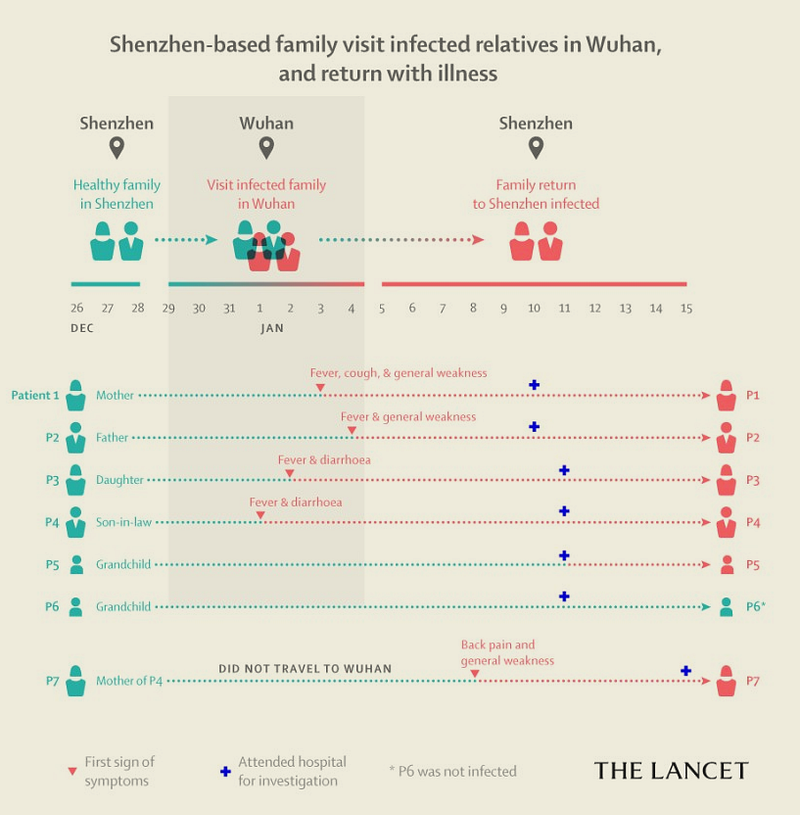
The most common symptoms seen in the patients coming to the hospital were fever and/or cough, while others exhibited shortness of breath, muscle aches & headaches. While the coronavirus is similar to its earlier counterpart SARS, there is one major difference — the former lacks any upper respiratory tract symptoms like runny nose, sore throat & sneezing. This sometimes leads to an absence of obvious symptoms (Patient P6 above).
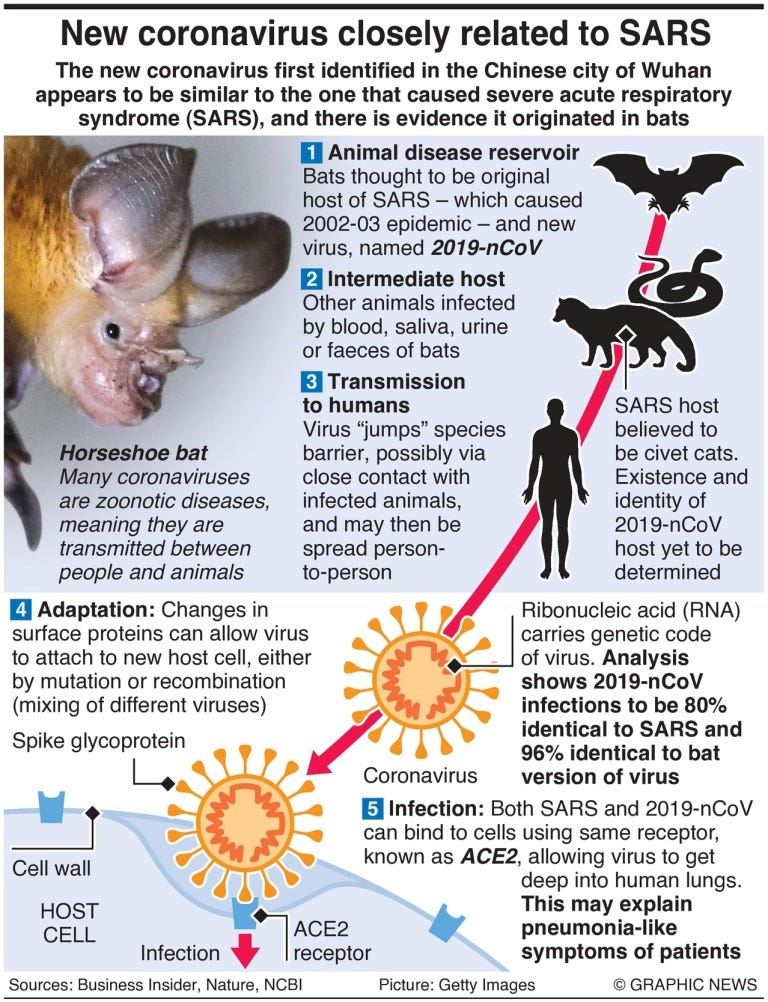
When this study concluded on January 25th, only 11 patients had died from the virus, while 31 had recovered and been discharged. The majority of the deceased patients at that time were older than 60 years with pre-existing medical conditions. The biggest takeaway from the study indicates that males older than 60 and suffering from some pre-existing conditions are the most susceptible group of the lot.
Females were better able to ward off the infection, which is attributed to the protection from the X chromosome — enhancing immunity, according to the experts. Another recent case study, analyzing the results of a whole family that was infected in early January indicates that asymptomatic transmission of the virus is possible (infographic above).
A lot more questions still remain unanswered as this rapidly changing global emergency evolves. The best way to protect yourself is to be aware of the risks & stay informed. Track Coronavirus in Real-Time (Johns Hopkins CSSE).
This Coronavirus study was published in the Journal The Lancet.