
What Did They Eat: The Aztecs
Corn, cannibalism, and cacao
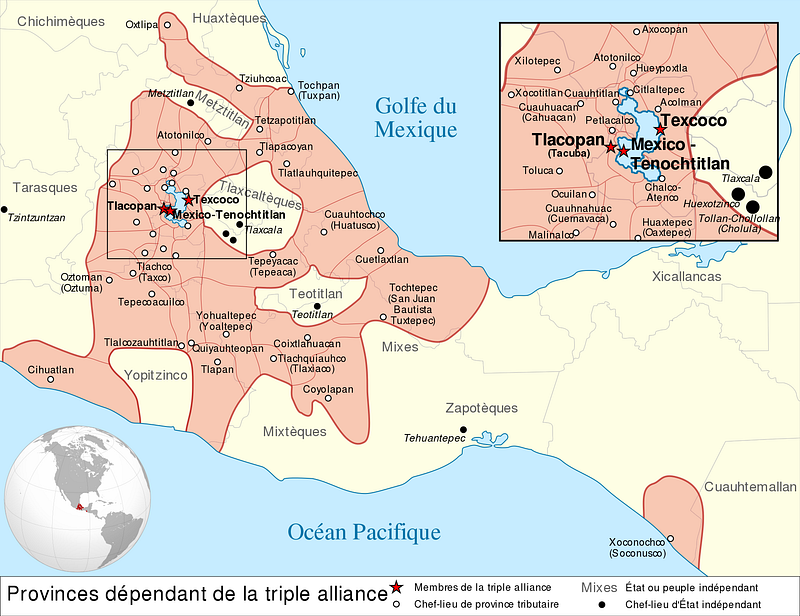
The origins of the Aztec people remain shrouded in mystery. They take their name from a place called Aztlan, which is thought to mean ‘white land’. The myth suggests that they lived in an idyllic paradise and for reasons that remain unclear, they left their native homeland. Making their way to what would become their capital Tenochtitlan, everything turned against them and they became mortal, susceptible to the elements and challenges of nature.
The Aztecs themselves searched for this lost, mythic land, which for a Western audience can loosely be compared to the Garden of Eden, but it was never found and to this day the exact origin of the Aztecs remains a mystery, with many suspecting multiple migrations from Northern Mexico and the Southern United States between 1100 and 1300AD.
The intimate relationship between mythology and the natural world is reflected in almost all facets of Aztec society, and perhaps more than any other culture, in their food too.
Maize
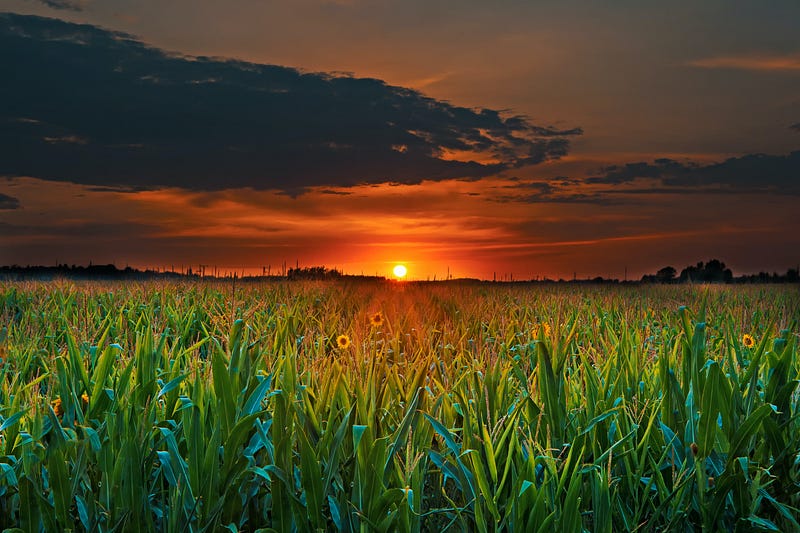
Maize, or corn as it’s also known, predates the Aztecs by several thousand years. Maize is thought to have been domesticated in what is today Mexico as early as 5000BC and was the staple crop of the Aztecs. They grew a great variety of maize and are thought to have created an innovative process for extracting more nutritional value from it. The process, called nixtamalization, allowed for more easy access to the nutrition contained within the maize by removing the outer shell from the grain and is still practised to this day.
According to their myths, it was Quetzalcoatl, one of their most famous gods that gave maize to humans. He is said to have spotted a red ant carrying maize on its back and followed it to Tonacatepetl (the Mountain of Sustenance). He then turned himself into a black ant, stole a kernel of maize, and brought it back for humans to plant.
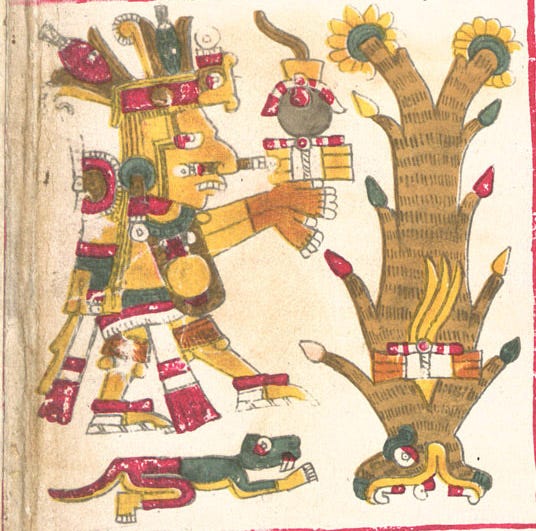
Despite this, Quetzalcoatl is not a maize god, and that honour goes to Centeotl and Chicomecoátl. These two figures are actually thought to be the same god, with the former being the male aspect of the god and the latter the female aspect. Each was responsible for a different part of the maize’s maturation and was worshipped in typical Aztec fashion with blood sacrifices, bloodletting and with women wearing necklaces of corn to honour the god.
The most common way maize was consumed by the Aztecs was in the form of tortillas and tamales, as well as ātōlli (a kind of hot drink, usually flavoured with vanilla and cinnamon) and a kind of porridge. All of these can still be found in Mexico today, especially tortillas and tamales.
Beans
Second, only to maize, beans were another staple of the Aztec diet and their largest source of protein. The most common variety, the creatively named ‘common bean’, was widely consumed by the Aztecs and eaten with almost every meal. Along with maize, it was eaten with almost every meal and they too remain a popular Mexican staple to this day.
Meat & Fish
As a society based around agriculture, much of the Aztec diet relied on beans for protein, but that is not to say that they didn’t eat meat when it was available. As with almost all societies of the period, meat was eaten with much more frequency by the upper classes, but some meats were still available to the common Aztec citizen.
The Aztecs had a far different palate than their European contemporaries and they didn’t domestic many of the animals we associate with meat-eating today, such as pigs, cows, sheep and chickens. The simple reason is that these animals are not native to the Americas and had to be imported by the Spanish during their conquest of the area.
The invading Spaniards are said to have seen the people of the region eating a ‘large chicken’, or as we would call it, a turkey. Turkeys and ducks are thought to the only animals the Aztecs took steps toward domesticating. There’s also evidence that they ate domesticated dogs, but most of their other meat was hunted and included deer and rabbits, as well as iguanas, gopher, frogs, tadpoles and insects.
The latter appears to only have been eaten by the common Aztecs, but meat overall was considered a luxury item and was only eaten rarely, especially if it was hunted.
Chillies and Vegetables
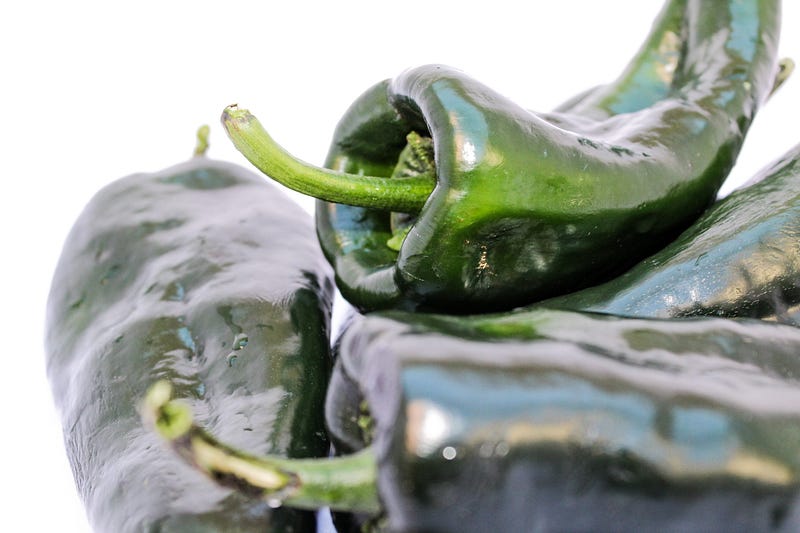
The Aztecs ate a broad range of fruits and vegetables, many of which we would still recognise today. Numerous squashes, tomatoes, sweet potatoes, onions and avocados were eaten, alongside guavas and papayas to name a few.
Chillies were often roasted, or made into a sauce, but could also be eaten raw. The chillies they used could be the wild ancestors of the Poblano, a popular chilli to this day. They also preserved their chillies, perfecting a technique of dehydration and then grinding them into powders to spice their foods.
Mushrooms also featured prominently in the diet of the Aztecs and they are thought to have consumed some mushrooms with hallucinogenic qualities. They would also eat ‘corn smut’ which is a fungus that grows on the ears of corn and seemed to have been something of a delicacy to the Aztecs.
Cacao
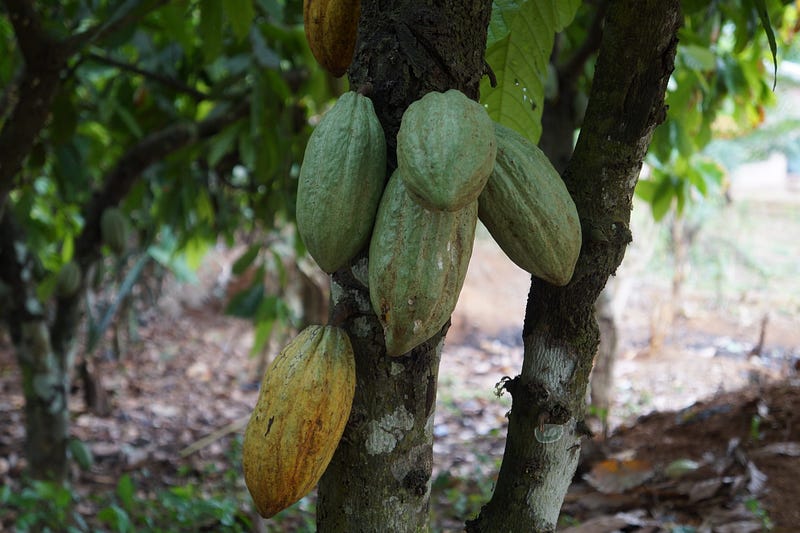
Chocolate, or Cacao as the Aztecs called it, is another food intimately tied up in mythology. Quetzalcoatl is said to have given chocolate to humans, much to the displeasure of the other gods. Unlike Maize though, Chocolate appears to have been a delicacy enjoyed only by the elites and ruler of the Aztec world.
The Aztecs themselves did not grow cacao beans and so imported them, insisting that everywhere that could grow them, pay a tribute to them in cacao beans. They are even thought to have been used as currency within the empire.
The beans weren’t eaten but brewed into a bitter drink and mixed with spices. Recipes inspired by the drink can still be found today and I urge you to try a true ‘classic’ hot chocolate.
Alcoholic Drinks
The Aztecs fermented numerous fruits, as well as honey and maize into alcoholic drinks. Being drunk, however, was not acceptable, especially for a member of the upper classes, who could be executed for drinking to excess. Bearing in mind, this is centuries after beer had become one of the most popular drinks in Europe and getting drunk was a popular pastime for rich and poor alike across the continent.
Cannibalism
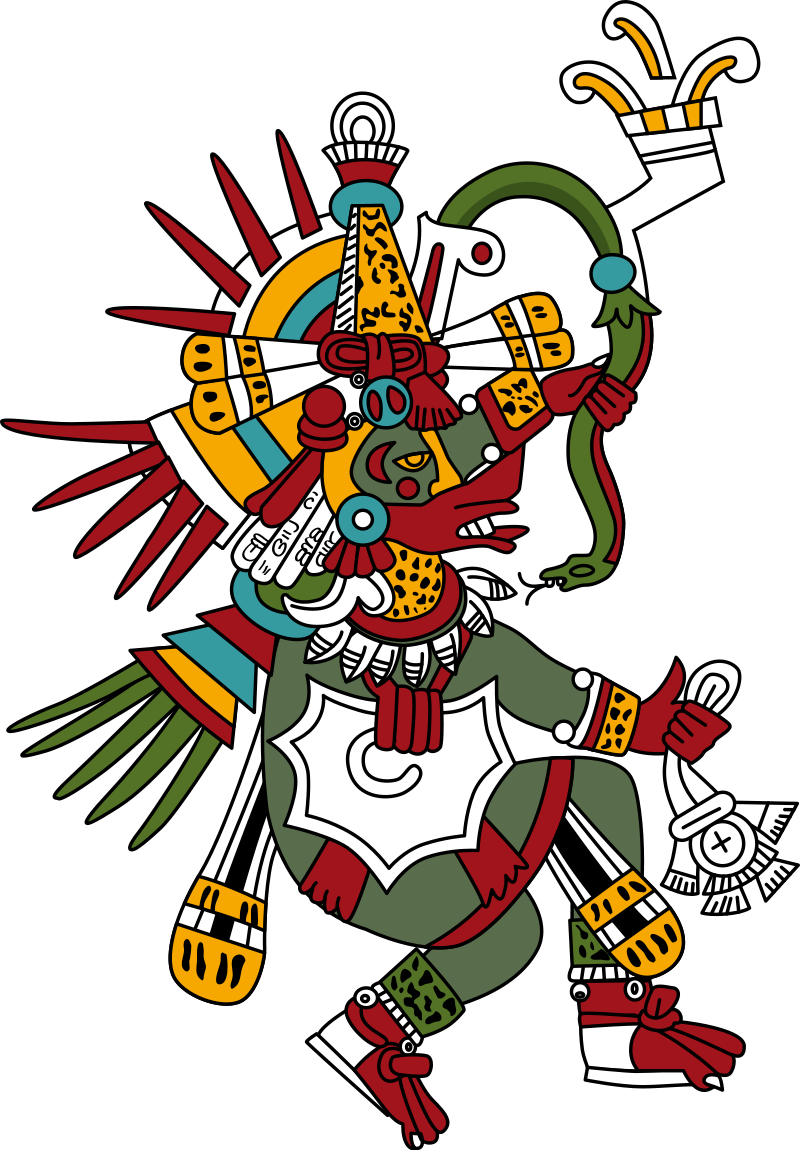
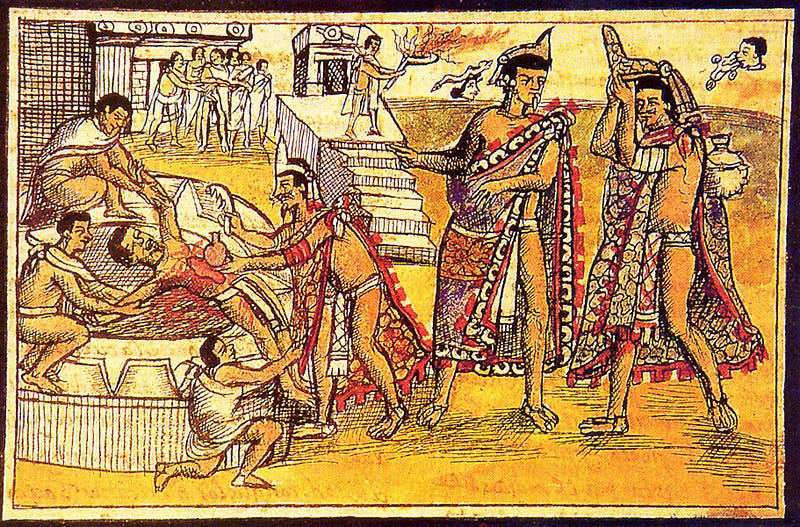
The Aztec mythology is intimately connected to cannibalism. Once again, they looked to Quetzalcoatl, who is said to have journeyed to the underworld at the end of the 4th Sun (the age before the 5th Sun, when the Aztecs believed they lived) and rescued the bones of humanity. The gods then gave their blood to resurrect humanity and as payment, humans must sacrifice blood to the gods to keep them nourished and strong, lest the world end.
Prisoners, but also fellow citizens, as some forms of sacrifice were considered an honour with even the winners of sports games chosen, would routinely be sacrificed to appease the gods. The heart would be ripped from the chest, the body thrown down the pyramid stairs and then dismembered by the crowd below. Pieces would be served to elites, often in a stew.
The Legacy of the Aztecs
The Aztecs remain one of the most fascinating civilisations of the pre-Columbian era. Some of it may be morbid curiosity on our part, but there is far more to the Aztecs than human sacrifice. At the height of their power they ruled over 5 million people, with their capital Tenochtitlan, having more than 150,000 inhabitants at its height, a number comparable to that of Paris in the same time period.
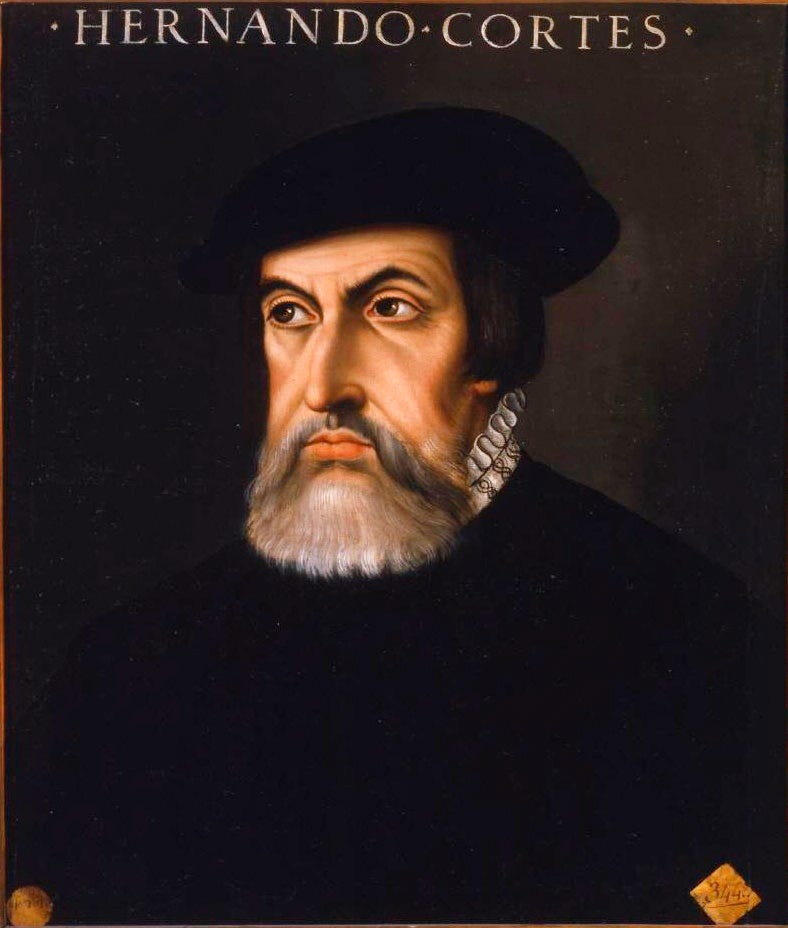
In 1521, Hernan Cortes defeated the last of Aztec resistance, effectively bringing to an end the last great Mesoamerican civilisation and beginning centuries of oppression that wouldn’t be broken until 1810.
Though their empire lasted less than 100 years, from 1428 -1521, the Aztecs have left a profound mark on the world. A great many of their foods are still widely consumed today, and not just in Mexico, but all around the world. While the distance between the Aztecs and us today may feel vast, simply by experiencing their food, we are able to experience their culture and make the Aztecs feel a little less ‘other’ to us.
Bonus fact: Within the first year of arriving at Tenochtitlan, Hernan Cortes is thought to have killed 40% of the population, a darkly impressive figure when you realise, he only had 680 men. It wasn’t his soldiers that did most of the killing, but what they brought with them — smallpox. The figures of Europeans brought smallpox and other related diseases to the Americas are astounding, with some estimates placing the death toll of Native Americans at 90% from the disease. Eventually, the Europeans realised the power of disease and began distributing smallpox laced blankets, one of the first examples of germ warfare in history. This is more than likely why the Aztec empire collapsed so quickly, through disease, not European superiority, despite the common narrative.
Bonus fact 2: Incidentally, many have long wondered why there was no ‘America pox’. Why the Europeans didn’t return with new and deadly diseases from the New World. One theory is that there simply weren’t any. Most of our diseases come from animals and spread through the filth of European cities at the time. The close proximity between animals and humans allows diseases to jump species, but in the Americas, people didn’t domesticate animals in the same way, nor did they live so closely alongside them. Put simply, there was no America pox because the people of the Americas were cleaner than Europeans.