
What Are You Missing Out On When You Run By Default?
4 quotes from Invisible Women that helped highlight biases I’ve both encountered and perpetuated
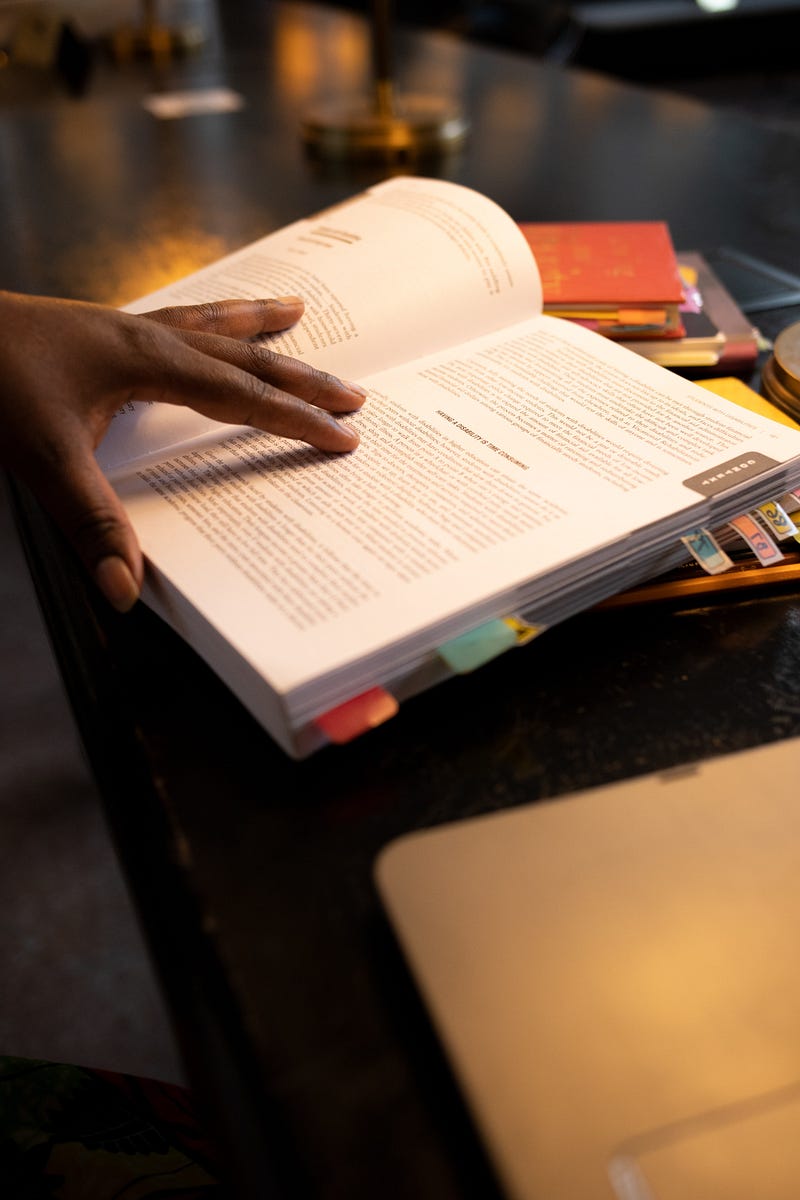
Book: Invisible Women: Data Bias in a World Designed for Men Author: Caroline Criado Pérez Genre: Nonfiction, Feminism, Science
This book covers numerous examples thoroughly explored for how data is often not collected to describe women and how they exist within the world. In absence of such data, this contributes to discrepancies in pay, health, and more.
From the many arguments in this book, four key quotes stood out to me the most to help me describe:
- The experiences I’ve been through, but also
- the way that I might perpetuate these biases.
Below, I share my thoughts from reading this book and hope this is helpful for you to begin reflecting on what’s missing from your worldview and how to challenge this thinking in new directions.
There is no such thing as a woman who doesn’t work. There is only a woman who isn’t paid for her work.
I didn’t become interested in economics until after I graduated university, so I never got to take any “official” courses. Yet, podcasts like The Indicator and Planet Money grabbed my attention and introduced me to how economics can actually be relevant and useful to understand.
(Key caveat: given that these podcasts are developed with entertainment in mind, there are also key limitations to how I absorb this knowledge. For one, I don’t try to pretend be an economics expert over one or two measly podcasts. Rather, I do unabashedly share that this is a relatively new interest to me, and that I humbly would like to see more different perspectives now that these podcasts have piqued my interest.
The most interesting piece to emerge from these podcasts though, is how it broke my assumption of what “work”, “productivity” and “value” mean, aligned with the message of this book. I certainly had a phase where I looked down on becoming a housewife because of some limited understanding of what feminism meant — for one, I was a teen then. As an adult now, I respect that feminism opened up the possibility such that women can choose to be whatever they’d like to be without the imposition that you can only make one lifestyle choice.
Yet, in a number of ways, our society still upholds this inequality in how we compensate and support work that is traditionally completed by women. Caregiving and household work is one category of such work that is assumed to fall on women’s shoulders that go without pay. Gaps in resumes due to caregiving duties are seen as personal failures needing to be explained and justified.
This perspective change of realizing this unspoken assumption to take on unpaid labour yet shamed for not being able to complete competitive amounts of the work with less time to begin with — that’s something I’ve had to reflect on and challenge myself.
Reflection Prompts:
- In what ways does unpaid work show up in your day to day? What maintains this assumption that this unpaid work falls on your shoulders?
- How does unpaid work fall on individuals within your community, workplace or family? How do you challenge these assumptions and ensure that everyone has the opportunity to take on projects that align with their life goals?
The result of this deeply male-dominated culture is that the male experience, the male perspective, has come to be seen as universal, while the female experience — that of half the global population, after all — is seen as, well, niche.
It’s interesting because if I read this quote five years ago, I would have focussed on the feminist piece of this argument.
Instead, when I read this, I wonder about the experience of being gender non-conforming and reading this piece.
And initially, I have a few reactions.
First, as a book focussing on data biases that exclude women, it may draw away from the main point by trying to tackle every other issue of marginalization. This consideration, of course, is an extreme, because other forms of marginalization intersect with the identity of being a woman — which this book partially tackles (e.g., with regards to racism).
What stands out to me in this specific quote is the binary language of male-dominated culture vs. female experience, of the female experience being “half” of the global population. What’s important to note in speaking about issues regarding the female sex and women’s experiences is that there will be overlap between these experiences with trans, genderfluid and non-binary experiences. Some of the points that speak about sociocultural assumptions about feminine-presenting people apply across genders rather than being restricted to men or women.
A book about feminism focussing on the data gap regarding women can still have inclusive language and begin to ask questions about how central points are made.
For me, rather than making a commentary on whether this book used the right or wrong terminology, it highlights to me how my language has changed. And how it’s still imperfect. Even in this paragraph, I struggled and questioned whether each term was the best term, especially when the quote focussed on terms related to biological sex (e.g., female experience) whereas I then took the turn of discussing sociocultural piece of gendered experience (e.g., women’s experiences).
Reflection Prompts:
- What changes in terminology have you adopted in the past few years and what meaning do they hold? Why is it important to you and/or to the others who are most affected by the terminology?
- How do you strive to be inclusive in your writing even outside of topics that focus on inclusivity?
We teach brilliance bias to children from an early age. A recent US study found that when girls start primary school at the age of five, they are as likely as five-year-old boys to think women could be ‘really really smart’. But by the time they turn six, something changes. They start doubting their gender. So much so, in fact, that they start limiting themselves: if a game is presented to them as intended for ‘children who are really, really smart’, five-year-old girls are as likely to want to play it as boys — but six-year-old girls are suddenly uninterested. Schools are teaching little girls that brilliance doesn’t belong to them. No wonder that by the time they’re filling out university evaluation forms, students are primed to see their female teachers as less qualified.
This example is powerful for a few reasons.
Empathy and connections. We have all been children, full of crayons and creativity and dreams and dumb thoughts. We all started at supposedly the same place, give or take.
Effect of culture on beliefs: Some of us will have that experience of how culture changed where we felt safe or could take up space. Or, you may reflect on how it hasn’t changed where you felt safe or could take up space, and begin to understand the perspective for someone else’s experience.
For me, that last line opened up a can of worms. I had so many examples. From being interrupted more often in class discussions that in turn translate into lower marks for “not participating enough”, to the negative feedback that I get as a TA for my teaching attributed to “not wearing the right shoes”, biases in beliefs about brilliance emerge in such insidious, ridiculous stories.
Reflection Prompts:
- How often do you find your self-talk surrounding judgments about your own abilities or brilliance? To what extend do stereotypes imposed on you contribute to these beliefs about yourself?
- To what extent do you perpetuate these beliefs about abilities and brilliance based on gender?
Whiteness and maleness are silent precisely because they do not need to be vocalized. Whiteness and maleness are implicit. They are unquestioned. They are the default. And this reality is inescapable for anyone whose identity does not go without saying, for anyone whose needs and perspective are routinely forgotten. For anyone who is used to jarring up against a world that has not been designed around them.
This quote illustrates a difficult point to grasp for some.
Sometimes, it’s difficult to grasp because it’s hard to see or feel a default when you’re experiencing it from within and benefitting from it. Sometimes, it’s difficult to grasp because it’s easier emotionally to deny the existence of the default than to do the work of dismantling it.
But it’s an unspoken default nonetheless. Some things go unquestioned and become the structure of how we ask questions, even in methods that are supposed to be “objective”. When you fail to examine the assumptions that go into how data is collected (and what data isn’t collected), the results will only ever describe what’s illuminated and not what’s absent.
Reflection Prompts:
- What are the ways you complete your research for writing? How often do you seek sources outside of beliefs you typically encounter? How often do you question and contextualize sources rather than presenting each source as iron-clad “truth”?
Hi I’m Lucy Dan 蛋小姐 (she/her/她) and this piece was written as part of the Noodle Book Club! For more information:
^ by Ntathu Allen


