
What Are the Teams Inside Your Head?
The physical and functional parts inside your head and how they work together
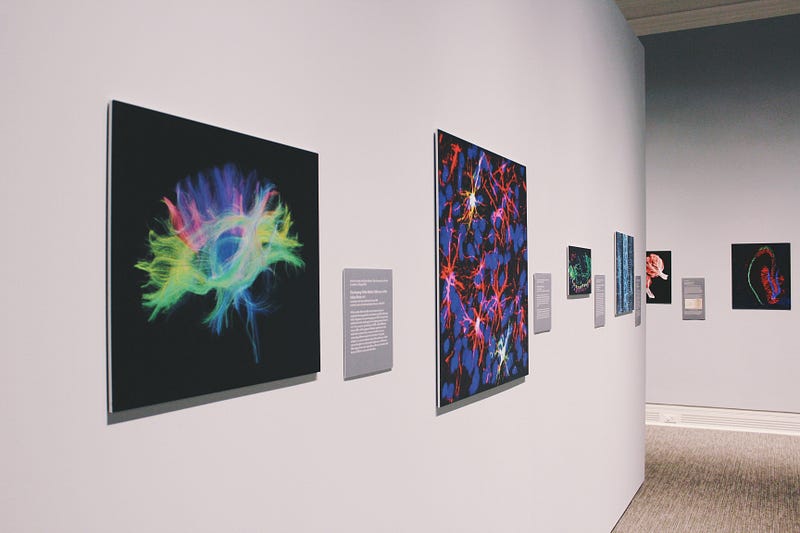
The state of flow feels like a miracle.
But our world itself is nothing else than a conglomeration of miracles.
Every stone, every sand corn, every bit of soil is a miracle.
Every creation is a miracle.
Every being is a miracle.
Every human being is an explosion of miracles.
Well, okay, maybe the word “explosion” is not entirely appropriate. Because the result of an explosion is chaotic, but there is nothing chaotic about the magic of the teamwork of all the bits, organs, tissues, and processes that make us up.
Yes, every one of us is a fantastic enterprise consisting of numerous teams, all working together to maintain life.
Let’s take a look at the human brain. It has three main parts.
“At the bottom of the brain is the brain stem. It’s… called the reptilian brain (and in fact, it does look like an alligator’s whole brain). The reptilian brain wakes you up in the morning, sends you off to sleep at night, and reminds your heart to beat.
“Sitting on top of the brain stem is the midbrain, also known as the mammalian brain… The midbrain regulates the body’s internal temperature, houses our emotions, and governs the fight-or-flight response that keeps us alive in the face of danger.
“The third part of the brain is the cortex… The cortex, which wraps around the rest of the brain, is responsible for the miracle of being human. … It’s where our rational thoughts and creative impulses take place. When we want to make a change, or jump-start the creative process, we need access to the cortex.” — Robert Maurer, One Small Step Can Change Your Life: The Kaizen Way
Then inside each part of the human brain, there are sub-teams, each member of which has a critical function, often a vital one.
Just take the amygdala, which can save our lives by switching on the fight-or-flight mechanism. Or which can send us into despair because it turns on the same mechanism in the face of a big wish or dream, be it the beginning of our journey to that dream, the middle, or just before reaching it.
“The midbrain is where you’ll find a structure called the amygdala. … The amygdala is crucial to our survival. It controls the fight-or-flight response, an alarm mechanism that we share with all other mammals. It was designed to alert parts of the body for action in the face of immediate danger. One way it accomplishes this is to slow down or to stop other functions such as rational and creative thinking that could interfere with the physical ability to run or fight.” — Robert Maurer, One Small Step Can Change Your Life: The Kaizen Way
But even the functional “parts” of our brains have a team-feature to them. Yes, I mean mind here.
The mind is “the part of a person that makes it possible for him or her to think, feel emotions, and understand things.” — Cambridge Dictionary
You can see by the definition that the mind represents several functions of the human brain. And it has components too.
These are “conscious” and “subconscious,” where the latter, according to Sigmund Freud, includes “preconscious” and “unconscious,” and even something called “superconscious,” which can be considered as a part of the subconscious mind or something separate.
You can’t do much about the physical structure of your brain. And whether the teams inside it work or don’t work together doesn’t entirely lie inside your hands and your will.
But when it comes to the functional teams inside your head — your mind with all its parts (whichever way they might be defined) — you have all the necessary tools for their successful collaboration to take place.
I don’t mean the tools to control your mind. Just like you opposed the control and rules bestowed by your parents, you will resist your own rules and control attempts. Instead, facilitate the collaboration between the teams inside your head by being aware and fully engaged in the moment of now. That includes being kind, honest, and helpful toward yourself and the world around you.
Thank you for reading! If you enjoyed this article, then in addition to those quoted above, you might also enjoy these:
P.S. To stay in touch, join my e-mail list, Optimist Writer.


