
What are mosquitoes for? These little bloodsuckers have their role to play in nature
Everyone has probably asked themselves this question. Especially in summer, when biting insects become a real nuisance. Actually, what are mosquitoes for? Wouldn’t the world be a better place without them?
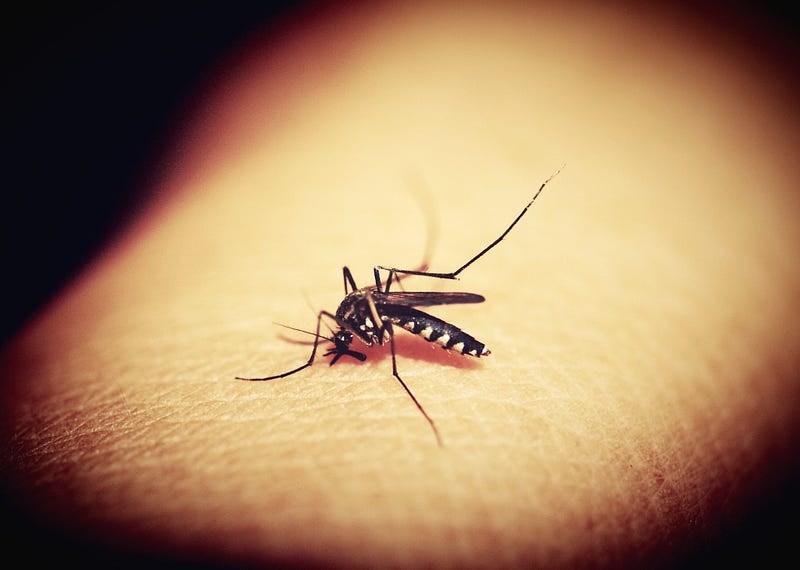
In Siberian and North American folk legends, mosquitoes are often the descendants of great demons that devoured humans. True, the demon is killed by the mythical hero, but the shreds or ashes of the beast survive and still try to suck our blood. So is the sole purpose of mosquitoes’ existence to torment us?
What are mosquitoes for?
Let’s start with the basics. Mosquitoes, like most creatures on Earth, exist by chance. They were formed by evolution, driven by random mutations in DNA and natural selection. Mosquitoes exist because they are highly adapted to their environment.
How well they have adapted is evidenced by the extent of their distribution. Mosquitoes live on all continents except Antarctica. Some subarctic islands, such as Iceland, are also free of them.
So what are mosquitoes for? In a general sense, mosquitoes are not “for something,” and neither are humans. Evolution does not pursue some set goal. In its course, it produces both organisms that we consider beautiful or useful and those we call pests. Nota bene, as many as 40% of all animal species on Earth are parasites, just like mosquitoes.
The role of mosquitoes in nature
From an ecological point of view, mosquitoes are part of food webs. Their larvae are fed by predatory aquatic insects, fish and amphibians. In turn, adults are fed by insects (e.g. dragonflies), birds (e.g. swallows, swifts) and mammals (e.g. bats). In addition, some species of mosquitoes are pollinators.
Therefore, removing all mosquitoes from the Earth would not be a good idea. It could upset the ecological balance of many ecosystems. For this reason, there are currently no plans to completely eradicate any species of mosquito. This applies even to those species that carry dangerous diseases.
Why do mosquitoes bite people?
In the mosquito world, drinking blood is the domain of females. They need it to produce eggs in their ovaries. In other words, the bloody meal is necessary for them to reproduce. Males, on the other hand, feed on the nectar of flowers.
Only a small fraction of the 3,500 species of mosquitoes feed on human blood.
The best-known bloodsuckers are:
- common mosquito, or buzz mosquito (Culex pipiens) — is common in Europe,
- Egyptian mosquito (Aedes aegypti) — transmits such tropical diseases as zika, yellow fever and dengue,
- forkhead mosquitoes (Anopheles) — transmit malaria and filariasis.
Why do mosquitoes bite some people more readily than others?
Why do mosquitoes bite only a select few, while others are at peace? “Sweet blood” has nothing to do with it. An important lure for female mosquitoes is lactic acid, the presence of which is much more characteristic of humans than of other animals. This bouquet of odors is complemented by other compounds such as ammonia, carboxylic acids, acetone, sulcodone or octanol present in sweat.
However, what makes, some seem more attractive to mosquitoes is the microflora of our skin. These are harmless bacteria and fungi that live on the surface of our skin, in our pores and hair follicles. The combination of organic compounds that these microorganisms emit is a key factor in determining whether we appear attractive to a mosquito.
New research also shows that certain viruses make you “tastier” to mosquitoes. The viruses in question are the virus that causes dengue and the zika virus. The altered body odor is more likely to attract mosquitoes, which are more likely to bite infected people and thus transmit diseases.
Interesting facts about mosquitoes
Insects that don’t give us a break in the summer are objects of scientific research. They can also inspire inventors.
Here are a handful of interesting facts about mosquitoes:
- Mosquitoes are prowling even underground. The most common species in Europe, the buzz mosquito, has adapted to life in the tunnels of the London Underground.
- Mosquitoes are the most dangerous animals on Earth. According to a report by the World Health Organization (WHO), there were 229 million cases of malaria transmitted by them worldwide in 2019, including 409,000 deaths. About 94 percent of all cases occurred in Africa. Sixty-seven percent of the deaths involved children under the age of five.
- A new species of malaria-spreading mosquito has been discovered in African cities. Anopheles stephensi is the main malaria spreader in India. A few years ago it also found its way to Africa.
- Hippocrates — the father of ancient Greek medicine — had already written about malaria. In Poland it has been present since at least the 14th century, with 53,000 Poles falling ill in 1921 alone. Malaria disappeared from Europe in 1975, thanks to the large-scale use of DDT, the draining of wetlands and the administration of new antimalarial drugs. Now malaria is making a comeback, along with warm-blooded mosquitoes of the genus Anopheles. In 2009, it appeared in Greece.
- The company Oxitec is releasing billions of genetically modified mosquitoes into the wild. This huge “army” of insects is intended to help fight their natural relatives, which carry deadly diseases such as malaria and dengue fever.
- A team from the National Institute of Allergy and Infectious Diseases analyzed the behavior of malaria-carrying mosquitoes of the genus Anopheles in the African Republic of Mali. It turned out that they are able to travel 295 kilometers in just one night. This is because the light insects are carried away by strong winds.
- Ildar Rakhmatulin developed a device that used artificial intelligence to kill mosquitoes with a laser. A new version of this invention is a laser to kill cockroaches.
Cool that you made it to the end of this article. I will be very pleased if you appreciate the effort of creating it and leave some claps here, or maybe even start following me. It would be nice if you also left a tip! Thank you!


