avatarFarhad Malik

Free AI web copilot to create summaries, insights and extended knowledge, download it at here

3015

Abstract

2">How Many Neurons In Input Layer?</h1><p id="adab">The number of neurons in an input layer is dependent on the shape of your training data.</p><p id="1b2f">Traditionally,</p><figure id="386d"><img src="https://cdn-images-1.readmedium.com/v2/resize:fit:800/1*t8C89plYLONhWRZUAKIEaQ.png"><figcaption></figcaption></figure><p id="d5ea">One additional node is to capture the bias term.</p><h1 id="160a">What Is An Output Layer?</h1><p id="fffb">The output layer is responsible for producing the final result. There must always be one output layer in a neural network.</p><p id="0121">The output layer takes in the inputs which are passed in from the layers before it, performs the calculations via its neurons and then the output is computed.</p><figure id="ca7e"><img src="https://cdn-images-1.readmedium.com/v2/resize:fit:800/1*Zhg5ypanLyDaL2CuD0GBvQ.png"><figcaption></figcaption></figure><p id="25bf" type="7">In a complex neural network with multiple hidden layers, the output layer receives inputs from the previous hidden layer.</p><h1 id="397f">How Many Neurons In Output Layer?</h1><p id="d786">The question to ask is whether you are attempting to work on a classification or regression problem.</p><p id="8899" type="7">If your neural network is a regressor, then the output layer has a single node.</p><p id="ff9b">If your neural network is a classifier, then it also has a single node. If you use a probabilistic activation function such as <i>softmax</i> then the output layer has one node per class label in your model.</p><h1 id="d8a2">What Is A Hidden Layer?</h1><p id="d41d">The introduction of hidden layers make neural networks superior to most of the machine learning algorithms.</p><p id="2ae1" type="7">Hidden layers reside in-between input and output layers and this is the primary reason why they are referred to as hidden.</p><p id="2d63">The word “hidden” implies that they are not visible to the external systems and are “private” to the neural network.</p><p id="4b96">There could be zero or more hidden layers in a neural network.</p><p id="d0c3" type="7">One hidden layer is sufficient for the large majority of problems.</p><p id="bce6"><b>Usually, each hidden layer contains the same number of neurons.</b></p><p id="19f3" type="7">The larger the number of hidden layers in a neural network, the longer it will take for the neural network to produce the output and the more complex problems the neural network can solve.</p><figure id="96af"><img src="https://cdn-images-1.readmedium.com/v2/resize:fit:800/1*wCphd0ADUwgCYRGh-OcAyQ.png"><figcaption></figcaption></figure><p id="eb36">The neurons simply calculate the weighted sum of inputs and weights, add the bias and execute an activation function.</p><h1 id="b3df">How Many Neurons In Hidden Layer?</h1><p id="10c0">Experiments have shown us that the optimum number of neurons in a hidden layer can be determined by:</p><figure id="e5d7"><img src="https://cdn-images-1.readmedium.com/v2/resize:fit:800/1*hFCW1HH_aeug8lmdbLpNQA.png">

Options

<figcaption></figcaption></figure><p id="1db8">The factor is used to prevent over-fitting and it is a number between 1–10.</p><p id="bfd1">To understand what activation functions are, please read:</p><div id="9467" class="link-block"> <a href="https://readmedium.com/neural-network-activation-function-types-a85963035196"> <div> <div> <h2>Neural Network Activation Function Types</h2> <div><h3>Understanding what really happens in a neural network</h3></div> <div><p>medium.com</p></div> </div> <div> <div style="background-image: url(https://miro.readmedium.com/v2/resize:fit:320/0*KxZHrfXwdtc8e_eC)"></div> </div> </div> </a> </div><p id="dea2">If you want to understand what weights and bias are then please read:</p><div id="b19f" class="link-block"> <a href="https://readmedium.com/neural-networks-bias-and-weights-10b53e6285da"> <div> <div> <h2>Neural Networks Bias And Weights</h2> <div><h3>Understanding The Two Most Important Components</h3></div> <div><p>medium.com</p></div> </div> <div> <div style="background-image: url(https://miro.readmedium.com/v2/resize:fit:320/0*hrHGbUf92-CvgqB1)"></div> </div> </div> </a> </div><p id="2075">If you want to understand what activation functions are then please read:</p><div id="5903" class="link-block"> <a href="https://readmedium.com/neural-network-activation-function-types-a85963035196"> <div> <div> <h2>Neural Network Activation Function Types</h2> <div><h3>Understanding what really happens in a neural network</h3></div> <div><p>medium.com</p></div> </div> <div> <div style="background-image: url(https://miro.readmedium.com/v2/resize:fit:320/0*KxZHrfXwdtc8e_eC)"></div> </div> </div> </a> </div><p id="6012">If you want to understand how neural network neurons work then please read:</p><div id="f337" class="link-block"> <a href="https://readmedium.com/understanding-neural-network-neurons-55e0ddfa87c6"> <div> <div> <h2>Understanding Neural Network Neurons</h2> <div><h3>Explaining What These Smart Components Doing?</h3></div> <div><p>medium.com</p></div> </div> <div> <div style="background-image: url(https://miro.readmedium.com/v2/resize:fit:320/1*lk7bbg9gbYKpDYSHABaDOg.png)"></div> </div> </div> </a> </div><h1 id="c4ca">Summary</h1><p id="8a13">This article presented an overview of neural network weights.</p><p id="8de4">Hope it helps.</p></article></body>

What Are Hidden Layers?

Important Topic To Understand When Working On Machine Learning Models

This article aims to provide an overview of how the layers within a neural network operate.

In particular, this article concentrates on the hidden layer of a neural network.

If you want to understand what neural networks are then please read:

What Are Neural Network Layers?

Think of a layer as a container of neurons. A layer groups a number of neurons together. It is used for holding a collection of neurons.
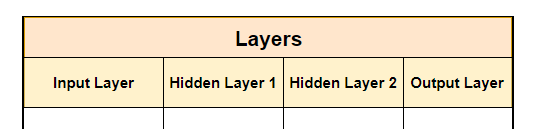
There will always be an input and output layer. We can have zero or more hidden layers in a neural network.

The learning process of a neural network is performed with the layers.

The key to note is that the neurons are placed within layers and each layer has its purpose.

The neurons, within each of the layer of a neural network, perform the same function. They simply calculate the weighted sum of inputs and weights, add the bias and execute an activation function.

Photo by Hasan Almasi on Unsplash

Let’s analyse the different types of layers.

What Is An Input Layer?

The input layer is responsible for receiving the inputs. These inputs can be loaded from an external source such as a web service or a csv file.

There must always be one input layer in a neural network. The input layer takes in the inputs, performs the calculations via its neurons and then the output is transmitted onto the subsequent layers.
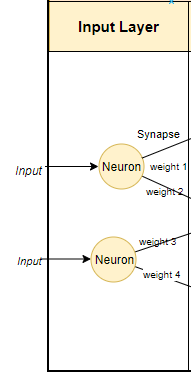
Input layer takes in the inputs. Output layer produces the final results.

How Many Neurons In Input Layer?

The number of neurons in an input layer is dependent on the shape of your training data.

Traditionally,

One additional node is to capture the bias term.

What Is An Output Layer?

The output layer is responsible for producing the final result. There must always be one output layer in a neural network.

The output layer takes in the inputs which are passed in from the layers before it, performs the calculations via its neurons and then the output is computed.
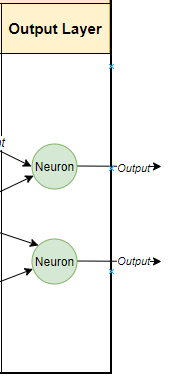
In a complex neural network with multiple hidden layers, the output layer receives inputs from the previous hidden layer.

How Many Neurons In Output Layer?

The question to ask is whether you are attempting to work on a classification or regression problem.

If your neural network is a regressor, then the output layer has a single node.

If your neural network is a classifier, then it also has a single node. If you use a probabilistic activation function such as softmax then the output layer has one node per class label in your model.

What Is A Hidden Layer?

The introduction of hidden layers make neural networks superior to most of the machine learning algorithms.

Hidden layers reside in-between input and output layers and this is the primary reason why they are referred to as hidden.

The word “hidden” implies that they are not visible to the external systems and are “private” to the neural network.

There could be zero or more hidden layers in a neural network.

One hidden layer is sufficient for the large majority of problems.

Usually, each hidden layer contains the same number of neurons.

The larger the number of hidden layers in a neural network, the longer it will take for the neural network to produce the output and the more complex problems the neural network can solve.
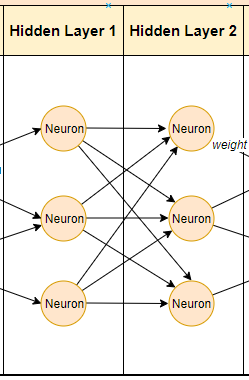
The neurons simply calculate the weighted sum of inputs and weights, add the bias and execute an activation function.

How Many Neurons In Hidden Layer?

Experiments have shown us that the optimum number of neurons in a hidden layer can be determined by:

The factor is used to prevent over-fitting and it is a number between 1–10.

To understand what activation functions are, please read:

If you want to understand what weights and bias are then please read:

If you want to understand what activation functions are then please read:

If you want to understand how neural network neurons work then please read:

Summary

This article presented an overview of neural network weights.

Hope it helps.

Machine Learning
Neural Networks
Data Science
Fintech
Deep Learning
Recommended from ReadMedium