
History
Tragic Women of Shakespeare and How They Die
Murder, suicide, accidental death, and execution
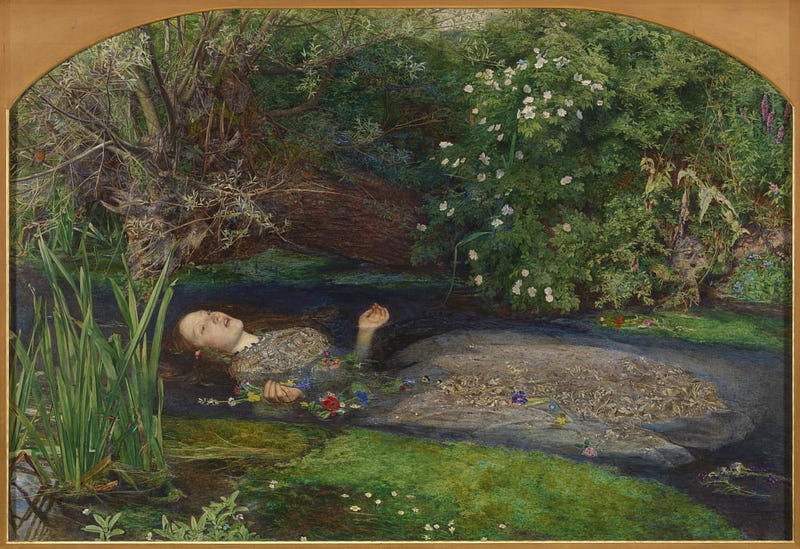
Shakespeare’s plays are full of compelling female characters, and many of them have happy endings. Let’s look at eight for whom he deemed fate had other things in store.
1. Cleopatra: Antony and Cleopatra, Act V, Scene II
“With thy sharp teeth this knot intrinsicate Of life at once untie: poor venomous fool Be angry, and dispatch.” — Cleopatra in Antony and Cleopatra
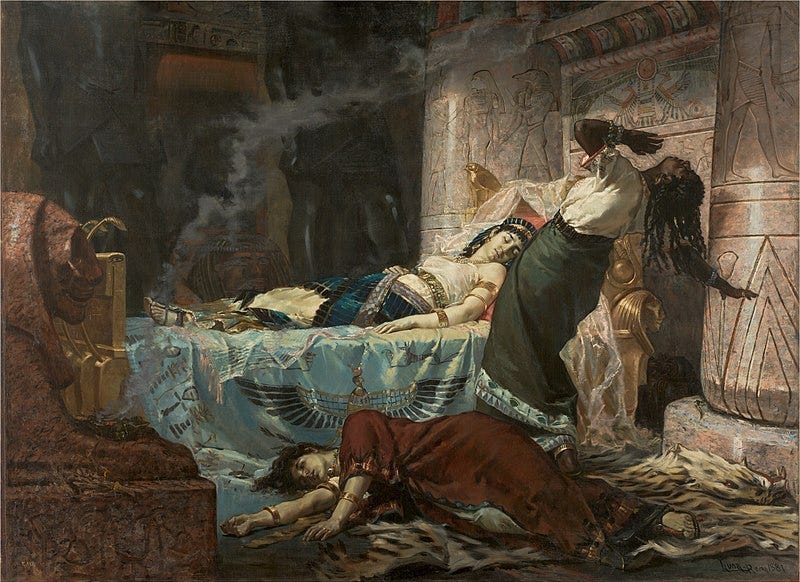
Most of us have heard of Cleopatra, Queen of Egypt. Shakespearean scholars consider her to be his most complex female character. She’s a powerful leader and a passionate lover, counting Julius Caesar and Mark Antony among her conquests.
In the play, Mark Antony is one of three rulers of the Roman Empire, along with Octavius and Lepidus. While living in Egypt, Antony has a torrid affair with Egypt’s Queen Cleopatra, with whom he allies.
Octavius declares war on Antony and Cleopatra, defeating their armies at the Battle of Actium. Believing Cleopatra to be dead, Antony falls on his sword and dies. Distraught at Antony’s death and unwilling to be taken captive by the Romans, Cleopatra kills herself by applying a poisonous snake to her breast, allowing it to bite her.
2. Cordelia: King Lear, Act V, Scene III
“A plague upon you, murderers, traitors all! I might have saved her; now she’s gone for ever!” — King Lear in King Lear
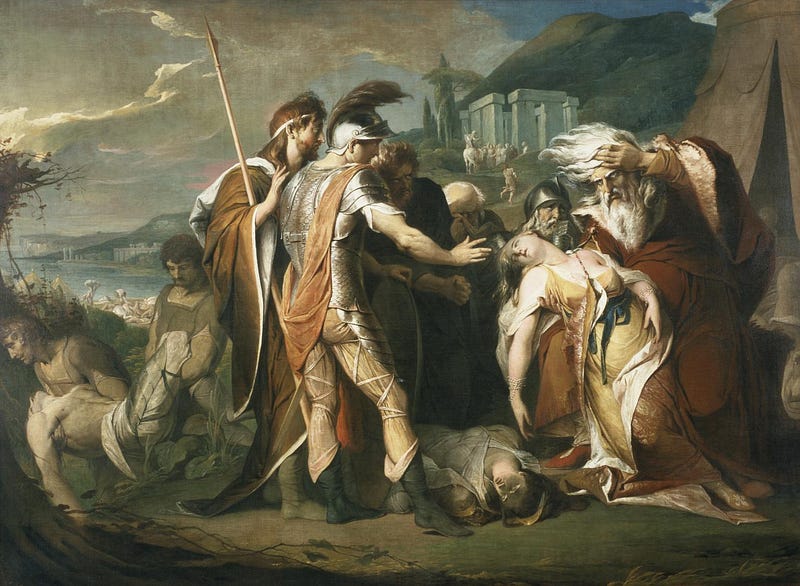
King Lear is a play about a severely dysfunctional family. Cordelia is the youngest of King Lear’s three daughters and his favorite.
He asks Cordelia and her sisters Goneril and Regan to profess their love for him so he can decide how to divide his kingdom among them.
Goneril and Regan praise him lavishly, but they are insincere. They don’t care about their father; they just want his wealth and power.
Cordelia refuses to play this game and says nothing. Enraged, Lear banishes her for staying silent. Goneril and Regan reject their father as soon as they have their portions of his kingdom, but Cordelia remains loyal. She brings an army to his rescue but, by the time she arrives, a series of tragic events have caused him to descend into madness, and he doesn’t recognize her.
Lear’s enemy Edmund orders death by hanging for Lear and Cordelia but then decides to rescind the order. For Cordelia, the decision comes too late. Lear sees her body, comes to his senses, and realizes his error. He dies shortly after of a broken heart.
3. Desdemona: Othello, Act V, Scene II
“A guiltless death I die” — Desdemona in Othello
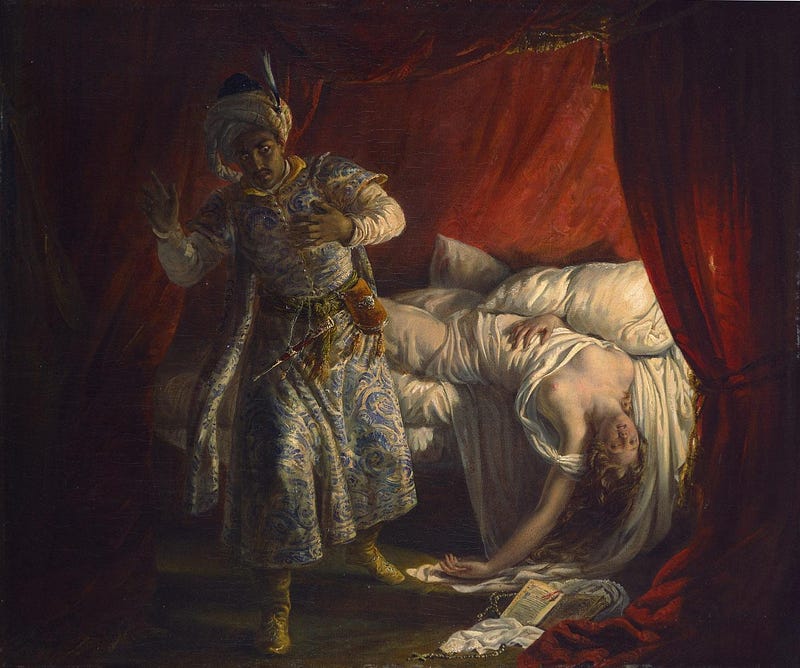
Desdemona is married to Othello, a general in the Venetian army. Iago, a fellow soldier who is jealous of Othello’s success, plots to destroy his happiness. He tricks Othello into believing that Desdemona has been unfaithful to him.
Othello confronts Desdemona, who insists that she is innocent. He doesn’t believe her, and, in a rage, he suffocates her with a pillow.
4. Queen Gertrude: Hamlet, Act V, Scene II
“No, no, the drink, the drink — O my dear Hamlet — The drink, the drink! I am poison’d..” — Queen Gertrude in Hamlet
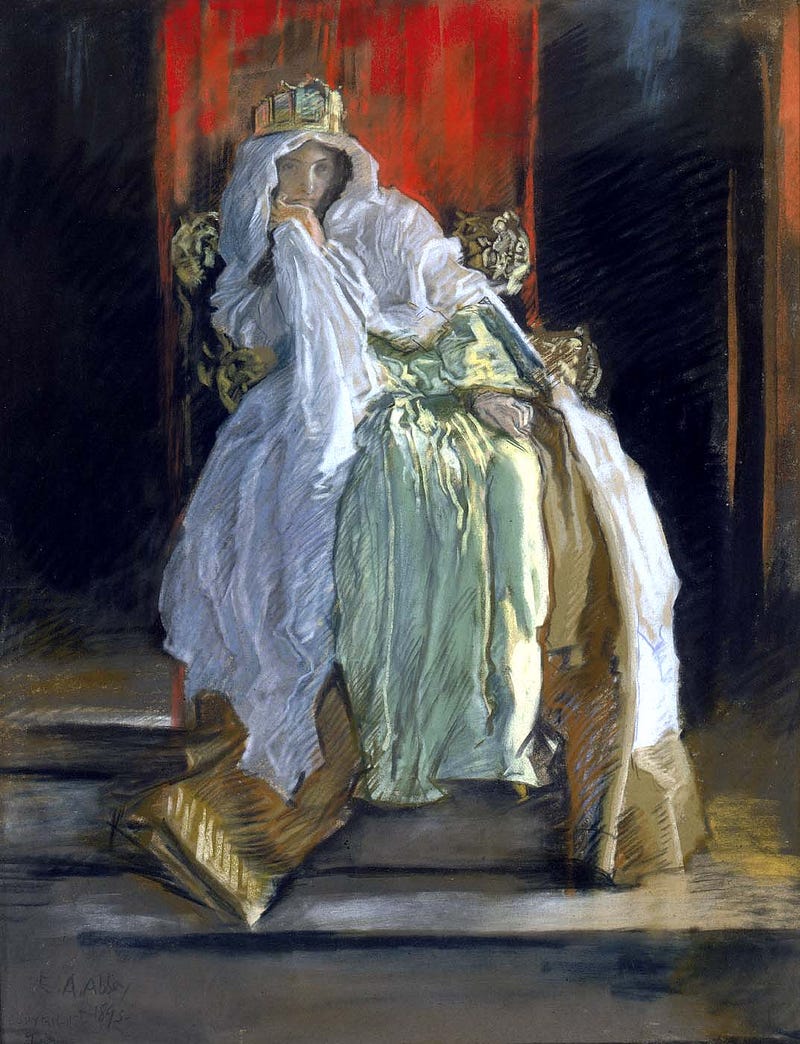
Queen Gertrude is the Queen of Denmark and the mother of Prince Hamlet. Hamlet’s Uncle Claudius murders Hamlet’s father so that he can become King in his place and marry Gertrude.
The ghost of the murdered King tells Hamlet about his wife and brother’s betrayal, and Hamlet vows to avenge his father.
Hamlet inserts a scene that reenacts the murder in a play that Claudius and Gertrude attend to gauge Claudius’ reaction.
Realizing that Hamlet is on to him, Claudius tries to kill him by poisoning a cup of wine that he intends for Hamlet to drink. Gertrude, unaware of what Claudius has done, drinks the wine by accident and dies.
5. Juliet: Romeo and Juliet, Act IV, Scene III
“O happy dagger, This is thy sheath.” — Juliet in Romeo and Juliet
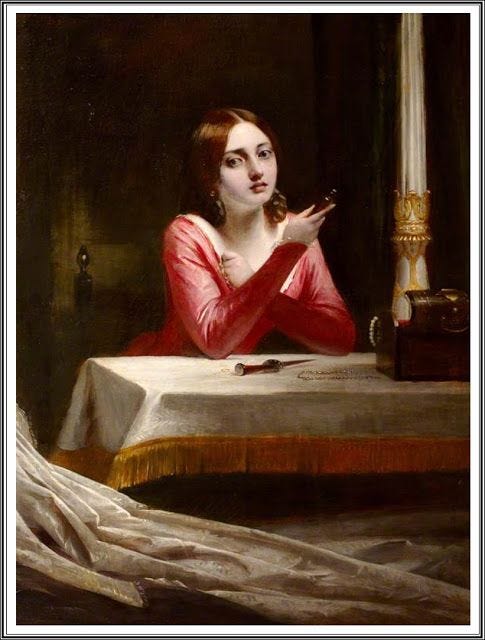
The play Romeo and Juliet takes place in the city of Verona, Italy, where two families, the Capulets, and the Montagues, are engaged in a bitter feud. Romeo, a Montague, falls in love at first sight with Juliet, a Capulet.
They secretly marry, but the Prince exiles Romeo after he kills Juliet’s cousin Tybalt in a duel. Romeo must flee the city and leave Juliet behind.
A kindly priest concocts a plan to reunite the lovers. He gives Juliet a potion to drink that will make her appear to be dead. He then sends word to Romeo telling him of the plan and to meet Juliet when she awakens in the family crypt.
Tragically, Romeo does not get the priest’s message. Hearing of Juliet’s death, he goes to the crypt to see for himself. Believing that his beloved is dead, Romeo kills himself by drinking poison. Juliet then awakens and sees what has happened. She tries to drink the poison as well, but the bottle is empty. She takes Romeo’s dagger, stabs herself in the heart, and dies.
6. Lady Macbeth: Macbeth, Act V, Scene V
“The queen, my lord, is dead.” — Seyton in Macbeth
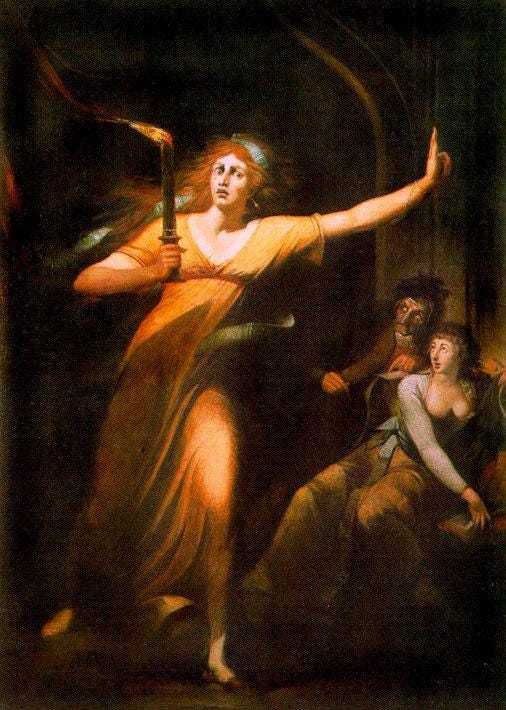
Lady Macbeth is a ruthless, ambitious woman married to a weak man. She goads Macbeth into murdering King Duncan of Scotland so that Macbeth can rule in his stead.
Macbeth stabs Duncan to death, and Lady Macbeth helps him plant the murder weapons on the King’s guards. Macbeth seizes the throne and becomes a tyrant, murdering anyone who questions his authority.
Guilt over the death and destruction caused by the power grab consumes Lady Macbeth. She is depressed, walks in her sleep, and compulsively washes her hands to remove the bloodstains she imagines are still there.
A group of Scottish nobles bands together and attacks Macbeth’s forces. Macbeth hears a scream, and one of his men tells him that Lady Macbeth is dead. Although Shakespeare doesn’t specify precisely how she dies in the play, the assumption is that she kills herself.
7. Lavinia: Titus Andronicus, Act V, Scene III
“Die, die, Lavinia, and thy shame with thee; And, with thy shame, thy father’s sorrow die!” — Titus in Titus Andronicus
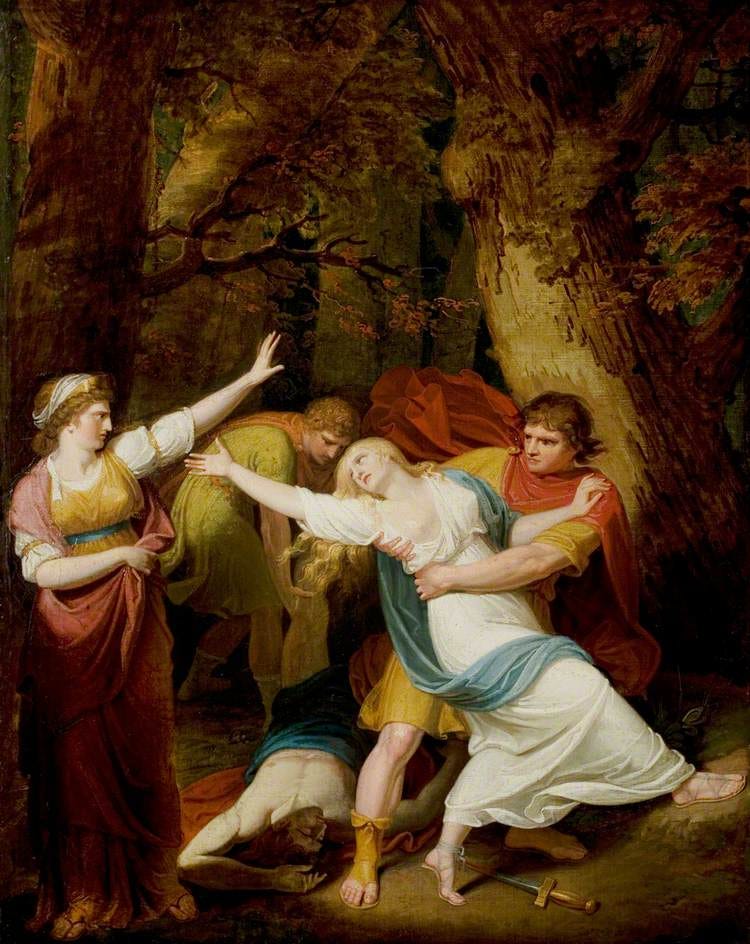
NOTE: This one needs a trigger warning because it’s horrible. Skip down to #8 to avoid the extreme unpleasantness of what happens to poor Lavinia.
Lavinia is the daughter of Titus Andronicus, a Roman general. Titus returns from the war with Tamora, Queen of the Goths, her three sons, and Aaron the Moor as his prisoners. He sacrifices Tamora’s eldest son in a burial ritual for his sons. He then turns the rest of the prisoners over to Emperor Saturnius, who liberates them.
Tamora’s sons both want to marry Lavinia, but Aaron the Moor, suggests that they rape her instead. They do so, then sever her hands and cut out her tongue so she cannot testify against them.
Lavinia tells Titus who raped her by showing him the similar story of Philomel in a book and by writing the men’s names in the sand by holding a stick between her stumps.
Titus kills Tamora’s sons, has them baked in a pie, and feeds them to their mother at a feast where she and the Emperor are his guests. During the banquet, Titus recalls how in the story Lavinia showed him, Philomel’s father kills his raped daughter to defend his honor. Titus, now completely deranged, stabs Livinia to death to protect his own.
8. Ophelia: Hamlet, Act IV, Scene VII
“One woe doth tread upon another’s heel, So fast they follow; your sister’s drown’d, Laertes.” — Queen Gertrude in Hamlet

Ophelia is Hamlet’s girlfriend, the daughter of the King’s counselor Polonius, and the sister of Laertes.
Consumed by his efforts to expose his uncle as his father’s murderer, Hamlet neglects and abuses Ophelia in such a way that she loses her mind.
Ophelia climbs into a willow tree overhanging a brook. The branch she is on breaks, and Ophelia falls into the water. She is so deranged that she makes no attempt to save herself and drowns.
In the case of Queen Gertrude and Lady Macbeth, one might argue that they deserve their unhappy endings. Cleopatra is not so much a victim as someone who refuses to be one. She chooses to control her fate, even if it means taking her own life.
Most of Shakespeare’s tragic heroines, however, are victims of forces beyond their control: men struggling for power and defending what they perceive to be their honor or, as in the case of sweet Juliet, the fault is simply in their stars.
“Death lies on her like an untimely frost Upon the sweetest flower of all the field.” — William Shakespeare, Romeo and Juliet
If you liked this, please visit my website. You can sign up for my monthly newsletter here. Thanks for reading!


