avatarDesiree Driesenaar

Free AI web copilot to create summaries, insights and extended knowledge, download it at here

4835

Abstract

definitely on the rise, as reported by <a href="https://www.pewresearch.org/fact-tank/2016/01/21/americans-spirituality/">Pew Research Center</a>.</p><p id="56d1">And this spiritual awareness comes with <b>a sense of wonder about the universe</b>. The universe. It’s beautiful. It’s vast. It’s mysterious. And we seem to be closer to the mystery when we are firmly grounded in our <a href="https://readmedium.com/connecting-to-nature-is-fun-73cd5578dd7">bodies and nature</a>.</p><p id="95ee">Another aspect of meaning in life is the worry about climate change and nature destruction. It can be seen in the <a href="https://en.wikipedia.org/wiki/School_strike_for_climate">hundreds of thousands of teenagers that are taking to the streets and striking</a>.</p><p id="290e">And that brings us to city life and countryside life again.</p><p id="2979">My readers are inspired by nature. A lot of them want to <a href="https://readmedium.com/rewilding-my-soul-e8610f9c0c91">rewild their souls</a>. And that is much easier when you have some green leaves around. Some trees. Some edible berries. When you’re able to take a hike during your lunch break.</p><p id="ab85">Of course, there are many ways that people give meaning to their lives and their longings for a different future. Some people take to the #vanlife in an effort to achieve what they call <a href="https://www.theminimalists.com/minimalism/">minimalism</a>.</p><p id="4ab1"><a href="undefined">Antonelle Cara</a> writes how <a href="https://readmedium.com/millennials-choose-meaning-over-money-in-pursuit-of-van-life-17791300a6ae">Millennials choosing meaning over money in adopting the van life</a>.</p><blockquote id="86ca"><p>“Even though van life may look like a sea of unknowns, I am focused on what I will be gaining and not on what others think I’d be giving up. I won’t be able to take long, hot showers every day. However, the financial and physical freedom I will gain living in a van is worth the small sacrifices I may have to make.” — Antonelle Cara.</p></blockquote><p id="ab13">Personally, I call this lifestyle <b>‘Abundanism’</b> because it gives me an <a href="https://readmedium.com/wanna-be-rich-try-investing-in-time-and-freedom-a56063cdea92">abundance of time and freedom</a>. I don’t live in a van myself but not in a normal house either. Less addiction to stuff. Less need for money. More freedom to choose projects that have a big impact.</p><p id="3ce9">Here is <a href="https://readmedium.com/city-vs-countryside-the-ultimate-productivity-experiment-7f18c0b46735">another story from Estonia</a>. <a href="undefined">Maria Magdaleena Lamp</a> writes about productivity boosters and productivity killers. Comparing working in Tallinn (440,000 inhabitants), the capital of Estonia, to working in a village of 40.</p><h2 id="3201">Remote Work</h2><p id="399a">So, what’s the third trend I see that might have an influence on the city-versus-countryside-issue?</p><p id="c059">Working remotely was already kind of a trend before COVID. But mainly freelancers harvested the fruits so far. COVID might change that. Trendwatchers are saying that also bigger companies might be considering permanent changes in their way of working.</p><blockquote id="4a27"><p>“We know from research that companies are taking a tough look at how long they’ll allow their employees to work remotely during COVID. We also see indicators that some companies will be making permanent changes to how their teams operate and looking at using remote work as a perk or a hiring reason to attract more talent, regardless of where they live.” — Grayline</p></blockquote><p id="f408">And then I read some stories lately from India. About young people considering to return to their parents in the countryside. Their employers want them to work remotely and that gives them the chance to go back, care for their elderly parents, and contribute to their home villages.</p><p id="637b">When I was studying at <a href="https://www.schumachercollege.org.uk/">Schumacher College UK</a>, I had many conversations with Brazilian and Mexican students about returning to their home countries after their studies.</p><p id="8f5f">They had experienced the <b>new-economy-life full of meaning and happy productive activity</b>. And they couldn’t see themselves return to the cities they came from. The life there would be too shallow. The work too meaningless. Life too much set in concrete. They wanted more from life. But how?</p><p id="e10b">One woman planned to go back to her parents on a rural farm in Brazil. She hesitated though. What would her life be like? No young friends to be with? Just the farm and nature? Would it be enough for her to make the farm flourish with <a href="https://readmedium.com/growing-high-quality-food-for-a-future-without-hunger-10f55a70c417">regenerative

Options

agriculture</a> and build a modern, meaningful farming enterprise?</p><p id="427e">Of course, companies need to take a good look at their leadership styles. Remote leadership is different from face to face control. I’m really curious to see where this trend might lead companies.</p><p id="c636">Do companies dare to take the next step and adopt leadership by trust? Like the Brazilian entrepreneur, <a href="https://en.wikipedia.org/wiki/Ricardo_Semler">Ricardo Semler</a> has set an example with already decades ago?</p><blockquote id="5223"><p>“Semler is the former CEO and president of Semco, which under his leadership grew from 4 million in revenue to over 160 million in about 20 years.” — <a href="https://www.forbes.com/sites/kevinkruse/2016/08/29/the-big-company-that-has-no-rules/#4e77acb656ad">Forbes, “The Big Company that Has No Rules</a>.”</p></blockquote><p id="83c4">Or will companies breach privacy rules? Using digital surveillance technology to increase control and maintain productivity?</p><blockquote id="2191"><p>“With the num­ber of remote work­ers surg­ing as a result of the pan­dem­ic — <a href="https://news.stanford.edu/2020/06/29/snapshot-new-working-home-economy/">42% of U.S. work­ers</a> are now doing their jobs from their kitchens, liv­ing rooms and home offices — a num­ber of employ­ers have begun requir­ing their work­ers to down­load spy­ing soft­ware to their lap­tops and smart­phones.” — <a href="https://inthesetimes.com/article/digital-surveillance-remote-workers-home-covid-pandemic-employers-control">InTheseTimes</a></p></blockquote><p id="3813">Of course, I really hope that companies will reinvent themselves mirroring themselves in the first example. To reassure them: people can be trusted. History tells us so if we read the book <a href="https://www.theguardian.com/books/2020/may/12/humankind-a-hopeful-history-by-rutger-bregman-review">Humankind by historian Rutger Bregman</a>.</p><h2 id="53ed">Conclusion</h2><p id="1054">What if COVID would turn around the wave of urbanization? What if all these young people with good educations would go working from home in rural areas? What would it do to the rural areas?</p><p id="4a6f">Would we be able to reinvent our local economies and combine <a href="https://readmedium.com/nature-based-solutions-are-hot-and-happening-870daf70b7fe">nature-based solutions</a> with remote work, meaning in life, and a lifestyle in line with pandemic risks?</p><p id="6da4">I really don’t know how the waves will affect you and me individually. Big waves are hard to predict. But being aware of waves often makes us realize that we have a choice. That we can choose which wave to be part of.</p><p id="ff50">In order to do that though, there’s some homework on the personal development front.</p><ul><li>Make a conscious decision to live a meaningful life</li><li>Be a creator not a consumer, and choose value over money</li><li>Slow down to really feel what you want to do to give your life meaning</li><li>Get rid of the fear of not having enough and not being enough</li><li>Be prepared to embrace uncertainty</li><li><a href="https://readmedium.com/connecting-to-nature-is-fun-73cd5578dd7">Connect to nature</a>, <a href="https://readmedium.com/rewilding-my-soul-e8610f9c0c91">rewild your soul</a> and just do it</li></ul><p id="85e6">The wave of change needs us all. Are you prepared to be part of whatever wave and make a conscious choice?</p><p id="f3e6"><i>If you want to reach out, just connect via</i> <a href="https://www.linkedin.com/in/desireedriesenaar/"><i>LinkedIn</i></a><i>, <a href="https://www.facebook.com/desiree.driesenaar/">Facebook</a>, <a href="https://twitter.com/driesenaar">Twitter</a>, <a href="https://www.instagram.com/driesenaar/">Instagram</a>, <a href="https://nl.pinterest.com/driesenaar/boards/">Pinterest</a>, <a href="https://www.manystories.com/@desireedriesenaar">ManyStories</a>, <a href="https://www.quora.com/profile/Desiree-Driesenaar">Quora</a>, <a href="https://www.patreon.com/driesenaar">Patreon</a>, or <a href="http://www.driesenaar.nl/">my website</a>.</i></p><div id="ea6e" class="link-block"> <a href="https://readmedium.com/the-wave-of-change-needs-us-all-85c8ef23a544"> <div> <div> <h2>The Wave of Change Needs Us All</h2> <div><h3>Q&A Flow Future. My first follower on Patreon is an interesting one. Ready for a surfer’s ride on a wave of wisdom?</h3></div> <div><p>medium.com</p></div> </div> <div> <div style="background-image: url(https://miro.readmedium.com/v2/resize:fit:320/1*lrG39MsdtINOkUAXXx_5ow.jpeg)"></div> </div> </div> </a> </div><p id="a267"><i>© Désirée Driesenaar 2020</i></p></article></body>

FUTURE

What 3 Trends Might Lead to Migration from City to Countryside?

Will it be COVID, meaning in life, and remote work?
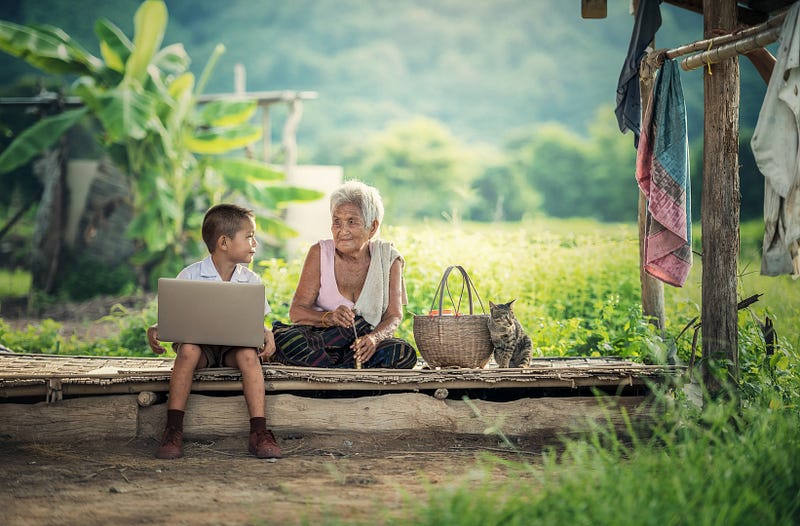
Photo by form PxHere

Mega shifts are happening in the world right now. And because I continuously peek into the future, I wonder about many things. What will cause the big waves I’m talking about in my stories?

And what can we, as individual humans, do to be part of the wave that will make us happy? The wave that will make our lives worth living? Are we just a playball of waves? Or can we contribute to the waves we would like to see in the world?

Lately, in some of the COVID stories I read, I see trends. And they awaken something in me. A lot is happening now in Asia, Europe, Australia, and America and it might lead to big waves of change. And the waves might well be flowing in counter-intuitive directions.

For decades, the trend of urbanization has been clear in developed and developing countries. But might that change now in the light of COVID happenings?

Let’s look at a few trends that are affecting our lives. Trends we might be able to turn into good things for us, personally.

Urbanization

The trend of migration from the countryside to cities has been going on for many decades. It is a global phenomenon seen in developed and developing economies. The United Nations wrote a revision of the world’s urbanization prospects in 2018. They say:

Today, 55% of the world’s population lives in urban areas, a proportion that is expected to increase to 68% by 2050. — United Nations 2018

The United Nations gives worldwide figures and the prediction that that especially in Asia and Africa, urbanization will continue. But in developed continents, the trend can be seen for longer. Urbanization is huge.

Here are the urbanization figures for continents, which Statista collected:

  • North America: 82%
  • Latin America, Caribbean: 79%
  • Europe 75%
  • Oceania 68%
  • Asia 51%
  • Africa 43%

Nothing new so far. But might this trend be completely turned upside down by recent happenings? By COVID and remote working? By our longing to find meaning in life? And what would that mean for rural economies?

COVID

COVID made a lot of people realize that the fast life in the city is not so desirable anymore if we are in lockdown. Living in a few square feet apartment is curtailing our freedom big time.

The parties are over. The theaters are closed. And even working in our favorite bar is not an option anymore.

Personally, I must say that I’m glad to be living in the countryside. I can at least go out into the woods for walks without having to face the human-flooded parks as the only natural space in cities. I smell autumn smells and hear uplifting birdsong.

Slowing down is also something that’s pressed upon us now. We can handle slowing down two ways: either we go crazy or we have a real good look at our life. Reflect. Find out what’s really important to us.

And for some people, a shimmer of realization is dawning that their current life might not be the life they want for themselves and their children in the future.

Meaning in Life

Many people are trying to find meaning in life. They have their jobs in the cities and love their lifestyles, but they also want to contribute to a better world. They do see a lot of the sh*t our world is in.

When people are thinking about meaning in life, they often come to the realization that money, comfort, and luxury come with a huge price. That price is paid in time and freedom.

Many people and looking towards spirituality for answers. In the USA, religion might be declining but feelings of spirituality are definitely on the rise, as reported by Pew Research Center.

And this spiritual awareness comes with a sense of wonder about the universe. The universe. It’s beautiful. It’s vast. It’s mysterious. And we seem to be closer to the mystery when we are firmly grounded in our bodies and nature.

Another aspect of meaning in life is the worry about climate change and nature destruction. It can be seen in the hundreds of thousands of teenagers that are taking to the streets and striking.

And that brings us to city life and countryside life again.

My readers are inspired by nature. A lot of them want to rewild their souls. And that is much easier when you have some green leaves around. Some trees. Some edible berries. When you’re able to take a hike during your lunch break.

Of course, there are many ways that people give meaning to their lives and their longings for a different future. Some people take to the #vanlife in an effort to achieve what they call minimalism.

Antonelle Cara writes how Millennials choosing meaning over money in adopting the van life.

“Even though van life may look like a sea of unknowns, I am focused on what I will be gaining and not on what others think I’d be giving up. I won’t be able to take long, hot showers every day. However, the financial and physical freedom I will gain living in a van is worth the small sacrifices I may have to make.” — Antonelle Cara.

Personally, I call this lifestyle ‘Abundanism’ because it gives me an abundance of time and freedom. I don’t live in a van myself but not in a normal house either. Less addiction to stuff. Less need for money. More freedom to choose projects that have a big impact.

Here is another story from Estonia. Maria Magdaleena Lamp writes about productivity boosters and productivity killers. Comparing working in Tallinn (440,000 inhabitants), the capital of Estonia, to working in a village of 40.

Remote Work

So, what’s the third trend I see that might have an influence on the city-versus-countryside-issue?

Working remotely was already kind of a trend before COVID. But mainly freelancers harvested the fruits so far. COVID might change that. Trendwatchers are saying that also bigger companies might be considering permanent changes in their way of working.

“We know from research that companies are taking a tough look at how long they’ll allow their employees to work remotely during COVID. We also see indicators that some companies will be making permanent changes to how their teams operate and looking at using remote work as a perk or a hiring reason to attract more talent, regardless of where they live.” — Grayline

And then I read some stories lately from India. About young people considering to return to their parents in the countryside. Their employers want them to work remotely and that gives them the chance to go back, care for their elderly parents, and contribute to their home villages.

When I was studying at Schumacher College UK, I had many conversations with Brazilian and Mexican students about returning to their home countries after their studies.

They had experienced the new-economy-life full of meaning and happy productive activity. And they couldn’t see themselves return to the cities they came from. The life there would be too shallow. The work too meaningless. Life too much set in concrete. They wanted more from life. But how?

One woman planned to go back to her parents on a rural farm in Brazil. She hesitated though. What would her life be like? No young friends to be with? Just the farm and nature? Would it be enough for her to make the farm flourish with regenerative agriculture and build a modern, meaningful farming enterprise?

Of course, companies need to take a good look at their leadership styles. Remote leadership is different from face to face control. I’m really curious to see where this trend might lead companies.

Do companies dare to take the next step and adopt leadership by trust? Like the Brazilian entrepreneur, Ricardo Semler has set an example with already decades ago?

“Semler is the former CEO and president of Semco, which under his leadership grew from $4 million in revenue to over $160 million in about 20 years.” — Forbes, “The Big Company that Has No Rules.”

Or will companies breach privacy rules? Using digital surveillance technology to increase control and maintain productivity?

“With the num­ber of remote work­ers surg­ing as a result of the pan­dem­ic — 42% of U.S. work­ers are now doing their jobs from their kitchens, liv­ing rooms and home offices — a num­ber of employ­ers have begun requir­ing their work­ers to down­load spy­ing soft­ware to their lap­tops and smart­phones.” — InTheseTimes

Of course, I really hope that companies will reinvent themselves mirroring themselves in the first example. To reassure them: people can be trusted. History tells us so if we read the book Humankind by historian Rutger Bregman.

Conclusion

What if COVID would turn around the wave of urbanization? What if all these young people with good educations would go working from home in rural areas? What would it do to the rural areas?

Would we be able to reinvent our local economies and combine nature-based solutions with remote work, meaning in life, and a lifestyle in line with pandemic risks?

I really don’t know how the waves will affect you and me individually. Big waves are hard to predict. But being aware of waves often makes us realize that we have a choice. That we can choose which wave to be part of.

In order to do that though, there’s some homework on the personal development front.

  • Make a conscious decision to live a meaningful life
  • Be a creator not a consumer, and choose value over money
  • Slow down to really feel what you want to do to give your life meaning
  • Get rid of the fear of not having enough and not being enough
  • Be prepared to embrace uncertainty
  • Connect to nature, rewild your soul and just do it

The wave of change needs us all. Are you prepared to be part of whatever wave and make a conscious choice?

If you want to reach out, just connect via LinkedIn, Facebook, Twitter, Instagram, Pinterest, ManyStories, Quora, Patreon, or my website.

© Désirée Driesenaar 2020

City Living
Covid-19
Work
Sustainability
Future
Recommended from ReadMedium