

Lets Stop Talking About Other’s Bodies
The health/fitness culture is an utter mess that doesn’t help us achieve our goals.
“Have you lost some weight? Your shoulders look different.”
The woman next to the man who made the comment bursted into laughter. I looked completely befuddled before laughing along.
The conversation went on for a little longer where the man who commented about my figure was trying to describe the differences in my shoulders. He then asked me again whether I lost weight and I told him I don’t know.
It was the strangest compliment on my figure that I’ve gotten and it doesn’t really bother me all that much. The guy who commented on my figure and the woman laughing are credit card sales reps at the grocery store I go to. I’m on a first-name basis with them and chat with them a lot.
But after watching a video on our obsession over weight loss, the more I think it’s better for us to generally stop talking about other people’s bodies. Even in the context of the scenario above where I was getting a compliment over my sexy shoulders, I believe when it comes to tackling weight loss and working towards our health, this kind of tactic is regressive.
Popular Health Trends Or Concepts Are Flawed
It all starts with specific health trends that the video I linked above goes into great detail. The most iconic is the 1,200 calory intake where the diet is touted all across Instagram. Small dishes with small portions receive a massive amount of attention.
No doubt this plays into the delboeuf illusion where eating a reasonable amount of food on a smaller plate tricks our mind to think we’re fuller.
But the effects of that way of eating is far more damaging as human beings need generally more calories than 1,200 in order to function. Consistently getting less puts you into starvation mode and you experience other side effects.
There are other iterations of these diets that achieve wild results, such as the ones on health magazines at the grocery store. They’re meant to give you quick results, but screw up your health system long-term.
But probably the biggest health scam of all is the Body Mass Index or BMI. We’re all pretty familiar with it as it’s the measurement that is used everywhere to determine how healthy an individual is. It’s a “standard” measurement that takes into account your age, height, and current weight, and calculates whether you are obese, overweight, ideal, or underweight.
Even though doctors, dieticians, and other smart health people use this measurement, it actually has nothing at all to do with health at all. That much should be obvious by the fact that athletes, according to BMI, are incredibly overweight.
That’s because BMI doesn’t account for body fat, or muscles.
In the best of circumstances where someone is sedentary, one could argue that determining someone’s BMI for that purpose is worth doing. However it’s grasping at straws because, as the video pointed out, the creator of BMI was into eugenics in the 1830s. Oh and the guy, Lambert Adolphe Jacques Quetelet, was not an expert on health.
He was a numbers guy. An astronomer.
How BMI came to be was he created a bell curve based on physically measuring the proportions of several Scottish white men.
In the 1830s.
And to this day the CDC and NIH still regard BMI as a pretty good determiner of any adults weight and overall health.
Why his calculations are taken seriously still at this point is a mystery to me but the fact that many still cling to this method to determine someone’s health goes to show how much even the experts don’t know much about human health.
Ideal Figures Are Different For Every Person
Even with the shaky ideals of beauty and health being twisted around those health trends or measurements, we shouldn’t try to avoid eating and being healthy either. Every person’s body is different and the picture of health from person to person is going to be a little different.
That’s ultimately what the body positivity movement is all about. Learning about your body and doing what feels good and makes you feel good. Yes, some people do go overboard with it, but generally speaking, the best health advice is ironically do what makes you feel good about yourself afterwards.
And if you’re not happy with how you look, then it’s a matter of trying to work towards that. However those standards shouldn’t be based on other people or societies form of beauty. After all, everyone has very different tastes. That includes AI image generators.
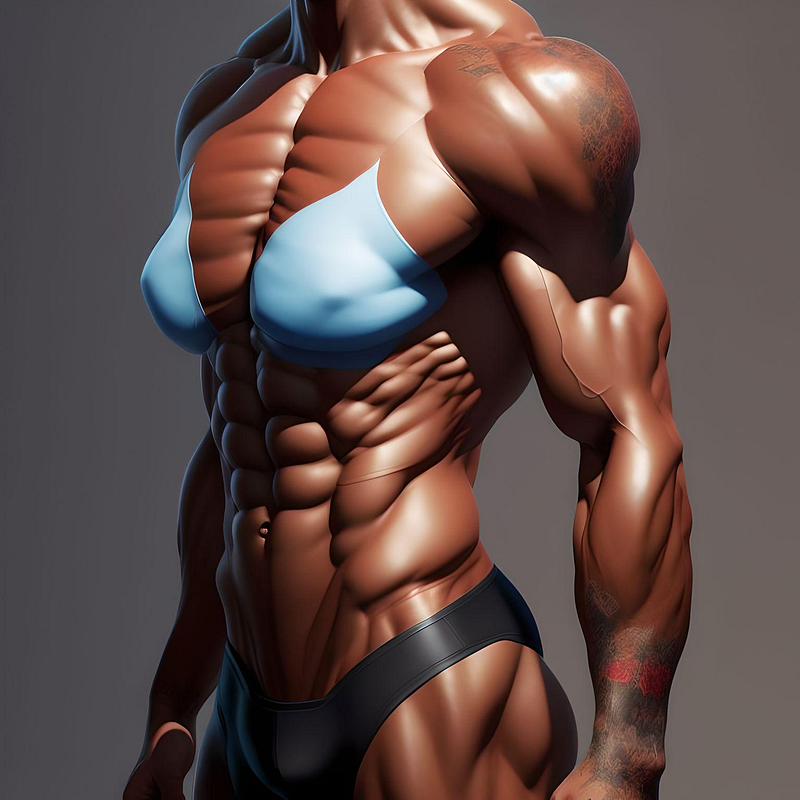
Not every peak human physique has to have six pack abs and bulging muscles everywhere. At the same time, someone on the heavier side could still be healthy as well and live for just as long as someone who hits the gym every single day and goes for an one hour run.
But we as a society have collectively agreed and encouraged that those things are important and that people who don’t hit those standards are lazy. They’re not trying hard enough or they’re not fully committed.
Even doctors behave in this sort of way where they refuse to think that obescity is a hormonal imbalance and it’s that the person with the weight problems is having too many Big Macs.
But as I and many others can attest to, it’s not always the fact we’re eating unhealthy that is the issue. There might be some other problem going on and we’re misdiagnosed on what the problem is. In fact, it happens quite a lot.
Eating Disorders Are Sneaky In Appearance
Beyond the ideal figures of various people, there is also the problem with nutrition being different from person to person. These days, popular health trends are picked up and encouraged and people don’t think twice about them.
I hinted at this last year with intermittent fasting and how women were shuned for doing it while men were applauded. There were even apps created by silicon valley executives who indulged in fasting and touted it as a “productivity hack”. This is on top of defenders of this eating habit criticising me.
Most of the criticisms were directed to the fact I called fasting a eating disorder of sorts.
And to an extent I still believe that because of the reasons said above. Our bodies are different and how we deal with nutrients and how much we need varies from person to person.
But we can generally agree that if you’re throwing up after eating, have a loss of appetite, dizziness, fatigue, and other symptoms, chances are you’re malnurished.
And some of those silicon valley executives were talking about it, but framing it as some higher state of mind. Achieving peak productivity or some nonsense like that. Little do they know they’re walking into disordered eating habits that their fans could find themselves in quickly if they’re not careful.
In the end, it’s positioned as a solution for those of us who want to lose weight or optimize our health. And yet in most circumstances, it doesn’t actually work. Health advice falls into a similar trap to the rich self-help advice. The only purpose is to keep you in the loop and not really progressing.
They want to keep you paying for more expensive fitness programs, following a specific dietary plan, buying their supplements, and so on. It’s not always designed for your actual betterment. Not everyone is out there to screw you over, as there are some genuine individuals who care and want to help. But the issue is the current tools are not all that effective and some of the more easily accessible alternatives are sketchy at best.
For example, I used a specialized scale at the gym which measured a lot more than just weight. It calculated everything to what my ideal weight loss should be based on my age, height and current weight. It’s a lot like BMI, but instead of just spitting out a BMI number, it didn’t provide one and showed percentages of muscle and fat among other pieces of information.
Not everyone has access to those scales though.
Poor Messaging Under Seemingly Normal Circumstances
The crutly of fitness culture is seen the most when people are either trying to be the picture of health or are overweight. Even though there was a time we considered fatness to be beautiful, and we’re in a resurgence of it now, there are still people who glare or stick their nose up at those overweight or talking about their bodies.
There is this hatred towards larger people which we call fat shaming.
Doctors do this subconsciously where many don’t listen to the plights of those who are clearly larger. They again think the issue is the person isn’t eating healthy or exercising enough.
We as a culture have embraced this idea that weight loss and achieving peak picture of health is an individualistic problem that we have to solve. Little do we know that obescity can be a hormonal problem, a mental illness (somewhat), and a problem that isn’t being properly addressed.
The solution that we give to larger people is to eat more salads. And if those salads aren’t good enough then that’s their problem. It’s their fault for being laughed at for being fat or to be hated because of it.
We see a similar scene playing out to those suffering from eating disorders who are skinnier too. There are athletes who believe that if they have an average meal, they now have to workout for 5 hours to burn all of those calories off.
You have this problem in wrestling. Weight classes are designed to keep people eating a certain way and exercising a certain way in order to stay in a particular weight class. This can result in some questionable eating habits, and drugs to compete. Wrestlers in the past have had to remove their gallbladder because their body wasn’t taking in enough fat. It’s a common issue among wrestlers.
And yet when you look at athletes, or wrestlers, we consider them as fit and healthy.
I lost half a pound and I got complimented about how my shoulders looked nicer.
Whether it’s shaming someone or praising someone for how they look, it doesn’t always encourage people to change. Motivation is a complex thing but I do know enough now that shaming someone into something or even praising their perceived accomplishments can often backfire.
You don’t know if the skinny person is someone that built their body through hours of cardio and training or whether they are suffering from an eating disorder that they have no control over.
You don’t know if the larger person became that way because of eating fast food all the time or whether they’re eating a very healthy diet with lots of meats, nuts, fruits, and veggies and are struggling to shed the pounds.
But in either of those cases, shaming or encouraging them doesn’t result in them actually making an effort to improve their health. Since when does “hey fatty, eat a salad” actually make a larger person want to eat a salad? How would they feel if they were genuinely going to the gym and exercising?
The disordered eating to the foundational metrics all compound against this weird messaging structure that we have. It creates these normal instances where we want to compliment people, but it can backfire without us even realizing it.
As I’ve said plenty of times with self-help, context matters. And in those moments where you don’t really know the person or their particular health situation, you can’t be certain whether you are advocating for something right or wrong for that person.
Even when we have the best of intentions and concern over the health of those around us, what might be better is instead of dancing around all of these subjects, we simply stop talking about other people’s bodies.
Enjoyed the article? Please consider offering your support!
👉 Subscribe to my email list here and receive emails whenever I publish on Medium!