Renaissance Now!
How we can trade a mere digital revolution for a truly dimensional shift
Built to enhance our essential interrelatedness, our digital networks could have changed everything. And the internet fostered a revolution, indeed. But it wasn’t a renaissance.
Revolutionaries act as if they are destroying the old and starting something new. More often than not, however, these revolutions look more like Ferris wheels: the only thing that’s truly revolving is the cast of characters at the top. The structure remains the same. So the digital revolution — however purely conceived — ultimately brought us a new crew of mostly male, white, libertarian technologists, who believed they were uniquely suited to create a set of universal rules for humans. But those rules — the rules of internet startups and venture capitalism — were really just the same old rules as before. And they supported the same sorts of inequalities, institutions, and cultural values.
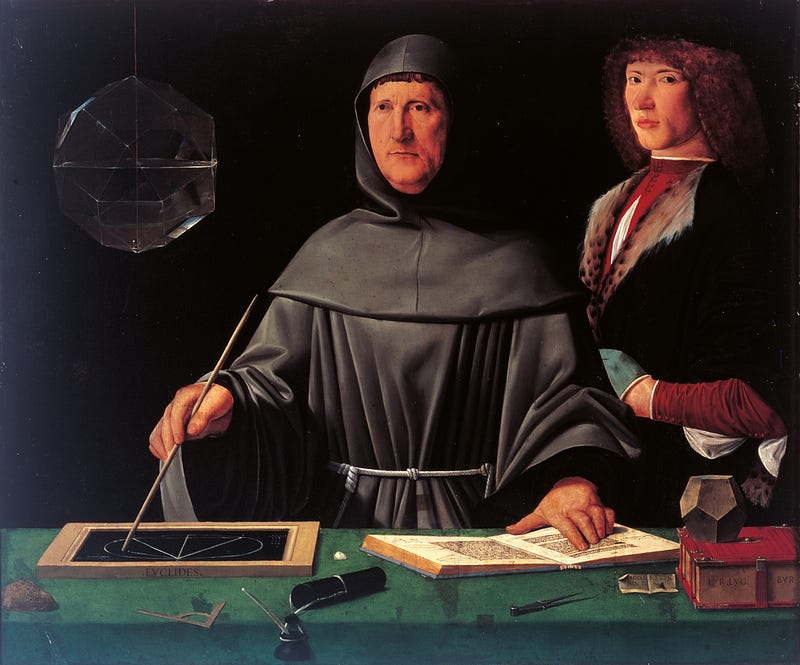
A renaissance, on the other hand, is a retrieval of the old. Unlike a revolution, it makes no claim on the new. A renaissance is, as the word suggests, a rebirth of old ideas in a new context. That may sound less radical than revolutionary upheaval, but it offers a better way to advance our deepest human values.
The revolutionary fervor with which the digital era was promoted has finally begun to die down, and people are becoming aware of the ways in which these networks and the companies behind them have compromised our relationships, our values, and our thinking. This is opening us to the possibility that something much bigger is going on.
Are we in the midst of a renaissance? Might the apparent calamity and dismay around us be less the symptoms of a society on the verge of collapse than those of one about to give birth? After all, childbirth is traumatic. Might we be misinterpreting a natural process as something lethal?
One way to evaluate the possibility would be to compare the leaps in art, science, and technology that occurred during the original Renaissance with those we’re witnessing today. Do they have the same magnitude?
Perhaps the most dramatic artistic technique developed during the Renaissance was perspective painting. Artists learned how to render a three-dimensional image on a flat, two-dimensional canvas. What’s our equivalent? Maybe the hologram, which lets us represent a fourth dimension of time on a flat plane. Or virtual reality, which lets the viewer experience a picture as an immersive environment.
During the Renaissance, European sailors learned to circumnavigate the globe, dispelling the conception of a flat earth and launching an era of territorial conquest. In the twentieth century we orbited and photographed our planet from space, launching a mindset of ecology and finite resources. The Renaissance saw the invention of the sonnet, a form of poetry that allowed for the first extended metaphors. We got hypertext, which allows anything to become a metaphor for anything else. The Renaissance got its own new media, too: the printing press, which distributed the written word to everyone. We got the computer and the internet, which distribute the power of publishing to everyone.
Most significantly, a renaissance asks us to take a dimensional leap: from flat to round, 2D to 3D, things to metaphors, metaphors to hyperlinks, or top-down to peer-to-peer. The original Renaissance brought us from a flat world to one with perspective and depth. Our renaissance potentially brings us from a world of objects to one of connections and patterns. The world can be understood as a fractal, where each piece reflects the whole. Nothing can be isolated or externalized since it’s always part of the larger system.
The parallels are abundant. This is our opportunity for renaissance.
This was section 79 + 80 of the new book Team Human by Douglas Rushkoff, which is being serialized weekly on Medium. Read the previous section here and the following section here.