
We Can’t Address Climate Without Addressing Food Inequity
Communities of color are at the center of balance for bringing our species back into harmony with the planet
Recent events have underscored the fact that we are at a necessary societal crossroads. This is a crucial moment for reshaping our systems to ensure social and environmental justice. Racist policing and incarceration practices, grotesque levels of economic inequality, a massive global health crisis, and rampant environmental degradation—these are all deeply intertwined structural problems, and our existing institutions are failing to solve them.
We cannot afford to “wait to see” if these shifts actually happen; the survival of nearly all species on this planet, including our own, depends on it. We are rapidly moving towards a 2.7°F rise in global temperatures, which a consensus of the scientific community believes would be catastrophic and irreversible. This is not hyperbole or hysteria, but simply a mundane fact regarding human civilization in 2020.
We must seize this opportunity to dismantle the animal agriculture industry’s stranglehold on both our planet’s resources and our collective health, particularly in our most vulnerable communities.
One of the critical issues we face as a society is food inequity, which is deeply rooted in race and class inequality in the United States. We have failed to make healthy, fresh food accessible in poor, working class, and largely minority communities, and we face a massive, ongoing public health crisis largely because of it. Heart disease is the leading cause of death for both men and women in the US, and disproportionately affects communities of color. The same goes for cancer, diabetes, and strokes.
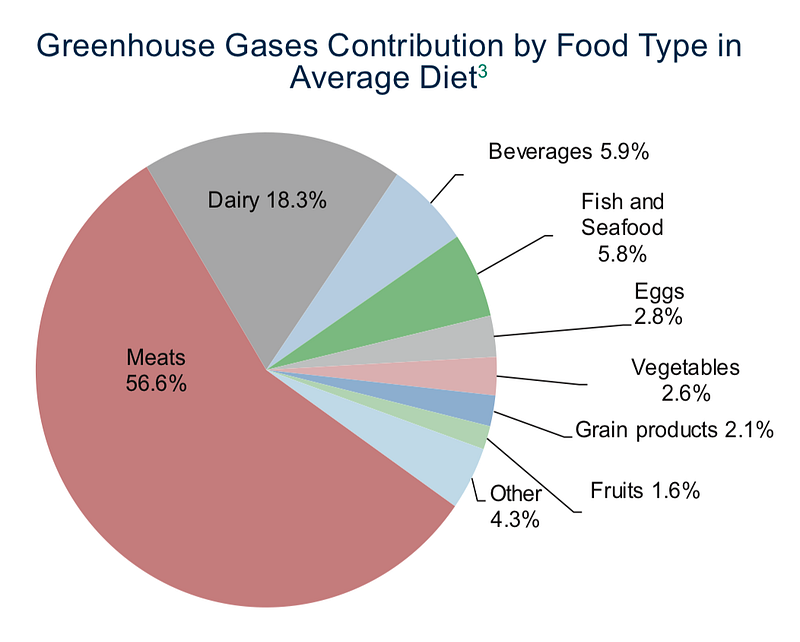
Just as our unsustainable levels of greenhouse gas emissions, land and water use are all inextricably linked to our outsized dependence on animal agriculture, the pervasiveness of these chronic diseases—particularly in Black and brown communities—is directly linked to the skyrocketing consumption of animal products. Our diet is killing both our planet and our people.
We must seize this opportunity to dismantle the animal agriculture industry’s stranglehold on both our planet’s resources and our collective health, particularly in our most vulnerable communities. It is impossible to move forward as a society on massive issues like climate change without including everyone in the conversation, and to do so we must drastically reform our food system to be more just and inclusive. This will require massive reprioritizations of wealth and resources to make healthful, environmentally sustainable food dramatically more accessible to low-income communities and communities of color.
A significant shift towards a more just and sustainable plant-based food system cannot happen without removing barriers to nutritious, ethically and sustainably produced ingredients and products.
First, a brief bit of history: White people did not invent plant-based eating, nor is inherently a diet of the privileged—in fact, it’s quite the opposite. Eastern religions like Hinduism, Buddhism, Jainism and Rastafarianism have all advocated for the avoidance of animal products for thousands of years, among both the rich and the poor. Its history in the US is deeply intertwined with civil rights: Angela Davis has been a practicing vegan for decades; Coretta Scott King was vegan; Rosa Parks was vegetarian; Dick Gregory was a vegetarian and animal rights activist; and César Chávez, who “respected all lives without exception,” became a committed vegetarian “after realizing that animals feel afraid, cold, hungry, and unhappy like we do.”
In recent years, we’ve seen a shift in the tenor of conversations around ethical and sustainable eating — specifically its relationship to communities of color, which have become thought leaders in this conversation. Progressive environmental and animal welfare organizations have grappled more deeply with the importance of reaching out beyond the predominantly white donor base that makes up much of the foundational support for these movements in the US. At the same time, progressive environmental organizations have focused more attention on the link between animal agriculture and climate change.
It’s important to recognize the broad intersectionality between civil rights, environmentalism, and food justice, and how any one simply cannot exist without the others:
- Meaningful environmental stewardship cannot happen without prioritizing a structural transformation of our food system. This means rethinking how and where we grow and sell our food, and deeply redefining some fundamental terms that we use to talk about food—specifically “meat” and “dairy”—both materially and nutritionally.
- A significant shift towards a more just and sustainable plant-based food system cannot happen without removing barriers to nutritious, ethically and sustainably produced ingredients and products.
Many on the left choose to look away from the issue of animal exploitation, and its deleterious consequences for environmental and human health (in addition to the horrific animal welfare concerns). It’s easy for some to wince at the glib associations between plant-based eating and white, righteous privilege, and we still see the media consistently punching down when it comes to animal rights and veganism—due largely to this same broad, generalized connection.
For white people, it’s not a choice between supporting communities of color or moving towards a plant-based diet — we must do both.
The only way to redirect these cultural feedback loops is on a structural level. As such, communities of color are at the center of balance for bringing our species back into harmony with the planet, and we must throw our full weight as a society behind them.
For white people, it’s not a choice between supporting communities of color or moving towards a plant-based diet—we must do both. For those with the means to move towards a plant-based diet, the notion that “veganism is just too privileged for me” is not only a false rationalization, but also an unacceptable high horse upon which to justify riding into a degraded future for the planet. Nor is it a legitimate excuse to continue rationalizing the mass exploitation of animals, and the humans hired to kill and dismember them—predominantly minority populations, doing some of the most physically and mentally dangerous work in existence.
The simple fact is that the meat and dairy industries are inherently unsustainable — not just environmentally, but financially as well. The U.S. government spends up to $38 billion each year to subsidize the meat and dairy industries, with less than 1% of that sum allocated to aiding the production of fruits and vegetables. Unsurprisingly, the vast majority of the Covid-19 bailout for the agriculture sector went to big meat and dairy. And we all know how bad these industries are for the planet; research shows, for instance, “that without meat and dairy consumption, global farmland use could be reduced by more than 75% — an area equivalent to the US, China, European Union and Australia combined — and still feed the world.”
In the midst of massive social upheaval, we’ve all watched as the meat industry sacrificed the lives of its largely minority employees to Covid-19, and gruesomely, torturously exterminated mass numbers of animals. According to the nonprofit Food and Environment Reporting Network, about 27,000 — almost 1 in 20 — have gotten sick. Meanwhile, meat prices have been surging, and plant-based replacements are getting cheaper.
We are rapidly breaking through the technological barriers required to dismantle the meat and dairy industries. As more talented and creative minds lend their expertise to creating alternative ecosystems to animal agriculture in both the nonprofit and commercial sectors, we get closer to expertly recreating and maintaining the rich cultural heritage of cooking, without killing animals. Plant-based replacements for ground beef and milk are 90% of the way there, and other skeuomorphic redesigns of familiar foods are right around the corner, as companies like Meati, Memphis Meats, and Finless Foods come closer to large-scale manufacture. We must undergo a massive redefinition and reclassification of what meat and dairy products actually consist of, and how they are manufactured — namely, without animals.
As they ride waves of massive capital investment and commercial success, it is incumbent upon these companies to find ways of bringing their products to underserved communities. They must be aggressive in achieving price parity with existing products in grocery aisles, and work doubly hard to make their products available to stores and restaurant owners in lower-income communities. They must hire and consult with leaders and citizens in these communities to improve the availability and accessibility of plant-based foods.
Of course, these kinds of tech-oriented solutions still rely on capital markets. Even more important is the low-level redistribution of both fresh food and agricultural empowerment; the work of Ron Finley as the Gangster Gardener and others like him in creating community gardens has been remarkable. Organizations like Summaeverythang have been delivering organic produce box donations to Watts and South Central Los Angeles. We must invest heavily in and subsidize more widely-distributed farmers markets and CSAs, as well as petition supermarkets and food distributors to make fresh, healthy produce available and affordable in the grocery stores of both inner-city and rural food deserts around the country. Vegetables must be at the center of the plate in school lunches, as we’re starting to see in NYC and Los Angeles.
Lastly, and most importantly, we must listen to the voices of Black and indigenous vegans and activists, and other people of color. There are countless Black thinkers and activists in this space, including the likes of Jabari Brisport, who is currently running for New York State Senate. Sisters and authors Aph and Syl Ko have been incredibly important voices in discussing issues around veganism and communities of color.
There’s also Beard Foundation award-winning chef, food justice activist, and author Bryant Terry, who has recently brought critical attention to the cultural appropriation of the “Thug Kitchen” media brand.
There’s Jasmine Leyva and her film The Invisible Vegan.
And Omowale Adewale, founder of Black VegFest:
I’ll conclude this quote from Adewale’s “Seven Points of Allyship for the White Vegan Community in Defense of Black Lives,” which I believe encapsulates a lot of what I’ve been trying to say here in a single sentence:
“When white communities start listening to concrete plans that address the quality of Black lives, we can move on together in shaping the world around us.”


