
Water in The Mixtape of Taliesin
This article supposes you are familiar with the Structure In The Mixtape of Taliesin, if not some references to Tarot poems and various suits of cards may not be easily understood.
In the original myth of Taliesin water plays some important parts, to recapitulate — Gwion Bach is boiling a broth meant to make Ceridwen’s ugly and idiotic son brilliant, but he spills three drops on his fingers and being stupid puts the burnt fingers in his mouth. Then he becomes smart, there’s not much of a theme about stupidity and intelligence in the book but it is an interesting bit from the original story.
To quote from The Birth of Taliesin
I stole my inspiration
from Cridwen’s cauldron
the witch had me stir
for a year imprisoned
then I was just Gwion Bach
but in a moment enlightened
with the gift of the Radiant Brow
So as we know Ceridwen (or Cridwen here) is mad about that, and chases him. Then
All these forms I assumed
I was a blue salmon
battling the waterfall
A water image, but also a birth image, since Salmon swim upstream to spawn.
Later on, in the poem Taliesin Talks to the Poets it asserts:
Born & re-born I have been
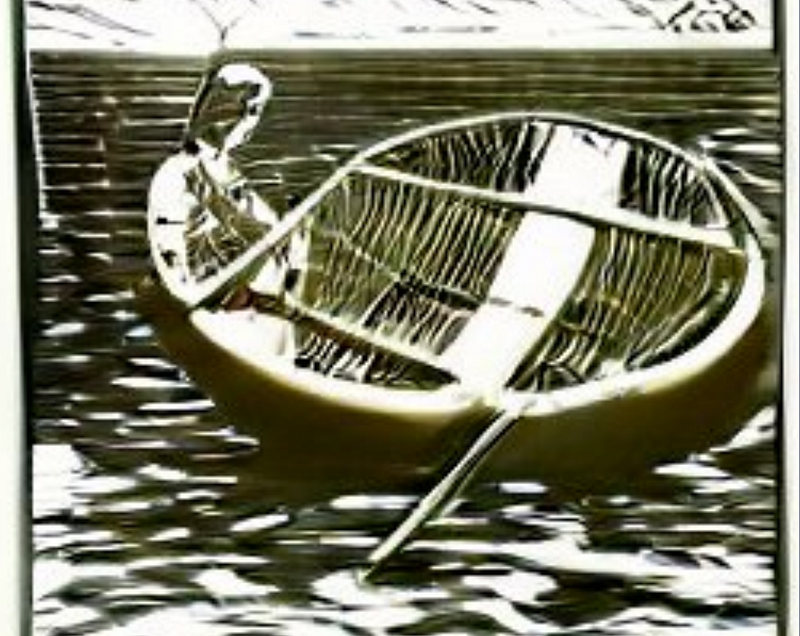
Borne in the rocking coracle
Over white-frothed waves
Seagull-scolded
Till I berthed at Penmaenmawr
Essentially Taliesin is like the Salmon (symbol of Wisdom in Wales for its ability to return to the place of its birth) that returns to water for creation and is themself born from the water.
In the poems water has many symbolic functionalities beside that of where the poet comes from, among these are
Water as Rain is a bringer of joy
As I swing idly on this wishing gate
Considering a hike to the swooning stream
Of Tongue Ghyll Force on Fairfield’s slopes
Long way bout by Alcock Tarn
The lightest rain is felt to fall
Thru my hat, with a grin
I wish it might rain stronger
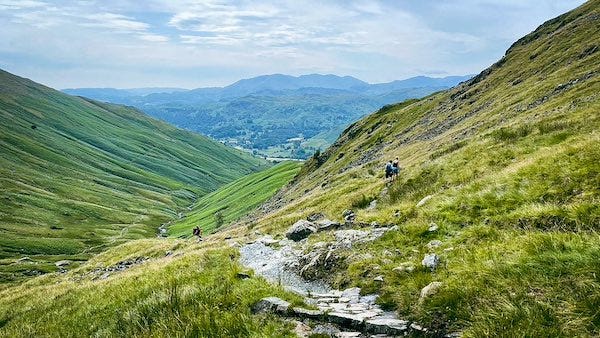
Suddenly I am overtaken by an interest in the place. Tongue Ghyll Force is in Grasmere. Google Maps evidently has some confusion about the proper location — searching just for Tongue Ghyll Force gives me some place called Troutbeck Tongue, searching for Tongue Ghyll Force, Grasmere gives me another place called Stock Ghyll Force which certainly has the looks of what I would expect, but i suspect the correct place is Tongue Gill, Great Rigg, Grasmere which Google maps says is a river named Tonguerigg Gill. I suppose having so many places named after tongues must be confusing. Unfortunately IG Agent 18 is not available for comment in the next couple weeks so I will need to go this alone.
Still the article mentioned above says “Tongue Gill springs from Fairfield Brow, and Hause Moss on the Coast to Coast path. It is eventually subsumed by the River Rothay.” That certainly sounds right — “springs from Fairfield brow” is similar to “on Fairfield’s slopes”
If I look for directions from Tonguerigg Gill to Alcock Tarn it suggests that the hike would be 9 hrs and 27 minutes, although it’s my experience Google Maps exaggerates the time to some extent. So certainly — “Long way bout”
Looking at pictures of the area, I am certain it must rain there quite a bit, and feeling a light rain through ones hat is a regular occurrence, even if wishing it might rain stronger might be frowned upon.
My little digression of feeling for the place having been satisfied back to the image of the rain — boyishly our poetic character is swinging on a wishing gate and is thinking about going to some place with a good deal of water running, at which point it starts a light rain
thru my hat, with a grin
I wish it might rain stronger
The hat, which crowns the head wherein sits the brain.
The grin which expresses mischief at the rain called forth by consideration on the wishing gate, and joy in the rain which for others might mean discomfort but for someone attuned with the natural world is only something that one might wish to be stronger, that the experience the rain offers should be turned up to its full extent.
Water as a Destructive Force
In The Hierophant — a tarot poem in the Book of Spades — we are presented with a drowned world.
Drowned Drowned
Downed in the whirlpool of Surreal Life
ice-blue corpses of dead poets
swim thru the haunted city
but it seems that here the death is perhaps spiritual
hooked ribs which counterfeit
the living breath
In schools of serene flow
or lifeless in the deep cafes
They peer thru frozen windows
wishing for some semblant being.
And in cases where we are overcome by spiritual death then the true poetry which Taliesin represents is a way back to life
Here I coax the honeyed verses
Of holy Y Vel Ynys.
The poet, by their gift, is able to combat the destructive, drowning nature of Water.
Still the threat of death is ever present, or perhaps not a threat, the recurrence of death, as The Tower tells us
At the root of it all there always lies
A mountain stream, Ophelia’s hair
In spreading vines along the depth
Water as a Source of Power to be controlled by Men
Some of the older warlike poems of Welsh medieval verse look to sea as something to be commanded, that brings commerce and provides protection against invasion. This older view of the Sea is embodied in the Poem The Fortress of Taliesin each stanza of which starts with a water-image
first stanza
A grand Tower stands on white wave
like a crystal on snow embankment
second stanza
A conqueror’s fortress commands the sea-top
carousing at New Year by the bright headland
third stanza
Splendid battlements are based on wide waves
white foam, like hoar-frost on willow
fourth stanza
A well-shielded Fort stamps down great Ocean
superior stronghold, sea-encoiled
fifth stanza
A nine-fold Castle climbs on Ninth-Wave
powerful its people in their pleasures
sixth stanza
A wealthy barrier builds itself on winding wave
where seas reach forth for contention
seventh stanza
Strong walls balance themselves on chaotic seas
transparent like hanging ice in a cavern
eighth stanza
A splendid Tower rises high on foam & tide
superb in knowledge, praised for wisdom
many of the stanzas are filled with other examples of water, but in this case the water is all water that might go against the tower, it may be that
the white wave encroaches against it
but the fact of the matter is the water cannot defeat the tower — the tower in this poem stands triumphant and overcomes the forces of entropy as opposed to The Tower in the Suit of Clubs, which is in every way a site of ruination. The water is powerful, but more powerful are the men who built the tower that controls and tames the water.
Water as the element of which the Poet is composed
Perhaps the greatest rain poem of the book is The Age of Taliesin, found in the Suit of Hearts, but I am not going to deal with all of it here as I am unsure how to reproduce its formatting in Medium — but it is a poem in which Water, represented by rain, is the world, all aspects of reality are affected by the rain of the poem, and in the center of it the poet who is themselves a creature of the rain. As seen in these lines
I am like a dispirited hurricane
resting within a summer shower
families run by me, raincoats
held overhead like ragmen’s hang-gliders.
Taliesin in the poem is filled with the potential of a great cataclysm, of a hurricane, the rain as a summer shower is about him, but he is a composed of the same constituent elements as the rain shower is, only those elements in him are greater — they are a hurricane which at the moment is not manifesting — it is dispirited. This is important for poems that follow, as is often the case in The Mixtape of Taliesin an idea is introduced in one poem and brought to its full expression in following poems, or returned to several times in various forms for a full exploration.
At the same time this poem connects rain to musicality and rhythm in complicated ways
As the rain breaks open the beat that breaks
open the rain
in the way that a master drummer’s hands
will alternate between foremost measure
& backing fills, or the way that
strong rains follow each other.
Strong rains follow each other, and then he says
I follow the storm wherever,
Again reiterating the idea that the poet is a being composed of the elements of water and wind.
Narrative wise the rain in this poem starts a summer shower that hits a festival in some unspecified park, the festival in the park seems to have many subcultures gathered, people selling things, hippies in drum circles, dancers, cops monitoring the hippies, but also the aforementioned families, and of course the poet. As the poem progresses it subsumes the existence of the world, everything in the world reflects the rain and takes on aspects of it, the rain covers everything and consumes it.
This is the season that the rains come,
the season that I come with.
In this world everything has an aspect of rain, the music is like the rain and the rain is like the music
rain is seriously jamming the world
like a duet on lapsteel
the consumerist aspect of the festival is also rain like
We are thoroughly drenched in product
people are covered by the rain, but the rain in this poem improves and makes more beautiful that which it covers
raindrops decorate brows
& uncovered throats
with torques & diadems, necklaces
that cry along smooth flesh
I could go on, as Taliesin says in another earlier poem
It is a deluge of words that I bring
And in The Age of Taliesin the deluge covers the pages.
Water, as a destroyer and life giver, as the source of poetry and the birth place of the poet Taliesin is a strong recurring theme of The Mixtape of Taliesin, and appreciation of the book is definitely heightened when we keep an eye out for the various ways water is used throughout.
This article was written by IG Agent 77, the poems that are referenced within the article were all written by IG Agent 18.
IG Agent 77 has written other articles referencing the Mixtape of Taliesin, these are
Selection Mixtape of Taliesin — The Emperor
Themes in The Mixtape of Taliesin: Youth And Age In the Suit of Clubs
Selection Mixtape of Taliesin — The Tower
Structure In The Mixtape of Taliesin
Other works of Criticism are gathered on this publication’s Criticism page https://medium.com/luminasticity/criticism/home