
Watching Waterfalls in Glacier National Park
Everybody has to take their photo
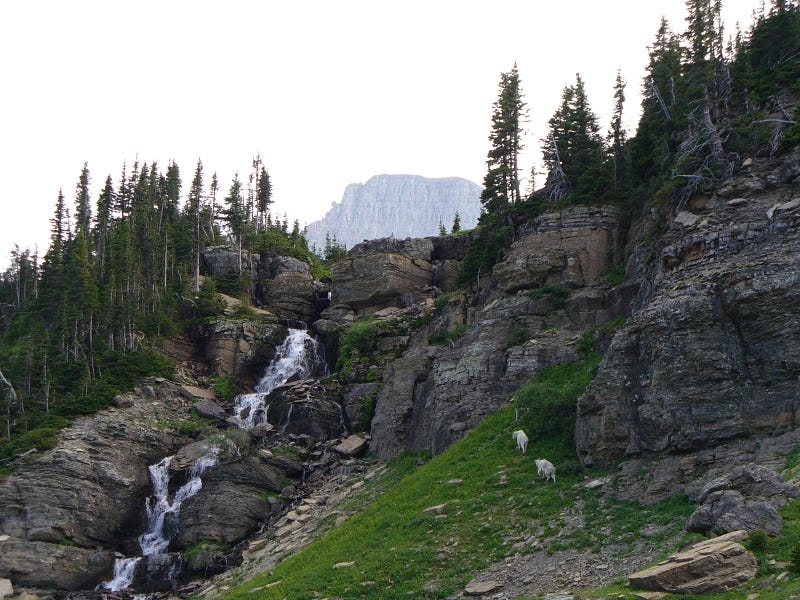
One year toward the end of July, as the calendar tipped toward both of our birthdays, my mom and I decided to take a trip to Glacier National Park in Montana. We would camp two nights at Apgar Village at the west end of the park and go on a guided wildflower walk, observing the briefest of blooms in their glory under the alpine skies.
The wildflowers weren’t the only thing out en masse. Tourists and their cameras were, too.
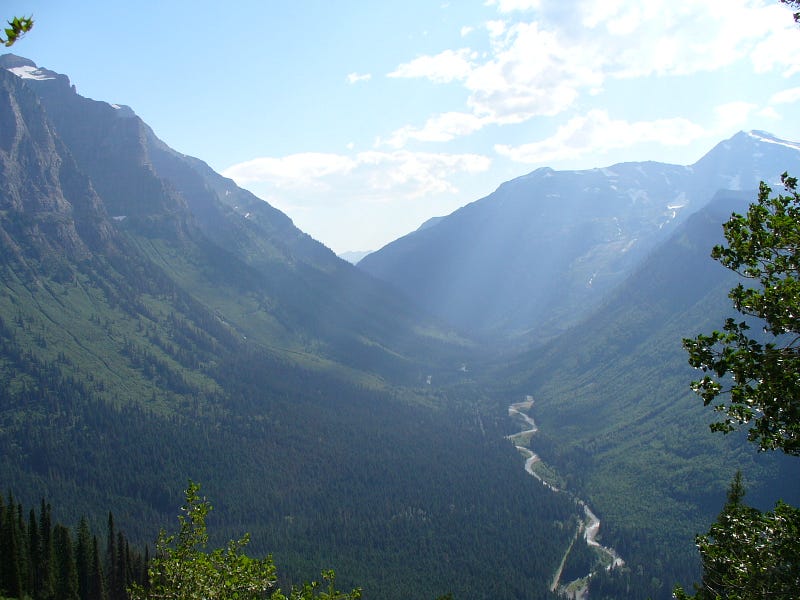
At first glance, as I looked through my photo thumbnails from the trip, I thought the above photo was of a beautiful waterfall cascading through the mountains. But it’s actually a road where waterfalls of tourists flowed, on and on and on, never stopping once the floodgates were opened in June or the start of July after the road was finally plowed out.
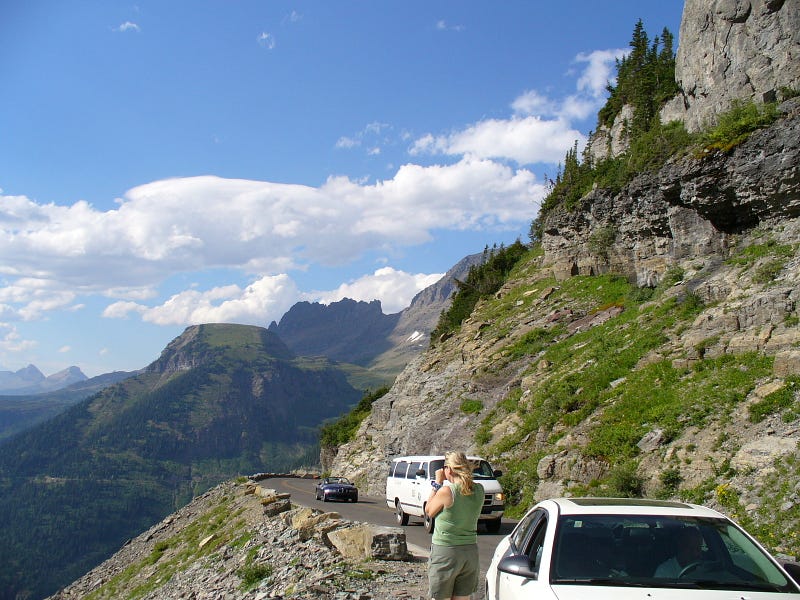
The tourists came from all over America, and overseas, too.
They came from flat places like Mississippi and Minnesota and the Iowa plains, quaking in their cars and driving over the center line in their haste to get away from the edge.
More likely, they pulled over with no warning and leaped out with their cameras, intent on getting the perfect photo.
My mom and I, too, stopped along the road for photos many times before we reached the top, contributing to the snarls of traffic that plague Glacier and many of our National Parks.
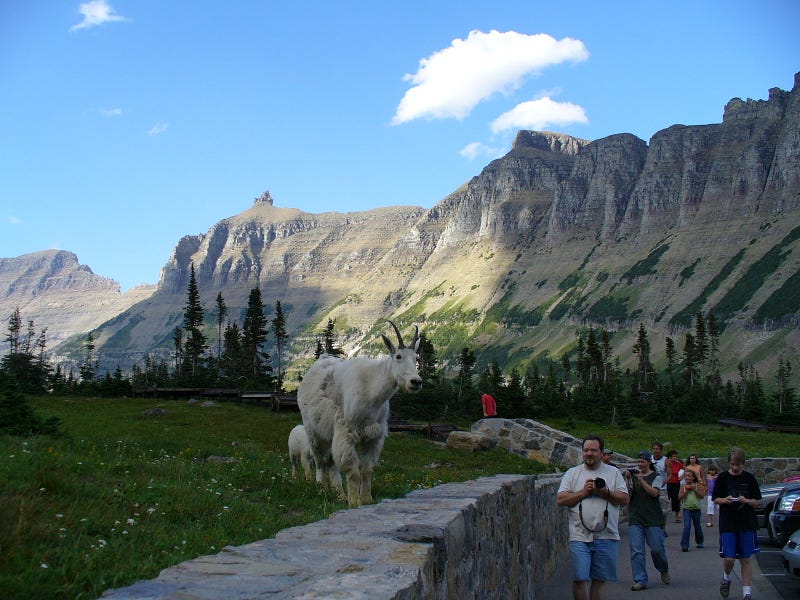
It was shocking to see how close the wildlife came to people. When we parked our car at the visitors’ center at the top of the pass, mountain goats were right next to the sidewalk. People scrambled to take photos. They couldn’t simply take a breath and enjoy the wildlife — and of course, I couldn’t either, or otherwise the photo above wouldn’t exist.
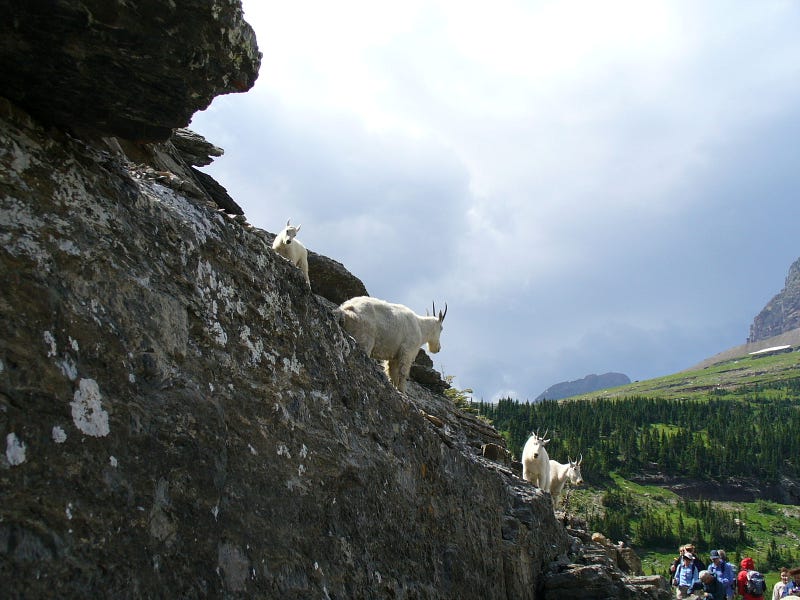
Does this mean I’m not fully human because I can’t live in the present, because I have to document every moment through a screen that mediates my reality?
Or am I more fully human because I’m making art and preserving the moment far beyond my faulty memory? Indeed, I have no memory of these meetings with mountain goats taking place, except for what I see in my photos.
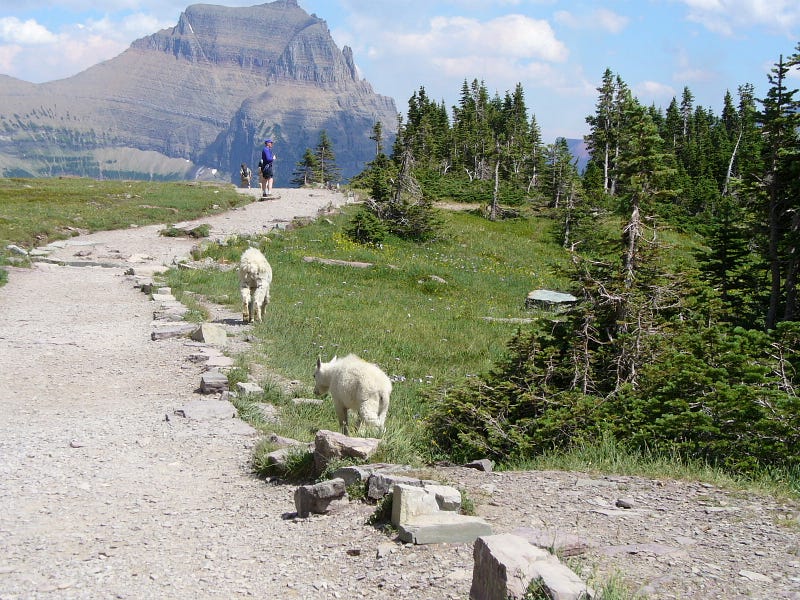
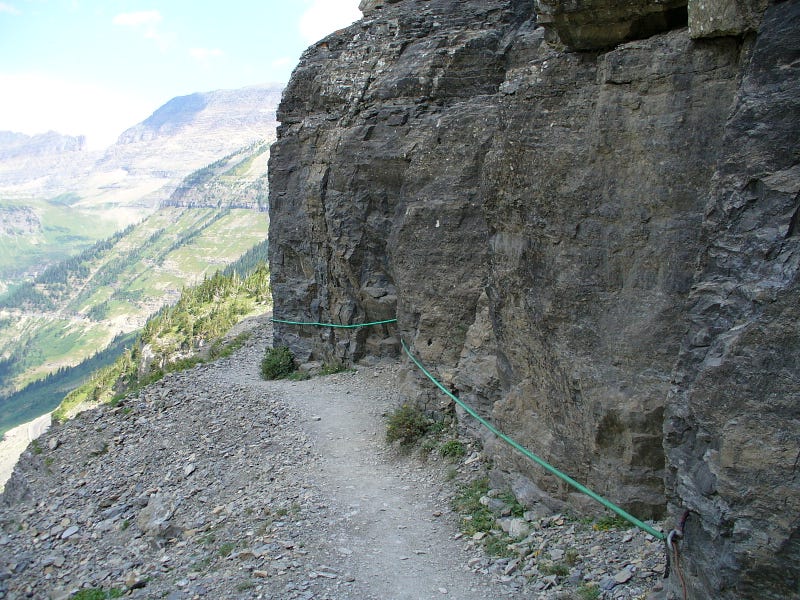
My mom and I headed for the Highline trail, where we met up with our group for the guided wildflower walk. We stepped out onto a path blasted into the cliff face, a narrow way forcing nature to obey the human will.
Here the waterfall of humanity poured across the cliffs, across the meadows, through the “pristine” wilderness. Thankfully, most left nothing but footprints — I saw no trash at all— but they took.
They took photographs. They took the soul.
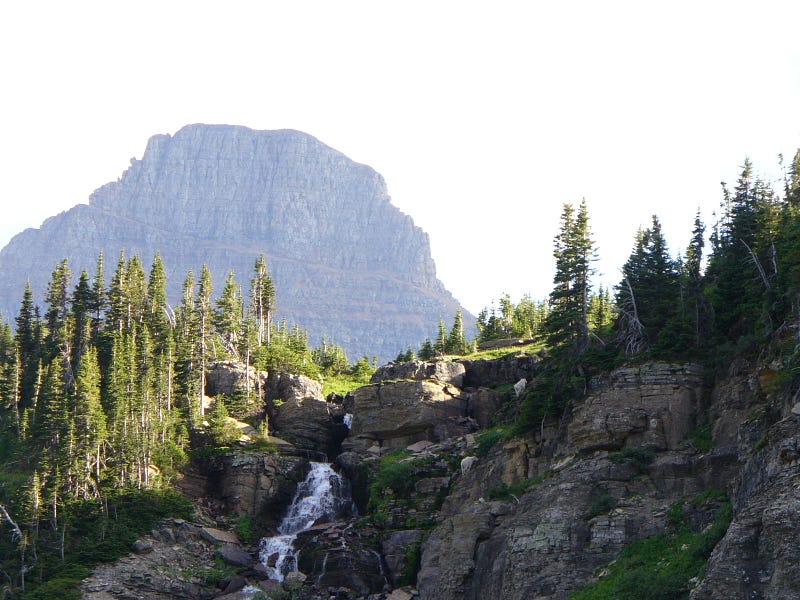
Perhaps it’s good to take the soul of this place. The many who walk here spread the word to others far and wide that we need to love Glacier, that we need to preserve this pure mountain waterfall that crashes down the cliffs through the pines.
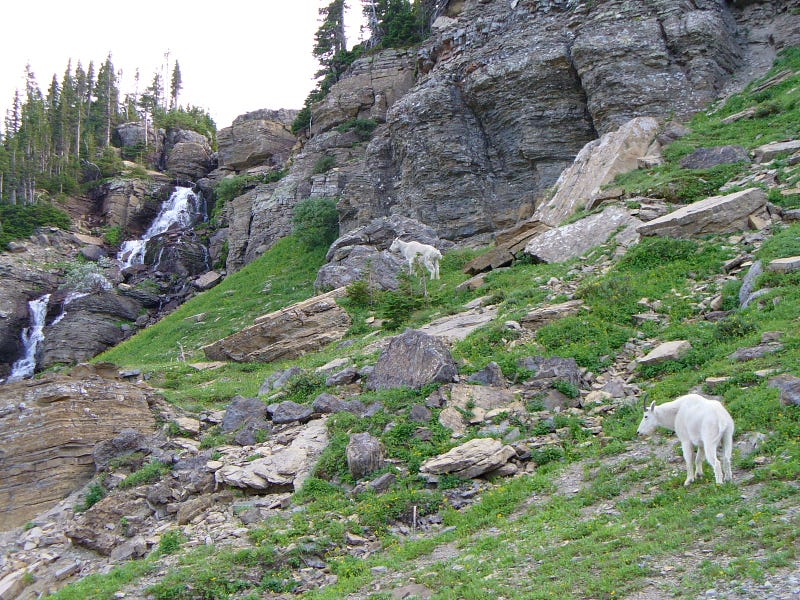
What do the mountain goats take when they see the waterfall? I think they simply breathe.
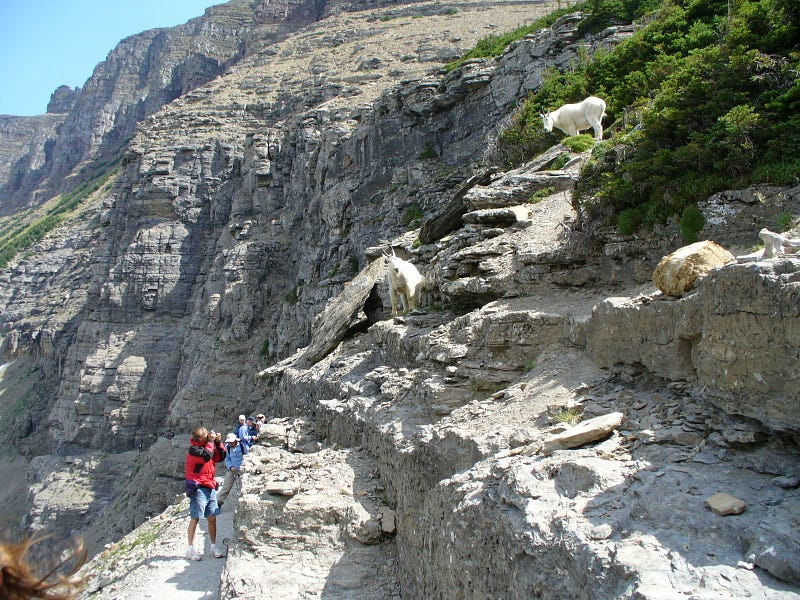
You can’t see a mountain goat in Glacier without also seeing people taking a picture. Never.
It was like being in a National Geographic photoshoot, only I was seeing behind the scenes. I didn’t want to see behind the scenes. I wanted the finished product, the glossy image that was all my own.
Maybe that’s it. I don’t like to share.
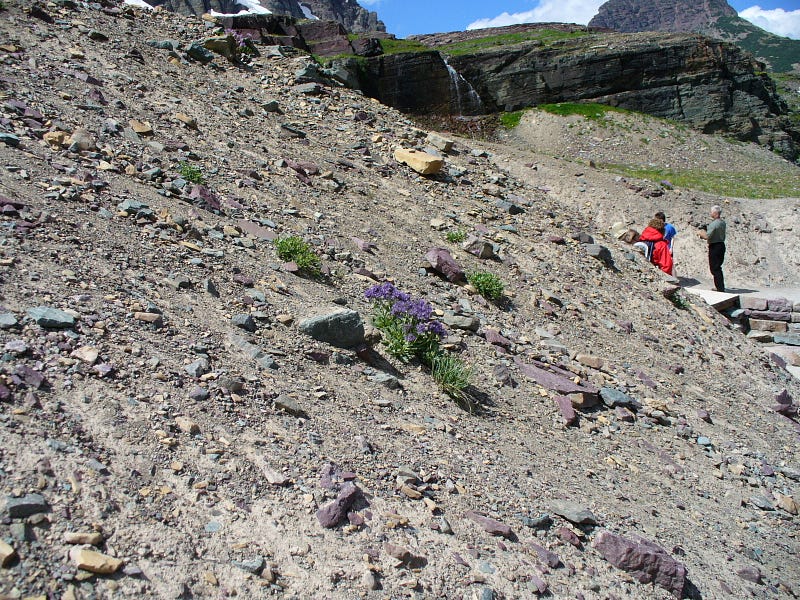
In the photo above, the waterfall is a distant memory, a thread of silver down the cliff face in the background.
A purple flower, one from my guided walk whose name I forgot a minute after it was told to me, clings tenaciously to the slope — just like the bricks those people stand upon as they listen to our guide.
In a moment they’ll all whip their cameras out, crouching low to zoom in on the flower at hand. After all, it’s not real unless you take a picture.
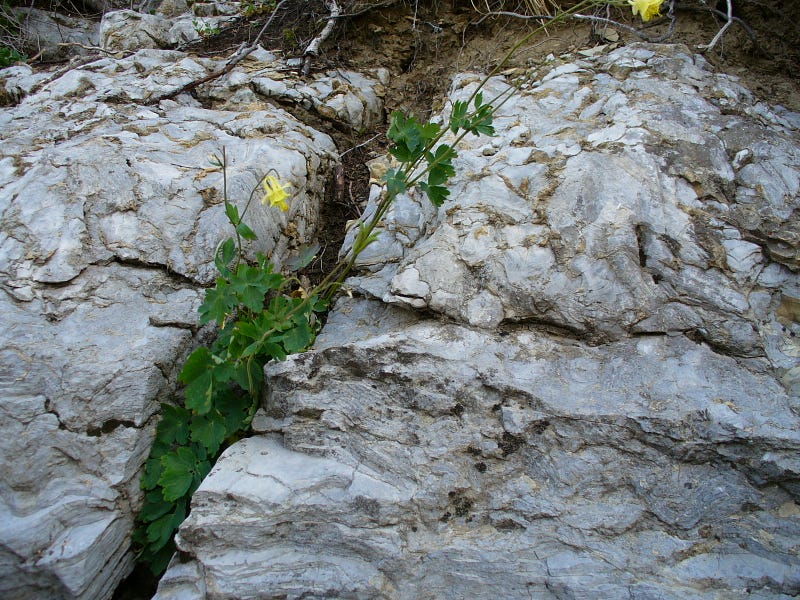
Maybe my tone sounds judgmental, and it is. But on my camera roll, I find my own photos of wildflowers. Here’s a brave one growing in a crack that would have started with a raindrop, then a rivulet, then a little waterfall wearing it away the rock every time it rained.
I’m as guilty as all the rest.
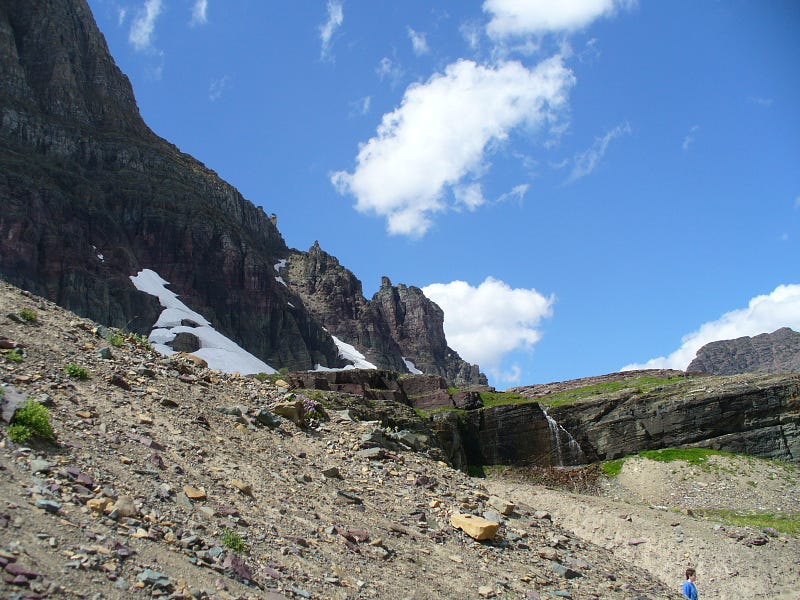
When you’re in a place of such extreme natural beauty as a National Park, nothing about the experience is only yours.
If only I could have gotten a clean shot of this scene with the waterfall a tiny trickle in the background. If only that guy could have gotten his head out of the way!
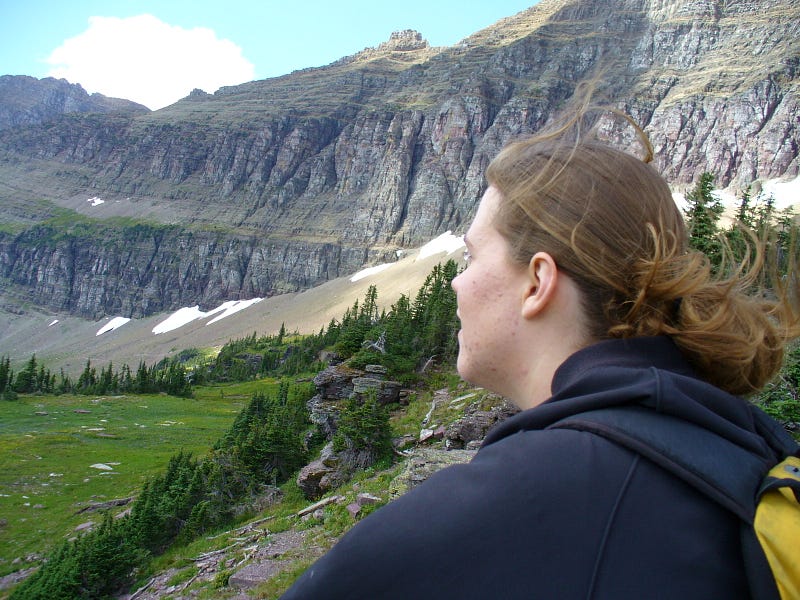
But if it’s not somebody else’s head, it’s your own head, right? I had my mom take this picture of me looking out at Hidden Lake — which, naturally, doesn’t feature in the photo. Do we really think we’re that beautiful?
I’m ashamed to say that of all these photos of natural splendor, I keep coming back to the one of myself. How my hair curls in the wind. The icky acne on my cheeks. The pleasing curve of my nose and my serene expression (I don’t look that happy in everyday life).
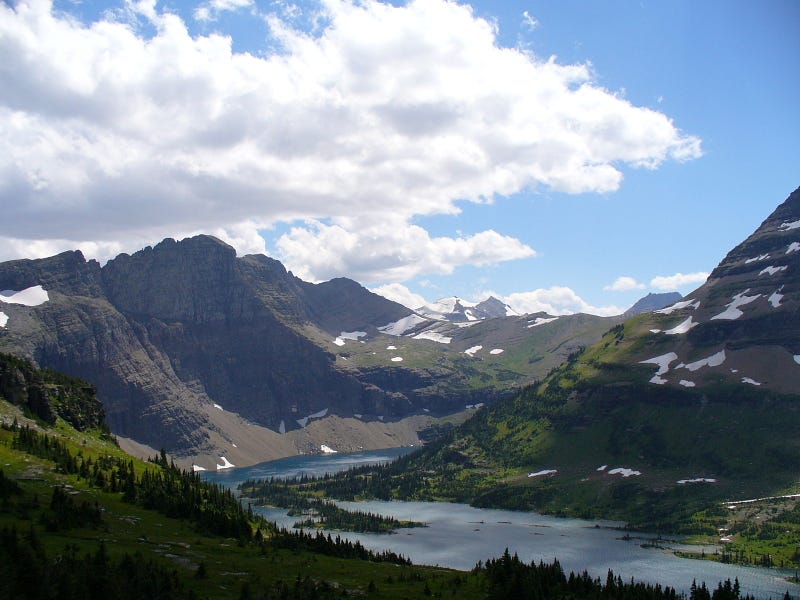
The lake was a far more interesting subject than my head, as you’ll see above. Selfie backgrounds usually are. Yet we still feel compelled to take them. The human form enraptures humanity. It’s why the ancient Greeks carved statues, and why we push ourselves into nature today.
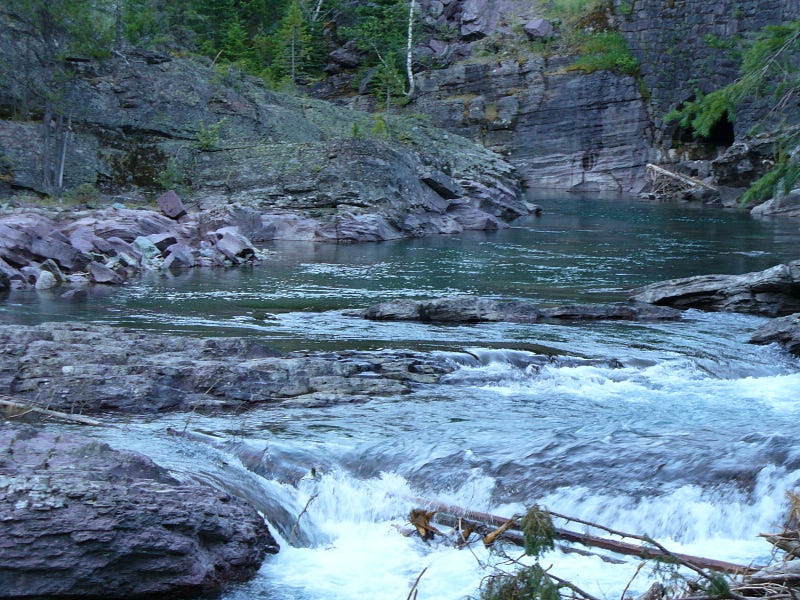
My portrait at Hidden Lake wasn’t enough for me. On the way back down the Going-to-the-Sun Road, my mom and I came upon a little waterfall that started as rapids in a river, then cascaded down some boulders into a rippling pool.
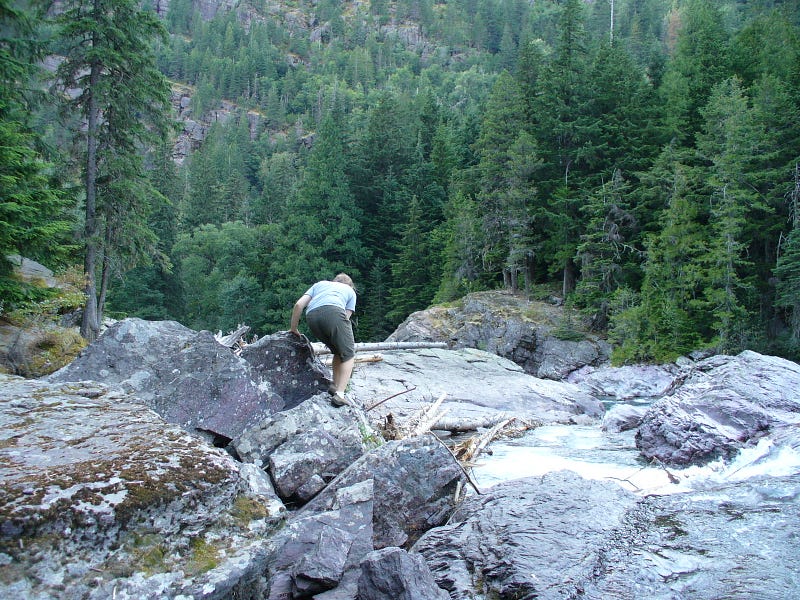
I got the idea that I had to have my picture taken with this waterfall. My mom protested, but I scrambled over boulders like I had done as a little kid. In just a few moments, I reclaimed a long-forgotten piece of my personality — the daring, adventurous side, the girl who loved to run outside and breathe in the freedom of the mountain air.
Without a waterfall to photograph, we would have driven past that spot without getting out of the car and I never would have felt the lichen beneath my fingertips nor heard the wind whistling through the pines.
I’m grateful for my camera. I’m grateful for the opportunity to take photos.
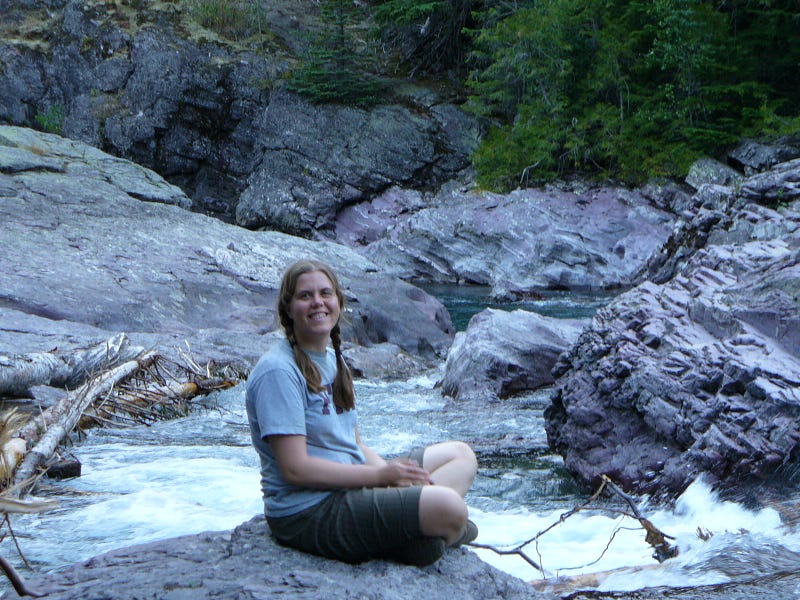
I like how the photo of me turned out — a nice blend of human and nature. I still get to be vain and look at myself, but my head doesn’t take up the whole picture so I can still see the beautiful waterfall.
And the best part about that spot? No other tourists had discovered it. At least not that day.
This article is in response to the Globetrotters March monthly challenge — “Waterfalls.”
I recommend these stories by Brad Yonaka and Jewel Allen, who write about two spectacular waterfalls:


